
Installation: Midea MDWS-2703 Dish Washer User Manual
Content
Midea MDWS-2703 Dish Washer Review and Product Manual
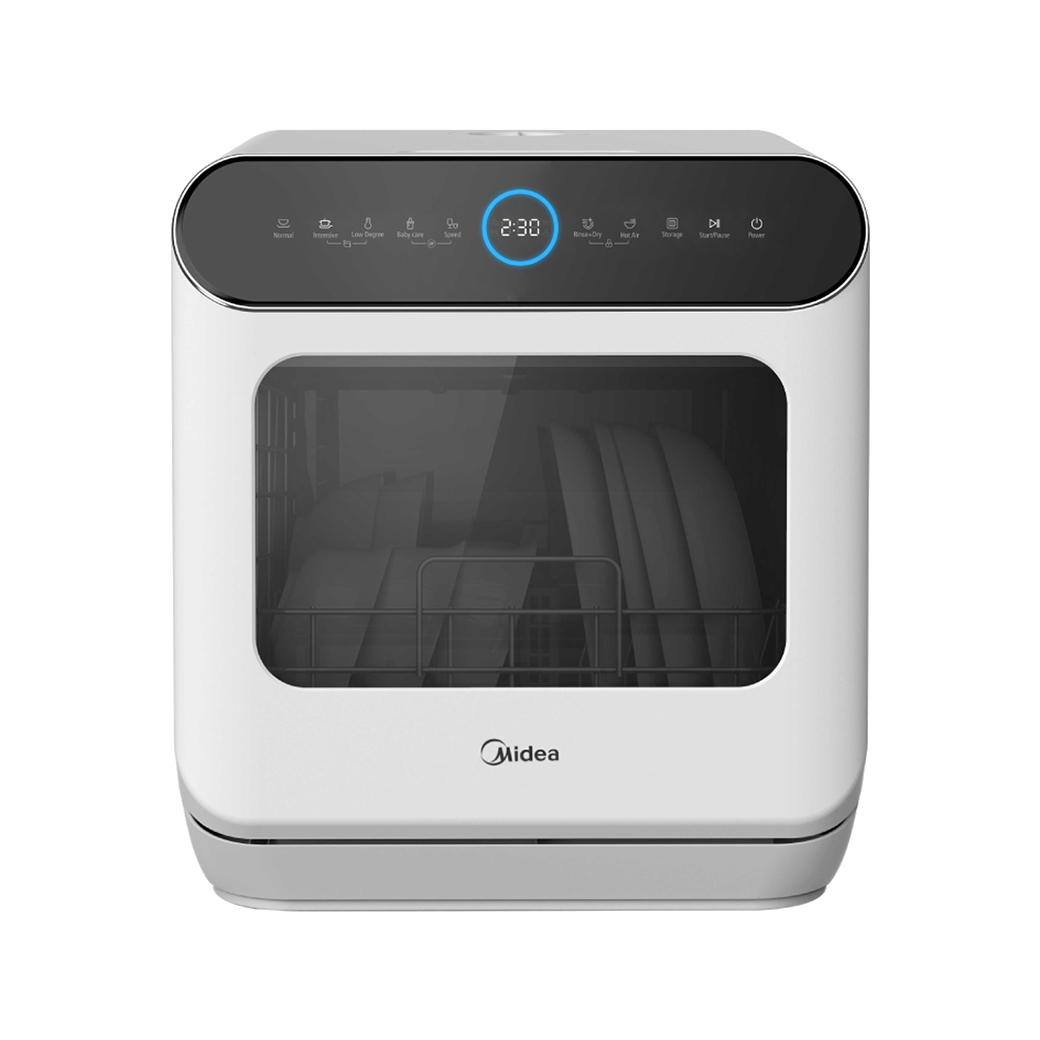
The Midea MDWS-2703 dish washer is a compact countertop dishwasher designed for small kitchens, apartments, offices, and households that need a space-saving cleaning solution. With its mini footprint, multiple wash programs, and support for both manual tank filling and direct water connection, it offers a practical alternative to full-size dishwashers. The Midea MDWS-2703 Dish Washer is especially appealing for users who want hygienic cleaning, easy operation, and flexible installation without major plumbing work.
Its main selling points include a 6L water tank design, up to 3 place settings depending on the standard used, a high-temperature hygiene wash, and a convenient auto-open drying function. The machine is built for everyday dish loads such as plates, bowls, cups, cutlery, and smaller cookware. It is a strong fit for singles, couples, small families, and shared living spaces where kitchen space is limited.
In terms of pricing, the Midea MDWS-2703 Dish Washer typically falls in the budget-to-mid-range countertop dishwasher category, with common retail availability generally around SGD 300 to SGD 400 depending on promotions, seller bundles, and installation offers. It is widely available through major appliance retailers and online marketplaces in Singapore and other selected markets. For buyers comparing compact dishwashers, this model stands out for its practical balance of size, efficiency, and ease of use.
Specifications for Midea MDWS-2703 Dish Washer
- Model: Midea MDWS-2703
- Type: Countertop mini dishwasher
- Capacity: 2 place settings under one standard, up to 3 place settings under another standard
- Dimensions: 420 mm (W) x 435 mm (D) x 465 mm (H)
- Water supply: Manual tank fill or direct inlet connection
- Water pressure range: 0.04 MPa to 1.0 MPa
- Power supply: 220–240V AC, 50Hz
- Socket rating: 10A, 250V AC
- Programs: ECO, Hygiene 72°, Intensive, Glass, 58-minute wash, Rapid, Self-cleaning
- Control type: Digital display with button controls
- Useful functions: Child lock, delay start, auto open drying
- Noise level: Commonly listed at about 58 dB
- ECO cycle performance: Approximately 0.43 kWh energy use and 6L water consumption
Compared with similar countertop dishwashers, the Midea MDWS-2703 Dish Washer offers a strong feature set for its size, particularly the hygiene wash and auto-open drying. It is well positioned against other compact models that usually provide fewer wash modes or less flexible filling options.
Detailed Description of the Midea MDWS-2703 Dish Washer
The Midea MDWS-2703 Dish Washer is designed to clean daily dishes through a spray-and-rinse wash system inside a sealed wash chamber. Users can load plates, cups, bowls, utensils, and other small kitchen items, then select a program based on soil level and wash priority. The Hygiene 72° cycle is intended for high-temperature cleaning, while Eco mode focuses on lower energy and water use. The 58-minute wash and Rapid cycle are useful for busy households that need faster turnaround.
The compact body makes it suitable for countertops, pantry corners, and smaller rental kitchens. Its build is aimed at practical durability, with a clean white finish and a layout that prioritizes simple operation. The digital control panel makes it easy to choose a cycle, set a delay start, and activate child lock when needed. The auto-open function improves drying by letting steam escape after the wash ends, which helps reduce water spots and lingering moisture.
In real-world use, this model works best for light to moderate daily dish loads rather than large family dinners. It is especially convenient for users who want machine washing without permanent installation complexity. Overall, the Midea MDWS-2703 Dish Washer delivers a user-friendly experience for homes that need compact cleaning performance with minimal setup.
Setup Guide for Midea MDWS-2703 Dish Washer
- Place the dishwasher on a flat, stable countertop near a power outlet and, if using direct supply, near a water source.
- Check that the outlet matches the required 220–240V AC, 50Hz power supply and supports a 10A plug rating.
- Leave enough clearance around the unit for ventilation, door opening, and drainage movement.
- Choose your water method: fill the tank manually or connect the inlet hose to a tap if your installation supports it.
- Load dishes so spray arms can rotate freely and avoid blocking water jets with oversized items.
- Add dishwasher detergent only; do not use regular dish soap because it can create excess foam.
- Select the desired wash program on the digital panel, then set delay start if needed.
- Press start and confirm that the unit is drawing water correctly before leaving it unattended.
For safety, keep the unit away from heat sources and do not operate it with damaged cords or loose hose connections. If the machine does not start, check the door closure, power supply, water level, and inlet connection. If dishes remain wet, use the auto-open function and allow extra drying time. Avoid overloading the baskets, as this can reduce cleaning quality and water circulation.
Troubleshooting Midea MDWS-2703 Dish Washer Problems
- Dishwasher will not start: Confirm the door is fully closed, the power plug is secure, and the timer delay is not active.
- No water entering the machine: Check the tank level or tap connection, and make sure the inlet hose is not bent or blocked.
- Dishes are still dirty: Reduce overloading, use a stronger program such as Intensive, and scrape off large food residue before loading.
- Excess foam or residue: Use proper dishwasher detergent and avoid hand-washing liquid.
- Drying is weak: Use the auto-open feature, unload with care, and allow the cycle to complete fully.
Some countertop dishwashers display simple fault indicators rather than detailed error codes. If an error code appears, refer to the onboard guide or user manual for the exact meaning, since codes can vary by region and revision. Preventive care includes cleaning the filter regularly, checking spray arms for blockages, and descaling when needed. For warranty or service support, buyers should contact the retailer or Midea’s local customer service channel, using the invoice and model number for faster help.
Pros and Cons of the Midea MDWS-2703 Dish Washer
Pros
- Compact size fits small kitchens, apartments, and office pantries.
- Flexible water supply options support both manual filling and direct connection.
- Multiple programs make it easy to match wash time and soil level.
- Hygiene 72° cycle is useful for users who want higher-temperature cleaning.
- Auto-open drying improves convenience and helps reduce moisture inside the cavity.
- Good value for buyers seeking a countertop dishwasher instead of a full-size unit.
Cons
- Capacity is limited compared with standard built-in dishwashers.
- Larger pots, pans, and oversized plates may not fit comfortably.
- Drying performance can depend on load arrangement and room humidity.
- Not ideal for large families or heavy entertaining.
- May require frequent loading cycles in busy households.
For value for money, the Midea MDWS-2703 Dish Washer compares well with other countertop dishwashers in its class because it combines compact design, practical programs, and easy installation. It is a better fit than many ultra-basic models, but buyers who need higher capacity should consider larger alternatives.
Customer Reviews of the Midea MDWS-2703 Dish Washer
Typical customer feedback highlights an average rating around 4 out of 5 stars, with users praising the compact footprint, easy setup, and effective cleaning for everyday dishes. Many buyers describe it as a strong solution for small homes and rental apartments.
Common praise includes the convenient auto-open drying, the 72° hygiene mode, and the ability to use either manual water filling or a hose connection. A frequent complaint is the limited space, especially for taller items and larger cookware. Some users also mention that the drying result varies depending on how full the machine is loaded.
“Perfect for my studio kitchen. It saves time every day.”
“Cleans well, but you need to load it carefully to get the best results.”
For buyers looking for a compact, easy-to-use countertop dishwasher, the Midea MDWS-2703 Dish Washer is a sensible recommendation. It is best suited to users who value convenience, hygiene, and space efficiency over large capacity.
Faqs
How do I set up the midea MDWS-2703 Dish Washer for the first time?
What water pressure and electrical requirements does the midea MDWS-2703 Dish Washer need?
Why is the midea MDWS-2703 Dish Washer not starting when I press the power button?
Why are dishes still dirty after using the midea MDWS-2703 Dish Washer?
What types of detergent work best with the midea MDWS-2703 Dish Washer?
How should I load the midea MDWS-2703 Dish Washer for better cleaning results?
How do I clean and maintain the midea MDWS-2703 Dish Washer regularly?
Why does the midea MDWS-2703 Dish Washer leave water spots or a wet interior after drying?
Tags
More midea manuals
- Midea Mechanical Control Series Chest Freezer MRC05M5CWW User Manual
- Midea Mounted Freezer Series MRT18D2BST Refrigerator User Manual
- Midea MF200D100WB Front Loading Washer Dryer User Manual
- Midea Single Door Series Upright Freezer MDRU385MTE46
- Midea MAD35S1QWT-A Dehumidifier User Manual
- How to Connect your Device: Midea MSmartHome Air Conditioner and Dehumidifier User Manual
Leave a Comment