
Miele HM-16-80-D Ironer User Manual
Content
Miele HM-16-80-D Ironer Review and Product Manual
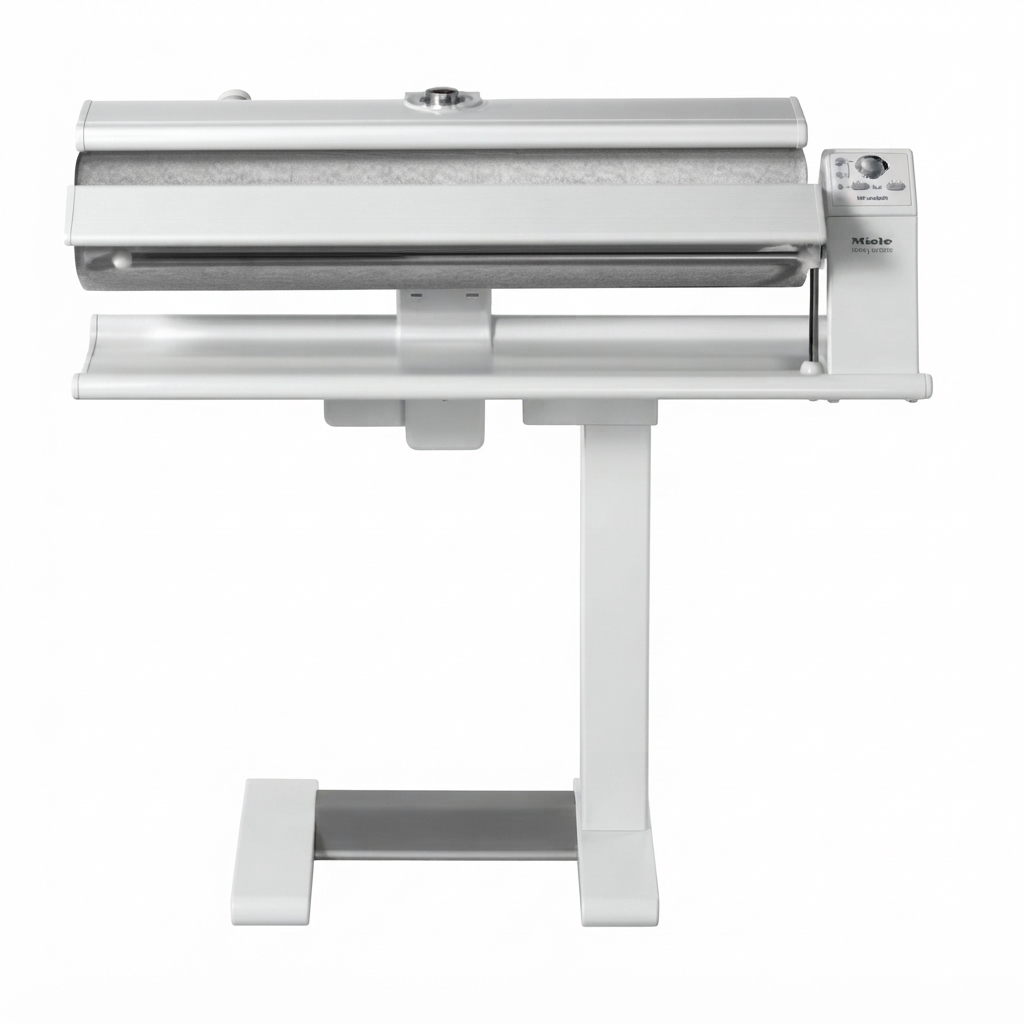
The Miele HM-16-80-D Commercial Ironer is a compact, electrically heated rotary ironer designed for professional laundry operations that need reliable finishing performance in a space-saving footprint. It is well suited to small hotels, guesthouses, care facilities, salons, laundries, and other businesses that handle frequent flatwork such as sheets, pillowcases, table linens, and uniforms. With a working width of about 830 mm and a roller diameter of 160 mm, it delivers efficient, consistent results while remaining easy to integrate into tight utility rooms or back-of-house laundry spaces.
Key selling points include steam-assisted ironing, variable roller speed, a folding design for easier storage, and strong build quality associated with Miele Professional equipment. The unit is engineered for comfortable operation and dependable output, especially where consistent finishing quality matters more than high-volume industrial throughput. For organizations comparing commercial rotary ironers, the Miele HM-16-80-D Commercial Ironer stands out for its balance of compact dimensions, practical performance, and user-friendly operation.
Estimated pricing typically falls in the mid-range premium category, often around $2,700 to $4,500 depending on seller, region, configuration, and whether installation or shipping is included. Availability is generally best through commercial appliance dealers, Miele Professional channels, and specialist laundry equipment retailers. For buyers searching for a professional rotary ironer with steam function, the Miele HM-16-80-D Commercial Ironer is a strong option for businesses that want reliable results without moving into large industrial machinery.
Detailed Specifications for the Miele HM-16-80-D Commercial Ironer
- Type: electrically heated rotary ironer with steam function
- Working width: approximately 830 mm
- Roller diameter: 160 mm
- Ironing performance: up to 13 kg/h at 20% residual moisture
- Electrical connection: 208–240 V, 50–60 Hz
- Heater rating: approximately 2.8–3.7 kW
- Boiler heater rating: approximately 0.85 kW
- Total connected load: about 2.9–3.8 kW
- Fuse rating: 20 A
- Net weight: about 39 kg
- Dimensions: about 985 mm wide, 959 mm high, and 380 mm deep
- Folded footprint: compact enough for space-conscious laundry rooms
- Maximum floor load: 382 N/m²
- Steam support: yes, for smoother finishing on linens and garments
- Speed control: variable roller speed for different fabric types
Compared with larger commercial rotary ironers, the Miele HM-16-80-D Commercial Ironer is more compact and easier to place in smaller facilities, though it is not intended to match the throughput of heavy-duty industrial models. Compared with basic entry-level ironers, it offers stronger performance, better control, and more professional finishing quality.
Troubleshooting the Miele HM-16-80-D Commercial Ironer
If the ironer does not power on, check the wall outlet, plug, fuse rating, and electrical connection. This model requires a properly installed grounded socket and the correct voltage range, so power issues are often caused by supply faults rather than the machine itself. If heating is weak or inconsistent, verify that the machine is not overloaded, that the selected temperature is appropriate, and that steam or water supply levels are sufficient.
Common problems include wrinkled output, uneven pressing, slow feeding, or unusual noise. These are often caused by incorrect roller speed, improper linen moisture level, worn padding, or fabric loading errors. Regularly clean the roller, inspect the cover, and follow the recommended operating sequence to prevent most performance issues. If an error code appears on the control panel, consult the product manual for the exact code meaning, then restart the machine only after confirming that ventilation, power, and water conditions are normal.
Preventive care should include routine cleaning, periodic inspection of the ironing cover, and checking the electrical cord and plug for wear. For warranty or support, contact an authorized Miele Professional dealer or Miele customer service in your region. Keep the model number, serial number, and purchase receipt ready when requesting help.
Pros and Cons of the Miele HM-16-80-D Commercial Ironer
Pros
- Compact design that fits smaller commercial laundry areas
- Steam-assisted operation improves finish quality on flat linens
- Variable roller speed supports different fabric types and skill levels
- Professional build quality suitable for daily business use
- Good balance of performance and footprint for medium-light commercial demand
- Folding design makes storage and placement easier than many larger rotary ironers
Cons
- Not designed for very high-volume industrial laundry throughput
- Premium pricing may be high for small businesses with limited budgets
- Requires correct electrical setup and adequate installation planning
- May be overkill for occasional home use or very low-volume settings
In value-for-money terms, the Miele HM-16-80-D Commercial Ironer is strongest for businesses that need repeatable professional results and long-term durability. Compared with cheaper alternatives, it usually offers better finish quality and control. Compared with larger commercial ironers, it trades raw capacity for easier placement, simpler operation, and lower space requirements.
Customer Reviews and User Feedback on the Miele HM-16-80-D Commercial Ironer
Customer feedback for the Miele HM-16-80-D Commercial Ironer is generally positive, with many users rating it around 4.5 out of 5 stars for build quality, ease of use, and ironing consistency. Buyers frequently praise the smooth feeding action, compact footprint, and the professional appearance of finished linens. One common testimonial theme is that the machine “saves time while delivering cleaner, flatter results than hand ironing.”
Common complaints usually focus on the price, the need for proper installation, and the learning curve for first-time rotary ironer users. Some reviewers also note that it is best suited to linens and flat textiles rather than complex garments. Overall, it is recommended for hotels, care homes, and laundry rooms that need dependable daily performance. Users looking for a commercial rotary ironer with steam function and a smaller footprint often consider it a smart purchase.
Frequently Asked Questions About the Miele HM-16-80-D Commercial Ironer
What is the Miele HM-16-80-D Commercial Ironer used for?
It is used for pressing and finishing flat laundry items such as sheets, pillowcases, table linens, and other machine-ironed textiles in professional environments.
Is the Miele HM-16-80-D Commercial Ironer suitable for small businesses?
Yes. Its compact design and commercial features make it a strong fit for small hotels, guesthouses, salons, and care facilities.
Does the Miele HM-16-80-D Commercial Ironer use steam?
Yes. The steam function helps improve finishing quality and reduces wrinkles on suitable fabrics.
Is it easy to store?
Yes. The folding design helps reduce the footprint when the unit is not in active use.
Faqs
How do I set up the Miele HM-16-80-D Commercial Ironer for first-time use?
What power and installation requirements does the Miele HM-16-80-D Commercial Ironer need?
Why is my Miele HM-16-80-D Commercial Ironer not heating up properly?
How does the steam function on the Miele HM-16-80-D Commercial Ironer improve ironing results?
Can the Miele HM-16-80-D Commercial Ironer be used for seated operation?
What fabrics and laundry items work best with the Miele HM-16-80-D Commercial Ironer?
How do I maintain the Miele HM-16-80-D Commercial Ironer for long-term performance?
What should I do if the Miele HM-16-80-D Commercial Ironer produces uneven results or wrinkles?
Tags
More miele manuals
Leave a Comment