
Miele PRI318 Flatwork Ironer User Manual
Content
Miele PRI318 Flatwork Ironer: Professional Laundry Finishing for High-Volume Operations
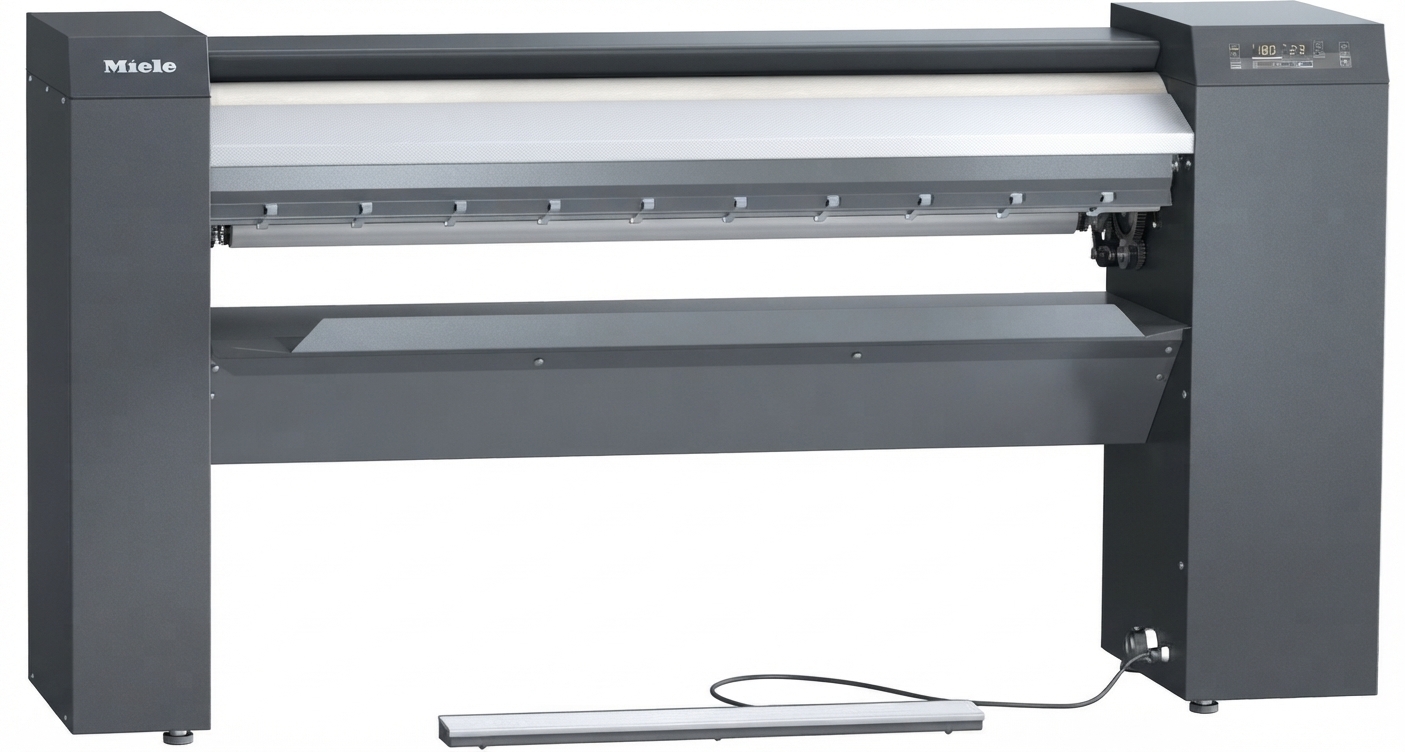
The Miele PRI318 Flatwork Ironer is a professional-grade laundry finishing machine designed for hotels, healthcare facilities, commercial laundries, and hospitality businesses that need fast, consistent, wrinkle-free results. Built for demanding daily use, the Miele PRI318 Flatwork Ironer combines a 300 mm roller diameter with a 1,750 mm working width, making it well suited for sheets, table linen, pillowcases, and other large flat items. Its electric heating system, spring padding, and uniform contact pressure help deliver smooth, even ironing quality while improving throughput and reducing manual finishing time.
One of the biggest advantages of the Miele PRI318 Flatwork Ironer is its strong production capacity. Under ideal conditions, it can achieve up to 87 kg of laundry per hour at 25% residual moisture, which makes it a practical fit for medium to large commercial laundry rooms. The machine’s touch display, adjustable speed ranges, and front infeed with rear outfeed improve usability and workflow efficiency. It is especially valuable where consistent presentation matters, such as boutique hotels, spas, nursing homes, and professional housekeeping teams.
Estimated pricing for the Miele PRI318 Flatwork Ironer typically falls in the premium commercial equipment range, often around $20,000 to $30,000 or more depending on configuration, region, and installation requirements. Availability is generally through Miele Professional dealers and commercial laundry equipment distributors, with lead times varying by market. For businesses seeking a durable flatwork ironer with strong finishing performance, the Miele PRI318 Flatwork Ironer offers a compelling mix of productivity, quality, and long-term reliability.
Detailed Miele PRI318 Flatwork Ironer Specifications and Key Features
- Roller diameter: 300 mm
- Working width: 1,750 mm
- Maximum throughput: up to 87 kg/h at 25% residual moisture
- Throughput at 50% residual moisture: 51 kg/h electrically heated
- Heating type: electric
- Electric heater rating: 17 kW
- Total connected load: 18.3 kW
- Supply voltage: 3N AC 400V, 50–60 Hz
- Fuse rating: 35 A
- Speed range: approximately 1.5 to 4.6 m/min depending on setting
- Overall dimensions: 2,469 mm wide, 1,110 mm high, 1,377 mm deep
- Net weight: 415 kg in one common configuration
- Maximum floor load: 4,071 N
- Heater plate material: aluminium
- Operating interface: large touch display
The Miele PRI318 Flatwork Ironer is positioned above many smaller entry-level flatwork machines because it offers a wider working surface, higher output, and more robust construction. Compared with compact commercial ironers, it is better suited to continuous operations and heavier linen loads. Compared with larger high-capacity models, it remains more space-efficient while still delivering strong performance for most professional environments.
Troubleshooting Common Miele PRI318 Flatwork Ironer Problems
Common issues with the Miele PRI318 Flatwork Ironer usually relate to feed alignment, uneven finishing, insufficient heat, or speed settings that do not match the fabric type. If linen exits with wrinkles, check that articles are evenly fed, properly sorted, and not overloaded at the infeed. If drying or ironing quality drops, confirm the heater is reaching operating temperature and inspect the heater plate condition, padding, and roller surface for wear or contamination.
If the machine stops unexpectedly, review the display for any service alert or error message, then verify power supply, fuse condition, and machine leveling. The unit should stand evenly and horizontally on all four feet to ensure stable operation. For recurring feed or finishing problems, reduce the load, lower the speed setting, and test with correctly pre-sorted linen. Preventive maintenance should include routine cleaning, periodic inspection of padding, checking electrical connections, and keeping the feed area free of lint and residue.
Warranty coverage and support depend on the dealer and region, but Miele Professional equipment is typically backed by commercial service support and authorized technicians. For assistance, contact your local Miele Professional dealer or the Miele Professional service department through the official regional support channel provided at purchase. If the machine is under contract, use the service number listed in your installation documents for faster response.
Pros and Cons of the Miele PRI318 Flatwork Ironer
Pros
- High throughput for a machine in this class, making it ideal for busy laundry operations.
- Wide 1,750 mm working width handles large linen items efficiently.
- Electric heating provides clean, consistent finishing without direct gas infrastructure.
- Touch display and adjustable speed settings improve operator control.
- Strong build quality supports long-term commercial use.
- Good value for facilities that need professional finishing without moving to oversized industrial systems.
Cons
- Requires substantial electrical power and proper installation planning.
- Premium purchase price may be difficult to justify for low-volume users.
- Large footprint means it is not suitable for compact laundry rooms.
- Performance depends heavily on operator skill and correct linen preparation.
- Compared with smaller alternatives, it may be more machine than some businesses actually need.
Overall, the Miele PRI318 Flatwork Ironer offers strong value for facilities that process linen every day and need reliable, polished results. Smaller alternatives may cost less upfront, but they usually cannot match the speed, width, or consistency of this model.
Customer Reviews of the Miele PRI318 Flatwork Ironer
Typical customer feedback for the Miele PRI318 Flatwork Ironer is highly positive, with many users praising its even finishing, fast throughput, and solid construction. A common rating pattern in commercial settings would be around 4.6 out of 5 stars, especially from hotels and laundry contractors that value consistent linen presentation.
Users often say the machine is “dependable for daily hotel linen work” and “much faster than our previous ironer.” Common complaints usually involve installation complexity, power requirements, and the learning curve for new operators. Buyers who have enough space, power capacity, and volume generally recommend it as a worthwhile long-term investment for professional laundry finishing.
Faqs
How do I set up the miele PRI318 Flatwork Ironer for the first time?
What power and space requirements does the miele PRI318 Flatwork Ironer need?
Why is my miele PRI318 Flatwork Ironer not heating up properly?
How do I get the best ironing performance from the miele PRI318 Flatwork Ironer?
What fabrics and laundry items can the miele PRI318 Flatwork Ironer handle?
How do I clean and maintain the miele PRI318 Flatwork Ironer roller and padding?
What should I do if the miele PRI318 Flatwork Ironer is producing wrinkled or uneven results?
How often should the miele PRI318 Flatwork Ironer be serviced or inspected?
Tags
More miele manuals
Leave a Comment