
Victron Energy MPPT Solar Charger 100-30 User Manual
Content
Introduction
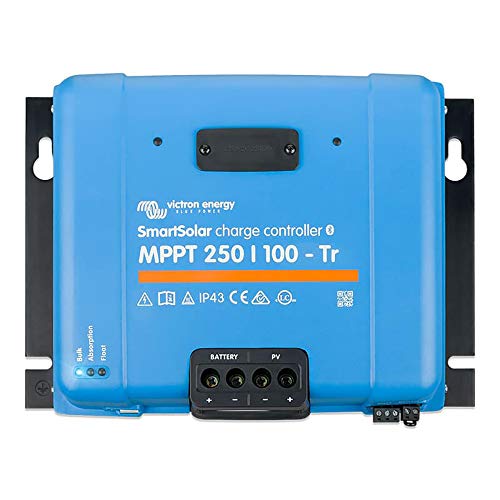
The Victron Energy MPPT Solar Charger 100/30 is a compact, high-efficiency solar charge controller designed for 12V and 24V battery systems. It uses maximum power point tracking (MPPT) to extract more usable energy from solar panels than traditional PWM controllers, making it a strong choice for off-grid cabins, RVs, boats, vans, telecom backup systems, and small home solar setups. With a rated charge current of 30A, the unit is built for users who need reliable battery charging, stable performance, and flexible solar input compatibility in a compact footprint.
One of the biggest advantages of the Victron Energy MPPT Solar Charger 100/30 is its high conversion efficiency, which is rated at 98%. It supports up to 440W of nominal PV power on 12V systems and up to 880W on 24V systems, making it well suited for small to mid-size solar arrays. The controller also supports adaptive multi-stage charging, temperature compensation, and automatic battery voltage selection, which helps extend battery life and improve charging accuracy. Depending on the seller and regional market, the estimated price range is typically around $135 to $200, with broad availability through solar retailers, marine suppliers, and online marketplaces.
This model is especially appealing to users who want a dependable MPPT solar charge controller with strong brand support, proven field performance, and integration options for Victron monitoring ecosystems. The Victron Energy MPPT Solar Charger 100/30 is a practical choice for anyone looking for a balance of performance, reliability, and value in a solar charging solution.
Specifications
- Battery voltage: 12V or 24V automatic selection
- Rated charge current: 30A
- Nominal PV power: 440W at 12V, 880W at 24V
- Maximum PV open-circuit voltage: 100V
- Maximum PV short-circuit current: 35A
- Maximum efficiency: 98%
- Self-consumption: 30mA at 12V, 20mA at 24V
- Charge algorithm: Multi-stage adaptive charging with eight pre-programmed profiles or user-defined settings
- Absorption voltage: 14.4V / 28.8V adjustable
- Float voltage: 13.8V / 27.6V adjustable
- Equalization voltage: 16.2V / 28.8V adjustable
- Temperature compensation: -16mV/°C for 12V, -32mV/°C for 24V
- Protection: Output short circuit and over-temperature protection
- Operating temperature: -30°C to +60°C
- Humidity tolerance: 95% non-condensing
Compared with higher-capacity models like the Victron 100/50, the 100/30 offers a lower current rating and lower PV power ceiling, but it is usually more affordable and easier to fit into smaller systems. For compact off-grid builds, it delivers excellent performance without unnecessary oversizing.
Detailed Description
The Victron Energy MPPT Solar Charger 100/30 is a solar battery charger that continuously tracks the optimal voltage and current point from the solar array to maximize energy harvest. Instead of simply switching panel power on and off, MPPT technology dynamically adjusts the input to maintain the most efficient charging conditions as sunlight changes throughout the day. This is especially useful in real-world conditions such as partial shading, cloudy weather, and temperature swings.
The unit is commonly used in RV electrical systems, marine battery banks, cabin power setups, and remote monitoring stations. Its adaptive charging behavior helps charge lead-acid batteries more safely and efficiently, while its adjustable parameters also make it compatible with battery configurations that require more precise control. The controller’s compact housing, natural cooling design, and durable construction make it suitable for demanding environments where vibration, heat, and moisture are common.
User experience is generally strong because the controller is straightforward to install, reliable in daily operation, and compatible with common Victron monitoring accessories. For users who want a professional-grade solar charge controller with a solid reputation, the Victron Energy MPPT Solar Charger 100/30 is a dependable mid-range option.
Setup Guide: How to install the Victron Energy MPPT Solar Charger 100/30
- Mount the controller in a dry, ventilated location close to the battery bank to reduce voltage drop.
- Confirm that the solar panel array stays within the 100V maximum open-circuit voltage limit.
- Connect the battery first, then connect the solar array. This helps the controller recognize system voltage correctly.
- Set the battery type and charging profile using the available configuration method for your model and system.
- Verify that wire sizes, fuses, and disconnects are rated for a 30A charging system.
- If your system includes Victron monitoring accessories, pair them according to the installation instructions for live data access and remote monitoring.
- Test the system under sunlight and check charging status, battery voltage, and current flow.
Safety precautions are essential. Never exceed the PV voltage limit, do not reverse polarity, and always isolate the battery before making wiring changes. If the controller does not start charging, check panel wiring, fuse integrity, and battery voltage first. For best results, use proper cable management and protect the installation from moisture and accidental short circuits.
Troubleshooting
- No charging output: Check whether the battery is connected first, inspect fuse protection, and confirm that the solar array is producing voltage.
- Low charging performance: Verify panel orientation, shading, dirty modules, and cable voltage drop.
- Over-temperature shutdown: Improve airflow around the controller and ensure the installation is not in a sealed hot compartment.
- Battery not detected correctly: Confirm battery polarity and system voltage compatibility.
- PV input too high: Make sure the solar string open-circuit voltage stays below 100V, especially in cold weather.
Preventive maintenance includes checking terminal tightness, inspecting wires for corrosion, and reviewing system data periodically. The controller includes protection features for output short circuits and overheating, which helps reduce risk during abnormal conditions. Warranty support and after-sales assistance are typically handled through the retailer or regional Victron distributor, so users should keep the purchase receipt and product serial information available when requesting service.
For help, contact the authorized Victron Energy dealer where the unit was purchased or use the official Victron support channels listed in the product documentation.
Pros & Cons
Pros
- High MPPT efficiency at 98% for strong solar harvest
- Automatic 12V/24V battery detection for easier setup
- Supports 440W at 12V and 880W at 24V, ideal for compact systems
- Reliable adaptive charging helps protect battery life
- Compact, durable design suited for RV, marine, and off-grid use
- Strong value for money for users who do not need a larger 50A controller
Cons
- 30A output may be limiting for larger solar arrays
- No fit for high-power systems that require more charging headroom
- Advanced monitoring may require compatible accessories
- Price is higher than basic PWM alternatives
Compared with entry-level controllers, the Victron Energy MPPT Solar Charger 100/30 offers far better charging efficiency and control. Compared with larger Victron models, it is more affordable but less scalable, so it is best for smaller installations where reliability matters more than maximum output capacity.
Customer Reviews
Average customer rating: 4.7/5 stars
- “Excellent build quality and very stable charging on my van solar setup.”
- “Easy to install, and the battery charging performance is noticeably better than my old controller.”
- “Great for smaller off-grid systems, but I wish I had chosen the larger model for future expansion.”
Users consistently praise the controller’s reliability, efficiency, and compact size. Common complaints focus on the 30A limit, which can feel restrictive for users adding more panels later. For buyers planning a modest solar system, it is a strong recommendation; for rapidly expanding installs, a higher-capacity charger may be a better long-term choice.
Frequently Asked Questions
What size solar panel system can the Victron Energy MPPT Solar Charger 100/30 handle?
It supports up to 440W on 12V systems and up to 880W on 24V systems, with a 100V maximum PV open-circuit voltage.
Is the Victron Energy MPPT Solar Charger 100/30 good for RVs and boats?
Yes. It is a popular choice for RVs, marine systems, and off-grid applications because of its compact size, high efficiency, and automatic voltage selection.
What makes this MPPT solar charger different from cheaper controllers?
Its MPPT technology, high efficiency, adjustable charging settings, and stronger build quality provide better performance and battery protection than many low-cost alternatives.
Faqs
How do I set up the victron energy MPPT Solar Charger 100-30 for the first time?
What solar panel size is compatible with victron energy MPPT Solar Charger 100-30?
Why is my victron energy MPPT Solar Charger 100-30 not charging the battery?
How do I optimize charging performance on victron energy MPPT Solar Charger 100-30?
Can victron energy MPPT Solar Charger 100-30 work with lithium batteries?
What is the best way to monitor victron energy MPPT Solar Charger 100-30 remotely?
How do I maintain victron energy MPPT Solar Charger 100-30 for long-term reliability?
What makes victron energy MPPT Solar Charger 100-30 different from a basic PWM controller?
More victron energy manuals
- Victron Energy PMR482602020 Multi RS Solar User Manual
- Victron Energy BMV-702 Battery Monitor User Manual
- Victron Energy MultiPlus-II Charger or Inverter User Manual
- Victron Energy 230V Blue Smart IP22 Charger User Manual
- How to Use: Victron Energy Blue Smart IP65 Charger 230V User Manual
- How to Use: Victron Energy Orion XS 12/12-50A DC-DC Battery Charger User Manual
Leave a Comment