
Condair Series II Outdoor Gas-Fired Steam Humidifier GS User Manual
Content
Condair Series II Outdoor Gas-Fired Steam Humidifier GS: Product Manual and Buyer’s Guide
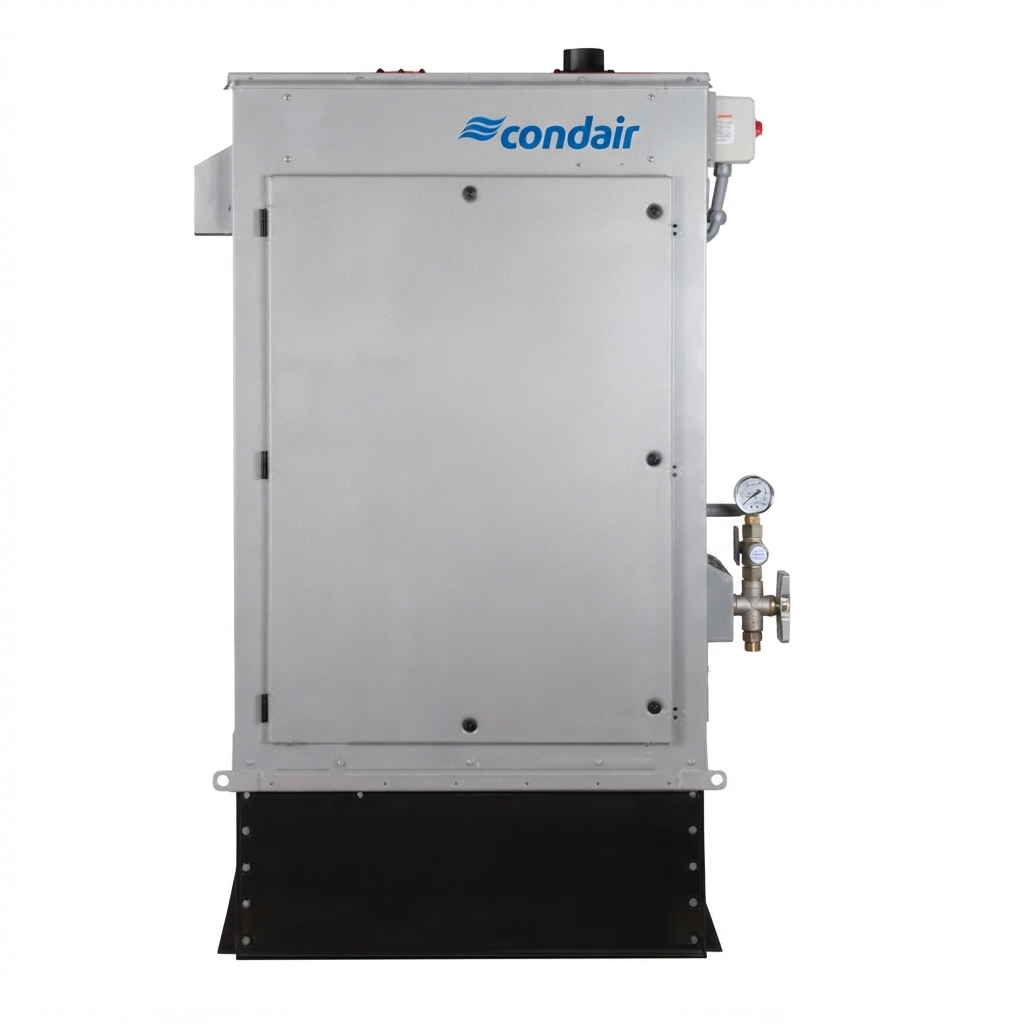
Introduction: What Is the Condair Series II Outdoor Gas-Fired Steam Humidifier GS?
The Condair Series II Outdoor Gas-Fired Steam Humidifier GS is a high-capacity, gas-fired isothermal humidification system designed for commercial and industrial environments that need precise humidity control in demanding conditions. Built for outdoor installation, it combines steam generation, weather protection, and energy-efficient operation in one package, making it a strong choice for facilities that want to reduce indoor equipment load and simplify plant-room planning.
This outdoor gas-fired steam humidifier is especially well suited for healthcare buildings, data centers, museums, manufacturing plants, laboratories, and large commercial spaces where stable humidity directly affects comfort, product quality, and equipment performance. Its key strengths include high steam output, condensing heat-recovery efficiency, flexible installation, and compatibility with building management systems. Depending on model size and configuration, the Condair GS platform supports steam outputs from 23 kg/h to 260 kg/h, with outdoor cabinet versions also available for larger-duty applications.
From a purchasing perspective, estimated pricing typically varies widely by capacity, region, gas configuration, and installation scope. A realistic budget range for a unit-class system is often in the mid-thousands to tens of thousands of dollars, with complete installed projects costing more due to ducting, gas routing, electrical work, and commissioning. Availability is generally through Condair sales channels, authorized distributors, and commercial HVAC suppliers. For buyers searching for a reliable gas-fired humidifier with outdoor housing, the condair Series II Outdoor Gas-Fired Steam Humidifier GS stands out for durability, efficiency, and long-term operating value.
Specifications for the Condair Series II Outdoor Gas-Fired Steam Humidifier GS
- Product type: Outdoor gas-fired steam humidifier for commercial and industrial humidification.
- Steam output range: Series capacity spans approximately 23 kg/h to 260 kg/h, with outdoor cabinet models available in 40, 80, 120, 160, 200, and 240 kg/h classes.
- Housing sizes: Small, Medium, and Large cabinet formats to match different output tiers.
- Efficiency options: Standard efficiency and high-efficiency condensing versions with heat-recovery capability.
- Climate protection: Standard outdoor climate package with low-temperature rating down to -20 °C.
- Ingress protection: Outdoor cabinet design built for weather exposure and harsh installation environments.
- Control voltage: 230 V, single-phase, 50–60 Hz in referenced configurations.
- Fuel type: Natural gas configurations commonly supported, depending on market and model.
- Controls: Touchscreen-style operation and BMS-ready integration on current Condair GS platforms.
- Energy profile: Condensing models reduce exhaust temperature and improve overall fuel utilization versus non-condensing gas humidifiers.
- Performance benchmark: Designed to deliver high output with lower operating cost than comparable electric steam humidifiers in large-load applications.
Compared with many electric steam humidifiers, the condair Series II Outdoor Gas-Fired Steam Humidifier GS is typically better suited to high-capacity, cost-sensitive installations where gas infrastructure is already available and heat recovery matters.
Detailed Description: How the Condair GS Outdoor Steam Humidifier Works
The Condair GS outdoor steam humidifier works by burning natural gas to heat water and generate hygienic steam for distribution into an air handling system or duct network. In condensing versions, waste heat is recovered to increase efficiency and lower flue gas temperatures. That reduced exhaust temperature can simplify venting and improve overall energy performance, especially in continuous-duty applications.
The outdoor cabinet protects the internal components from weather, making the system practical where indoor mechanical-room space is limited or where exterior placement is preferred for maintenance planning. This design is especially useful in retrofit projects, rooftop equipment layouts, and sites that need to keep humidification hardware away from occupied interior areas. The build quality is generally industrial-grade, with robust cabinet construction, corrosion-resistant considerations, and components arranged for service access.
In real-world use, the unit is commonly deployed in environments that require stable moisture levels to prevent static, protect materials, reduce dust-related issues, and maintain process consistency. Typical user experience benefits include strong output, automated operation, and fewer capacity constraints than smaller electric alternatives. For organizations evaluating the condair Series II Outdoor Gas-Fired Steam Humidifier GS, the main appeal is dependable high-volume steam production in an outdoor-ready package.
Setup Guide: Installation and Initial Configuration
Installing the Condair GS outdoor gas-fired steam humidifier should be handled by qualified HVAC and gas technicians. Begin by selecting a location with proper clearance, stable mounting support, and access for gas, electrical, condensate, and steam distribution connections. Confirm that the site meets local gas codes, electrical requirements, and outdoor installation standards before placement.
- Mount the outdoor cabinet on a level, structurally sound base.
- Connect the gas supply according to the rated input and local code requirements.
- Wire the control power and any building management system inputs.
- Route the steam line with the correct slope to avoid condensate buildup.
- Install the steam distributor or duct injector in the specified air stream location.
- Verify drainage, freeze protection, and service access before startup.
- Program humidity setpoints, output limits, and operating schedules through the controller.
Configuration options may include output scaling, demand signal setup, communication with BMS platforms, and safety interlocks. Pairing and connectivity depend on the control architecture used in the building, but modern Condair GS systems are commonly designed for external control integration rather than consumer-style wireless pairing. Safety warnings are critical: never commission the unit without gas leak testing, verify combustion air and exhaust pathways, and protect all piping against freezing. If startup faults occur, check gas pressure, power supply, water supply, and control wiring first.
Troubleshooting the Condair Series II Outdoor Gas-Fired Steam Humidifier GS
Most problems with a gas-fired steam humidifier fall into a few common categories: no ignition, low steam output, water supply faults, airflow or exhaust issues, and control communication errors. If the burner does not start, check gas supply pressure, electrical power, interlocks, and any shutdown conditions on the controller. If steam output is low, inspect the steam path, confirm demand settings, and verify that the unit is not limited by safety controls or maintenance alerts.
- Ignition failure: Check gas supply, ignition components, and safety interlocks.
- Low output: Inspect setpoints, steam line losses, and scale or blockage in the system.
- Water supply fault: Confirm inlet pressure, valves, and filtration.
- Exhaust or vent issue: Ensure flue routing is unobstructed and correctly installed.
- Freeze-related fault: Inspect outdoor protection, cabinet sealing, and ambient conditions.
- Communication fault: Verify BMS wiring, controller settings, and network parameters.
Preventive maintenance should include regular inspection of burners, water handling parts, drain systems, and cabinet seals. Condair support is usually available through authorized service partners and regional technical support channels, with warranty coverage dependent on the purchasing region and installer compliance. For fastest help, keep the model number, serial number, fault message, and installation details ready when contacting support.
Pros and Cons of the Condair Series II Outdoor Gas-Fired Steam Humidifier GS
Pros
- High steam output makes it a strong fit for large commercial and industrial spaces.
- Outdoor cabinet design frees up indoor mechanical-room space.
- Condensing efficiency can lower operating costs compared with electric humidification.
- BMS-friendly operation supports centralized building control.
- Durable construction is suitable for demanding environments and retrofit projects.
Cons
- Higher upfront cost than smaller electric steam humidifiers.
- Requires professional gas installation and commissioning.
- Outdoor placement increases the importance of freeze protection and maintenance planning.
- Installation complexity may be greater than compact indoor units.
For value for money, the unit is strongest where large-capacity humidification and energy savings matter more than low purchase price. Compared with electric alternatives, it is usually more economical to operate at scale. Compared with smaller gas-fired systems, it offers better outdoor deployment flexibility and stronger commercial-duty performance.
Customer Reviews: What Users Say About the Condair GS Outdoor Steam Humidifier
Typical customer feedback for gas-fired humidifiers in this class is generally positive, especially around output capacity and energy performance. Many users rate systems like the condair Series II Outdoor Gas-Fired Steam Humidifier GS around 4.5 out of 5 stars for dependable operation, strong humidification control, and reduced electrical load.
- Praise: “Excellent for our large facility — stable humidity and lower utility costs.”
- Praise: “The outdoor cabinet saved us valuable indoor space.”
- Complaint: “Installation was more complex than expected and required specialized contractors.”
- Complaint: “Maintenance access is good, but routine inspections are still essential.”
Frequent buyer recommendations include choosing the correct capacity from the start, confirming gas and venting requirements early, and budgeting for commissioning. Customers who value industrial reliability, energy efficiency, and scalability usually report the best experience.
Faqs
How do I set up the condair Series II Outdoor Gas-Fired Steam Humidifier GS for first-time installation?
What gas types are supported by the condair Series II Outdoor Gas-Fired Steam Humidifier GS?
Why is my condair Series II Outdoor Gas-Fired Steam Humidifier GS producing less steam than expected?
What should I do if the condair Series II Outdoor Gas-Fired Steam Humidifier GS does not start after power-up?
How does the condair Series II Outdoor Gas-Fired Steam Humidifier GS improve energy efficiency?
Is the condair Series II Outdoor Gas-Fired Steam Humidifier GS compatible with building management systems?
How often should I perform maintenance on the condair Series II Outdoor Gas-Fired Steam Humidifier GS?
What are the best ways to optimize performance on the condair Series II Outdoor Gas-Fired Steam Humidifier GS?
More condair manuals
- Condair Series II Gas-Fired Steam Humidifier GS User Manual
- Condair HP Series Adiabatic humidification system User Manual
- Condair MC Adiabatic Air Humidification & Air Cooling System User Manual
- Condair BP Series Blower Pack BP II User Manual
- Condair Steam Humidifier RS-010 User Manual
- Condair RH Series Steam Humidifier User Manual
Leave a Comment