
Setup: Dyson WashG1 Wet Floor Cleaner User Manual
Content
Dyson WashG1 Wet Floor Cleaner
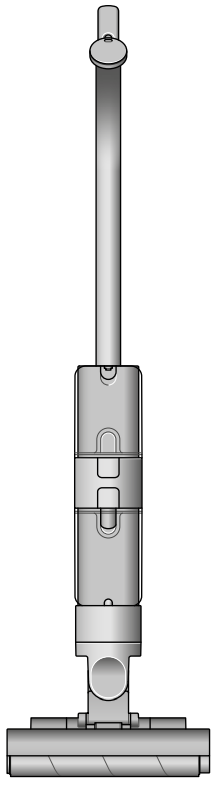
Introduction
The Dyson WashG1 Wet Floor Cleaner represents a breakthrough in wet floor cleaning technology, designed specifically for hard floor surfaces such as tiles, vinyl, laminate, and sealed wood. As Dyson's first dedicated wet floor cleaner, the WashG1 uniquely combines motorized, counter-rotating microfiber rollers with advanced separation technology to remove both wet and dry debris efficiently in a single pass. This innovative design ensures thorough cleaning of dust, hair, low viscosity spillages like syrup, and stubborn stains, including dried food and toothpaste,e without the need for prior vacuuming.
Key benefits include smear-free stain removal, hygienic double rollers that self-clean during operation, and a self-clean cycle that flushes the system after use to maintain readiness for the next cleaning session. Its versatility suits homeowners, pet owners, and busy individuals seeking an all-in-one solution for maintaining spotless hard floors. With up to 35 minutes of run time and a generous 27 oz. The clean water tank capacity, it can cover large areas up to approximately 3,100 square feet on a single charge.
The Dyson WashG1 typically falls within a premium price range, reflecting its advanced features and Dyson’s engineering excellence. It is widely available through Dyson’s official stores and major online retailers. Overall, it appeals to users looking for a high-performance, easy-to-use wet floor cleaner that delivers professional-quality results with minimal effort.
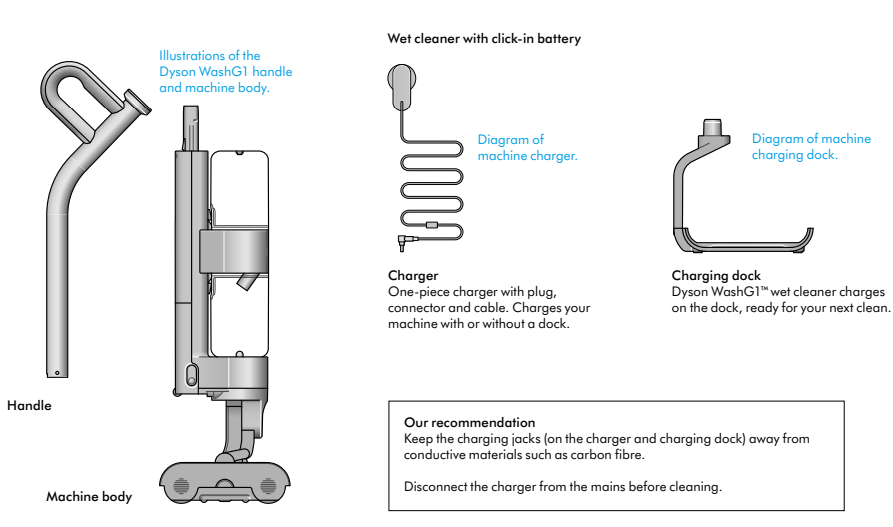
In the box
Your machine is boxed in two parts:
- Machine body.
- Handle.
Simply attach the handle to the main body.
Getting started
Regular maintenance
Self-clean cycle
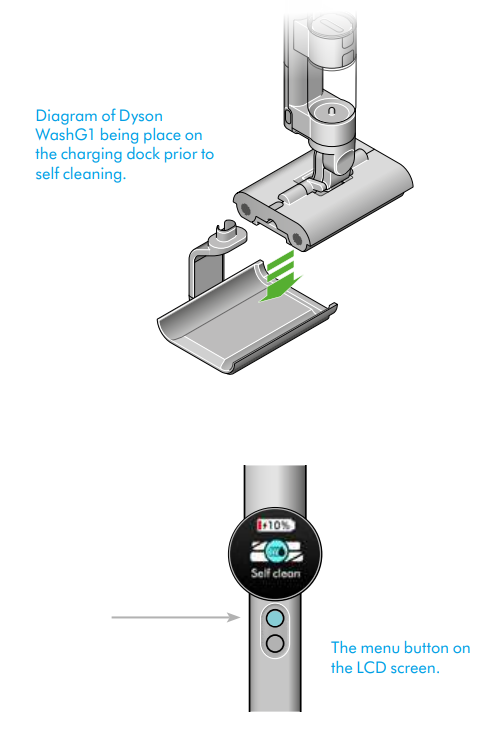
Dyson WashG1™ wet cleaner self-cleans on the dock while charging. Place on the dock, and make sure the charger is connected.
- Using the menu button, scroll to Self clean using the blue button and select start.
- Dyson WashG1™ wet cleaner will now self-clean its entire system, for 140 seconds, leaving it refreshed and ready for your next clean.
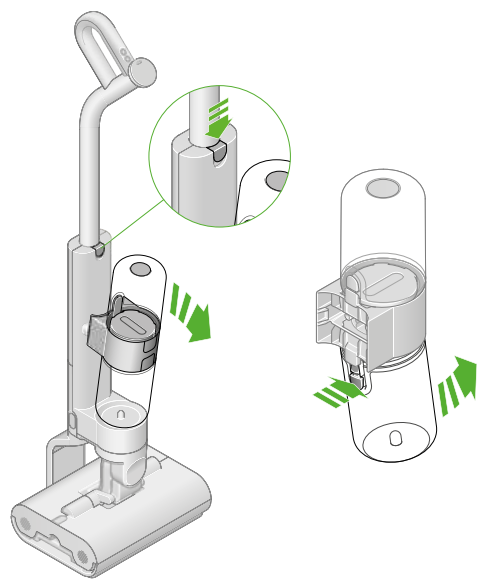
Washing the Dirty water tank
Remove the tank assembly.
Press the release button to remove the tank assembly from the product. Remove the Dirty water tank from the tank collar.
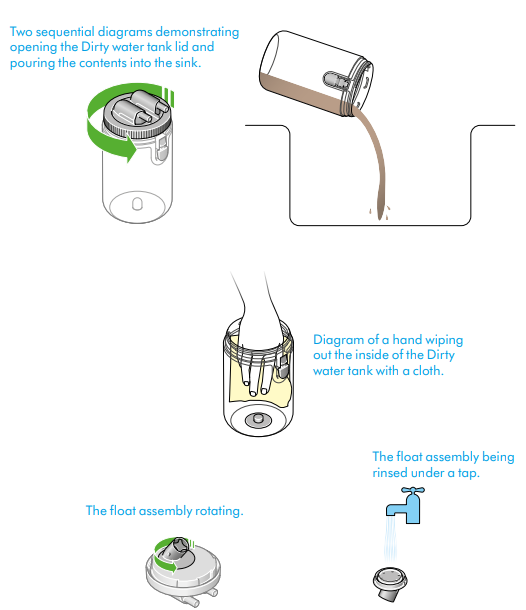
- Open the Dirty water tank.k
Turn the lid anti-clockwise to open the Dirty water tank. Empty the Dirty water into the sink. - Clean the Dirty water ta.nk
Wash the Dirty water tank in a sink, using warm water, detergent, ent and a cloth. - Open the Float Assembly
Rotate and remove the Float Assembly from the Dirty water tank lid. - Clean the Float Assembly
Wash the Float Assembly in a sink, using warm water, detergent, ent and a cloth. Run clean water onto the Lid Assembly to remove debris from the filter. - Soak the filter every six months.
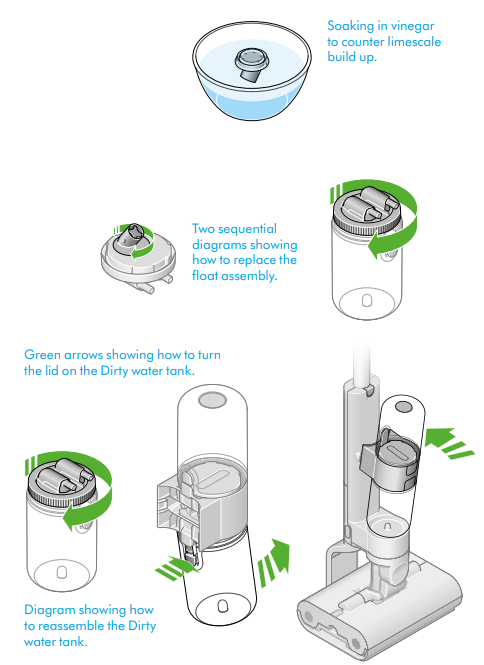
We recommend cleaning the filter inside the Dirty water tank lid, every six months, to remove limescale. To access the filter mesh, open the lid Float Assembly a quarter turn. Soak the mesh in citric acid/vinegar for one hour; this will counter limescale buildup. - Replace the Float Assembly
Attach the Float Assembly to the Dirty water tank lid. - Replace the Dirty water tank
Turn the lid clockwise to close. - Reassemble the Dirty water tank
Reconnect the empty Dirty water tank to the body of the machine.
Washing the Debris tray
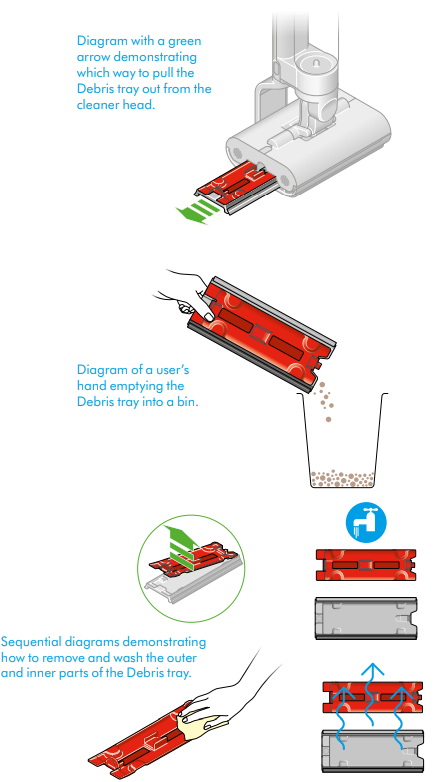
- Remove the Debris tray
Slide the tray from the machine. - Empty the tray
Take the tray to the bin and dispose of the solid debris. Tap the tray on the side of the bin to dislodge any remaining debris. - Remove and wash the tray.
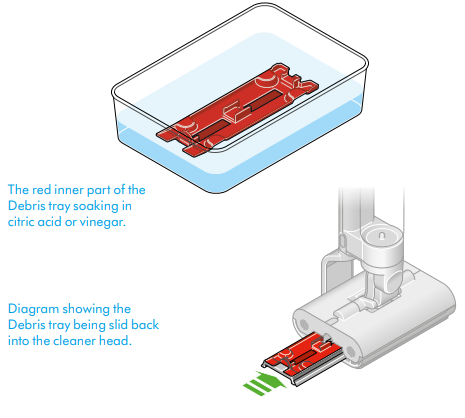
Rinse the tray in a sink. Remove the red filter material and wash with a cloth, in warm water and detergent, to remove any remaining dirt. - Soak the filter every six months.
We recommend cleaning the filter inside the Debris tray every six months, to remove limescale. Soak the mesh in citric acid/vinegar for one hour; this will counter limescale buildup. - Reassemble
Slide the tray back into the machine.
Washing the rollers
Remove the rollers
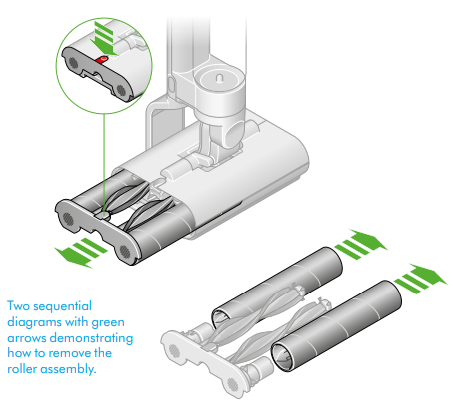
Press the red release catch to slide out the roller assembly – and simply detach the rollers.
Wash the rollers
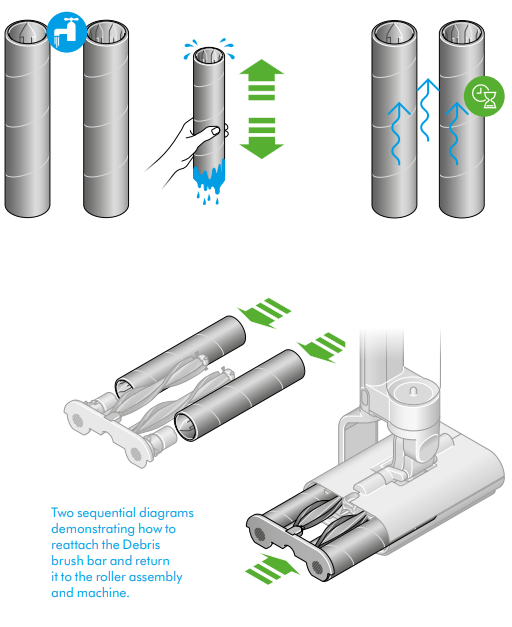
Wash the rollers in a sink, using warm water and detergent. Squeeze rollers to remove excess water and leave to dry. Replace the rollers in the end cap.
Two sequential diagrams demonstrating how to hand-wash the rollers and leave them to dry thoroughly.
Reattach the rollers
Slide the rollers and Debris brush bar into the cleaner head until the end cap clicks.
Washing the Debris brush bars
Remove the Debris brush bars
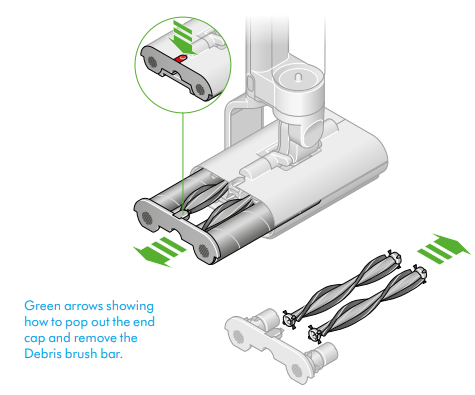
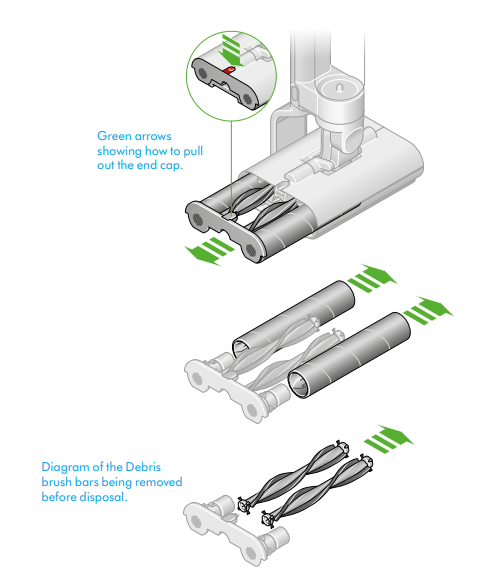
Pop out the end cap.
Remove the Debris brush bar from the end cap.
- Remove debris
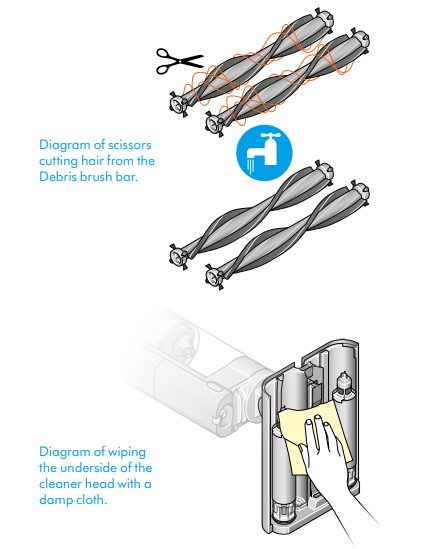
Use scissors to cut any hair wrapped around the Debris brush bar. - Wash the Debris brush bar.
Wash the Debris brush bar in a sink, using a cloth, warm water,r and detergent. - Wipe the underside of the cleaner head with a damp cloth and detergent.
- Reattach the Debris brush bar
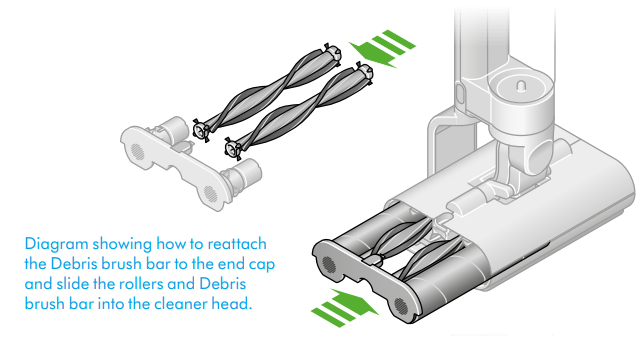
Reattach the Debris brush bar to the end cap.
Slide the rollers and Debris brush bar into the clean head until the end cap clicks.
Washing the Clean water tank
Remove the tank assembly.
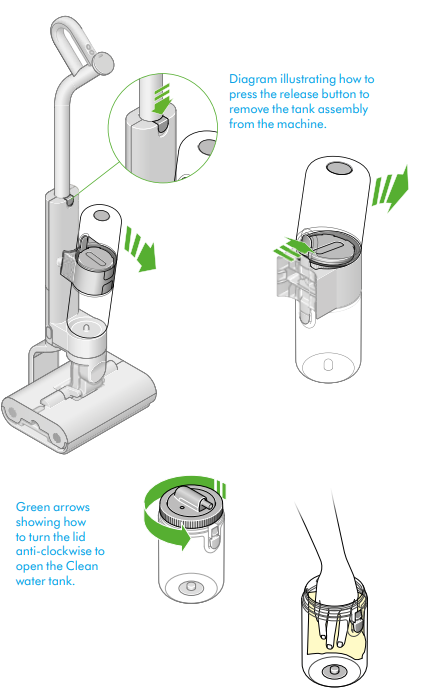
Press the release button to remove the tank assembly from the machine. Remove the Dirty water tank from the tank collar.
- Open the Clean Water tank.k
Turn the lid anti-clockwise to open the Clean water tank. - Clean the Clean water ta.nk
Wash the Clean water tank in a sink, using warm water, detergent, ent and a cloth. - The oak filters every six months.
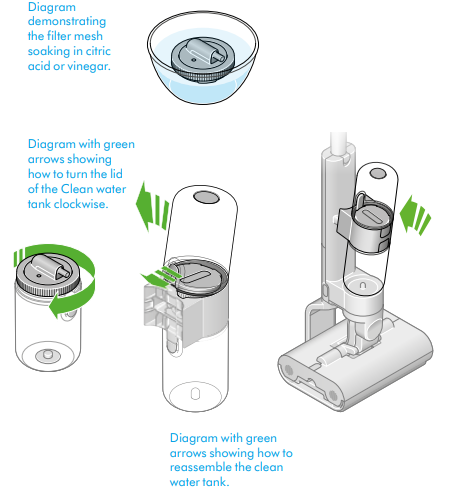
We recommend cleaning the filter in the Clean water tank every six months, to remove limescale. Soak the mesh in citric acid/vinegar for one hour; this will counter limescale buildup. - Replace the Clean water tank.
Close the lid of the Clean water tank by turning it clockwise. - Reassemble the Clean water tank
Reconnect the empty Clean water tank to the body of the machine.
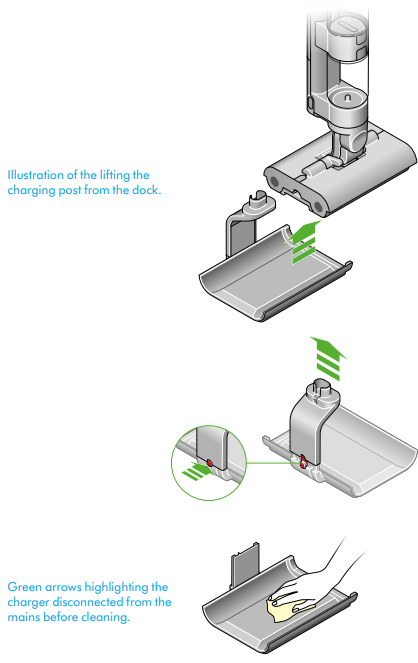
Cleaning the dock
Remove the machine from the Dock.
Press the release button on the rear of the Dock and ift off the charging post.
- Clean the Dock tray
Make sure the charger is disconnected from the mains before cleaning. Wipe over with warm water, detergent, and a cloth. - Replace the Dock tray.
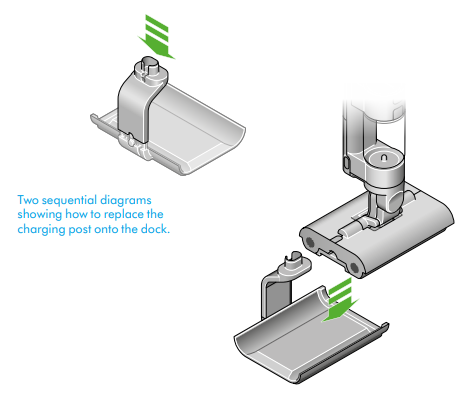
Replace the charging port on the Dock. Replace the machine on the Dock.
Replacing the rollers
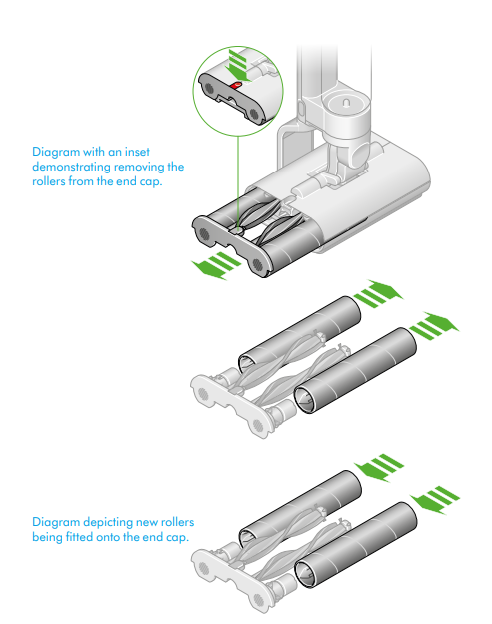
Remove the rollers
Pull out the end cap with the roller and Debris brush bar. Remove the rollers from the end cap.
- Dispose of used rollers in your bin
- Fit new rollers onto the end cap
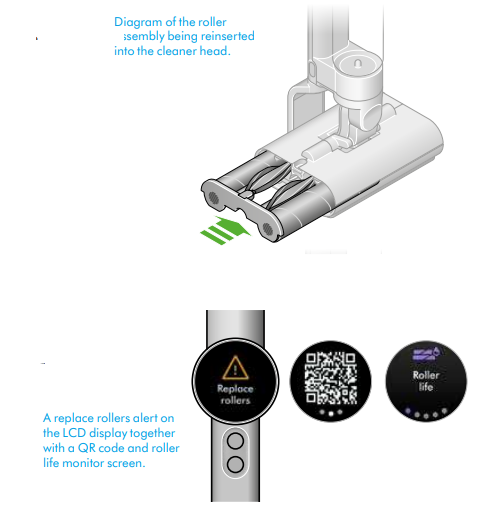
- Reattach the roller
Slide the roller and Debris brush bar into the cleaner head until the end cap clicks. - Check the lifespan of your rollers.
Your Dyson WashG1™ wet cleaner rollers have a lifespan of 25 hours. The machine will alert you when they need to be changed – and display a QR code for ordering replacements.
Replacing the Debris brush bars
- Remove the rollers
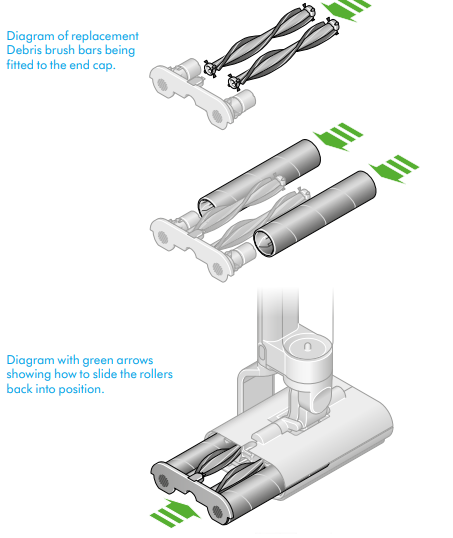
Pull out the end cap with the roller and Debris brush bar. Remove the from the end cap. - Dispose of used Debris brush bars into your bin
- Fit new Debris brush bars onto the end cap
- Reattach the rollers
Slide the Debris brush bars and rollers into the cleaner head until the end cap clicks.
Specifications of the Dyson WashG1 Wet Floor Cleaner
- Cleaning Technology: Counter-rotating motorized microfiber rollers for wet and dry debris pickup
- Clean Water Tank Capacity: 0.26 gallons (approximately 1 liter)
- Dirty Water Tank Capacity: 0.21 gallons (approximately 0.8 liters)
- Run Time: Up to 35 minutes per charge
- Cleaning Coverage: Approximately 3,000 to 3,100 square feet per fill
- Weight: 10.8 pounds (4.9 kg)
- Dimensions: Height 44.8 in, Width 11.8 in, Length 8.8 in
- Cleaning Modes:
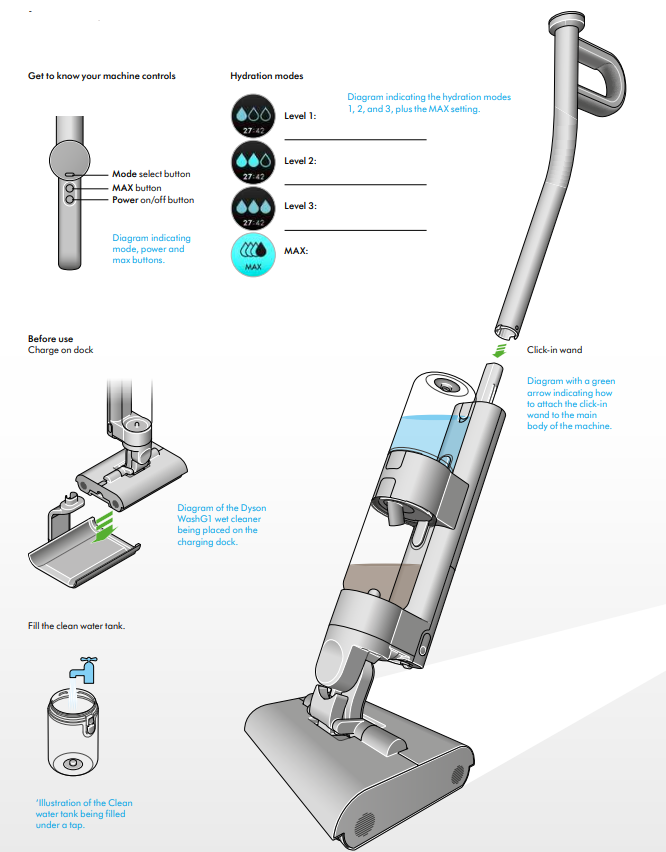
- Level 1 & 2: Dry dust, hair, fiber, light spillages
- Level 3: Dry debris and high viscosity spillages
- MAX: Stubborn dirt and dried-on stains
- Edge Cleaning: Six-point edge contact for comprehensive floor coverage
- Self-Clean Function: Full system flush in 140 seconds during charging
- Filter System: Filter-free design prevents odors and bacteria buildup
Compared to similar wet floor cleaners, the Dyson WashG1 stands out with its dual-roller system, self-cleaning technology, and separation of dry and wet debris,, which conventional models often lack. This ensures hygienic disposal and superior stain removal without the need for manual filter maintenance or additional vacuuming beforehand.
Troubleshooting the Dyson WashG1 Wet Floor Cleaner
- Issue: Reduced water flow or cleaning performance
Solution: Ensure that the clean water tank is filled and the dirty water tank is emptied. Run the self-clean cycle after every use and manually clean the machine every three uses to prevent buildup. - Issue: The Machine won’t start or power on
Solution: Check battery charge level via the LCD. Charge fully before use. Reset by turning off and on again if necessary. - Issue: Odors or strange smells during operation
Solution: Dyson WashG1’s filter-free design minimizes odors. If present, run the self-clean cycle to flush the system and ensure the dirty water tank is emptied and rinsed. - Error Codes: No common error codes displayed; refer to LCD messages for usage tips.
- Preventive Measures: Regularly empty the debris tray after cleaning hair or large debris. Avoid using hot water, as only cold water is recommended.
Warranty & Support: Dyson offers a limited warranty covering defects. For assistance, customers can contact Dyson Customer Support via their website or phone hotline for troubleshooting guidance and repairs.
Pros & Cons of the Dyson WashG1 Wet Floor Cleaner
- Pros: An effective dual roller system provides thorough, smear-free cleaning of wet and dry debris in one pass
- Self-clean function maintains hygiene and ready-to-use status without manual cleaning after each session
- Filter-free design eliminates odors and bacteria issues common in other wet floor cleaners
- Multiple cleaning modes adapt to various floor types and mess severities
- Lightweight and maneuverable with a swivel head for easy navigation around furniture
- Large cleaning coverage suitable for extensive floor areas
- Cons:
- Relatively high price point compared to basic wet floor cleaners
- Cleaner head height and tank placement may prevent cleaning under very low furniture
- Requires a separate vacuum for carpeted areas, as it is designed exclusively for hard fTherunn time of 35 minutes may be insufficient for very large homes without recharging
Overall, the Dyson WashG1 offers excellent value for money for users prioritizing advanced wet floor cleaning technology and hygienic maintenance. However, users needing multi-surface cleaning or extensive under-furniture reach may consider alternatives or complementary devices.
Customer Reviews of the Dyson WashG1 Wet Floor Cleaner
Users widely praise the Dyson WashG1 Wet Floor Cleaner for its impressive cleaning performance, especially its ability to pick up tough stains and hair effortlessly. Many highlight the convenience of the self-clean cycle and the hygienic separation of debris and liquid as standout features. The LCD screen and intuitive controls receive positive feedback for ease of use.
Common complaints include the difficulty in reaching under very low furniture due to the cleaner’s height, and the need to vacuum carpets separately. Some users note the premium cost as a consideration but acknowledge that the quality justifies the investment. Average star ratings hover around 4.5 out of 5, with recommendations focusing on households with large hard floor areas and pet owners dealing with hair and spills.
Overall, customers recommend the Dyson WashG1 for those seeking a dedicated, high-efficiency wet floor cleaner that saves time and delivers superior results.
Faqs
How do I set up the dyson WashG1 Wet Floor Cleaner for the first time?
What should I do if the dyson WashG1 Wet Floor Cleaner is not picking up debris effectively?
Can the dyson WashG1 Wet Floor Cleaner be used on all types of hard floors?
What are the main cleaning modes on the dyson WashG1 Wet Floor Cleaner and when should I use each?
How does the dyson WashG1 Wet Floor Cleaner separate wet and dry dirt during cleaning?
What maintenance is required to keep the dyson WashG1 Wet Floor Cleaner functioning optimally?
Is the dyson WashG1 Wet Floor Cleaner cordless, and how long does the battery last?
Why doesn’t the dyson WashG1 Wet Floor Cleaner use vacuum suction like other wet-dry cleaners?
Tags
More dyson manuals
- Setup & Usage: Dyson Pure Cool Me Personal Purifier Fan User Manual
- Pair & Usage: Dyson 360 VisNav Robot Vacuum Cleaner User Manual
- Setup: Dyson Pure Cool Air Purifier User Guide
- Setup: Dyson Gen5detect Cordless HEPA Vacuum Cleaner User Manual
- How to Use: Dyson Cool AM06 Desk Fan User Guide
- Setup: Dyson Outsize Vacuum Cleaner User Manual
Leave a Comment