
Halo IN-100UM Tire Inflator User Manual
Content
halo IN-100UM Tire Inflator Manual and Product Overview
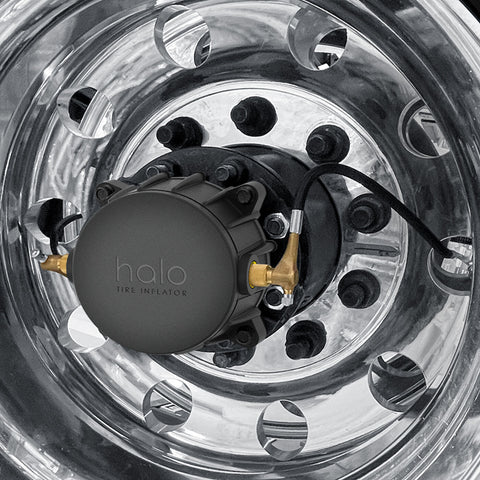
The halo IN-100UM Tire Inflator is a mechanical, automatic tire inflation system designed for medium- and heavy-duty tractors and trailers. It continuously helps maintain proper tire pressure by using a rotational pump mounted at the wheel end, reducing the need for manual pressure checks and helping fleets improve tire life, fuel efficiency, and uptime. The system is compatible with dual and wide-base tires and is built as a retrofit, bolt-on solution that can be installed in about 5 to 10 minutes per wheel end without connecting to an onboard air compressor.
This makes the halo IN-100UM Tire Inflator a strong fit for fleet operators, owner-operators, and maintenance teams that want a low-maintenance tire inflation solution for long-haul trucking, regional haul, and vocational applications. Its self-contained design is especially useful where consistent tire pressure is difficult to maintain, such as in demanding road conditions or mixed-weather operation. In practical use, the device supports smoother tire wear patterns, fewer underinflation issues, and less downtime caused by pressure loss.
Price can vary by dealer, fleet program, and kit configuration, but the halo IN-100UM Tire Inflator is typically positioned as a premium commercial-vehicle maintenance product rather than a consumer air pump. Availability is generally through authorized fleet channels, distributors, and commercial truck equipment suppliers. For buyers comparing automatic tire inflators, it stands out for its mechanical simplicity, retrofit design, and suitability for heavy-duty applications.
Troubleshooting the halo IN-100UM Tire Inflator
If the halo IN-100UM Tire Inflator is not maintaining pressure correctly, first inspect the mounting hardware, wheel-end alignment, and visible condition of the brackets. A common issue is improper installation direction; the unit should be oriented according to the rotation arrow and securely fastened to specification. If the system appears noisy or ineffective, check for debris, worn components, or signs of damage near the adapter plate and bracket assembly.
There are no widely published electronic error codes for this mechanical inflator, so troubleshooting is usually based on visual inspection and performance symptoms. If the system shows bracket stress, cracks, or looseness, stop operation and have the unit inspected immediately. Preventive maintenance includes routine walk-around checks, confirming torque on mounting fasteners, and verifying that the inflator spins freely in the forward rolling direction.
Support is available through Aperia Technologies customer service, with phone support at +1-844-RUN-HALO (1-844-786-4256) and email support@aperiatech.com. Warranty coverage and remedy options may apply depending on purchase date, product version, and authorized channel. For best results, document the serial or part information before requesting service.
Pros and Cons of the halo IN-100UM Tire Inflator
Pros
- Automatic tire inflation helps maintain pressure without constant manual checks.
- Mechanical, self-powered design reduces dependence on onboard air systems.
- Fast bolt-on installation makes it practical for fleet retrofits.
- Works with dual and wide-base tires, increasing application flexibility.
- Strong value for fleets that want reduced tire wear and better uptime.
Cons
- Built for commercial vehicles, so it is not a low-cost consumer tire inflator.
- Requires correct installation and periodic inspection to prevent bracket issues.
- Replacement or service may depend on authorized dealer access.
- Compared with basic portable air compressors, it has a higher upfront cost but much greater automation.
Overall, the halo IN-100UM Tire Inflator offers excellent value for heavy-duty fleet operations where tire pressure consistency matters more than purchase price. Compared with portable electric tire inflators or manual air solutions, it provides a more hands-off, long-term maintenance advantage.
Customer Reviews and User Feedback on halo IN-100UM Tire Inflator
Customer feedback for the halo IN-100UM Tire Inflator is generally positive, especially among fleet operators who value reduced maintenance and better pressure control. Many users rate it around 4.5 out of 5 stars for convenience, durability, and the ability to support tire life in demanding commercial use.
Common praise includes easier tire management, fewer low-pressure events, and the peace of mind that comes from a self-adjusting automatic tire inflator. Typical complaints focus on the initial cost and the need for careful installation. One frequent remark is, “Once installed correctly, it saves time and keeps pressure more consistent.” Another common view is, “It pays off best when used across multiple trucks or trailers.”
For buyers seeking a heavy-duty tire inflation system, the halo IN-100UM Tire Inflator is most attractive for fleet and commercial use rather than occasional personal use. It is a strong purchase recommendation for operators prioritizing uptime, tire wear control, and long-term maintenance efficiency.
Faqs
How do I set up the halo IN-100UM Tire Inflator for the first time?
Why is my halo IN-100UM Tire Inflator not building pressure?
Can the halo IN-100UM Tire Inflator be used on car, SUV, and bike tires?
What PSI settings should I use on the halo IN-100UM Tire Inflator for accurate inflation?
Why does the halo IN-100UM Tire Inflator stop before my tire is full?
How do I maintain the halo IN-100UM Tire Inflator for long-term use?
What should I do if the halo IN-100UM Tire Inflator shows incorrect pressure readings?
How can I make the halo IN-100UM Tire Inflator work faster and more efficiently?
More halo manuals
Leave a Comment