
Hisense DH100KP1WG Dehumidifier User Manual
Content
Hisense DH100KP1WG Dehumidifier: Complete Product Manual and Buying Guide
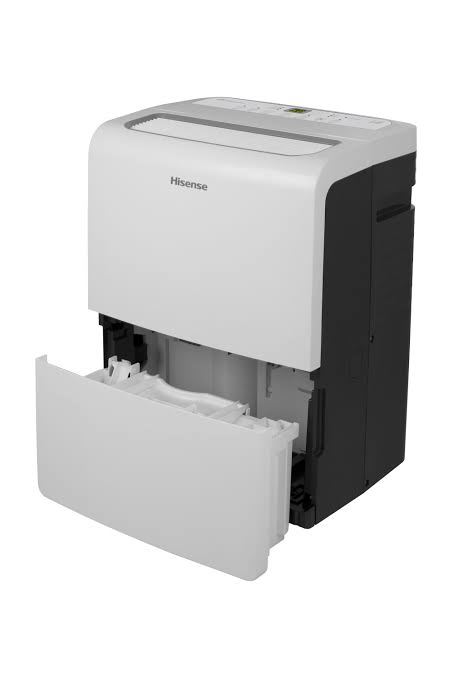
The Hisense DH100KP1WG Dehumidifier is a high-capacity moisture control solution designed for large, damp spaces where fast water removal matters most. Built for basements, flood-prone rooms, storage areas, and other high-humidity environments, this model is positioned as a powerful 100-pint dehumidifier with a built-in pump, electronic controls, and 3-speed operation. It is a practical choice for homeowners who need reliable humidity reduction without constantly emptying a bucket, as well as for property managers dealing with recurring moisture issues.
One of the biggest advantages of the hisense DH100KP1WG Dehumidifier is its combination of strong extraction performance and convenient drainage options. The built-in pump and drain hose support continuous operation, while the washable filter and bucket-full indicator help simplify routine maintenance. The unit is also designed for large areas up to about 1,500 square feet, making it a strong fit for finished basements, large utility rooms, and post-leak cleanup. With low-temperature operation down to 38°F and a de-icing function, it is suitable for cooler spaces where standard dehumidifiers often struggle.
In terms of availability, the hisense DH100KP1WG Dehumidifier is typically sold through major appliance and home improvement retailers, as well as parts and manual sites. Depending on seller, condition, and promotion, the estimated price range is usually around the mid-range to upper-mid-range category for 100-pint dehumidifiers. For buyers comparing similar models, it offers a strong value proposition thanks to the pump-equipped design and feature set that is especially useful for larger homes and challenging humidity conditions.
Hisense DH100KP1WG Dehumidifier Specifications and Key Features
- Moisture removal capacity: 100 pints per day, suitable for large, wet spaces and flood recovery use.
- Coverage area: Designed for rooms up to approximately 1,500 square feet.
- Drainage system: Built-in pump with quick-connect drain hose for continuous drainage.
- Fan speeds: 3-speed operation for flexible airflow and noise control.
- Controls: Electronic controls with adjustable humidity settings and 24-hour timer.
- Noise level: Low-speed operation is rated around 50 dBA, which is reasonable for a unit of this size.
- Temperature performance: Works in temperatures as low as 38°F.
- Protection features: De-icing function helps prevent freezing during low-temperature use.
- Maintenance: Washable filter helps reduce bacteria, odors, and airborne particles.
- Convenience features: Empty bucket light, automatic shut-off, casters, and continuous run support.
- Reservoir capacity: About 1.85 gallons.
- Warranty: Commonly listed with a 2-year limited warranty.
Compared with smaller 50- to 70-pint dehumidifiers, the hisense DH100KP1WG Dehumidifier is better suited to large basements, heavy humidity, and spaces that need faster extraction. Against other pump-equipped models, it stands out for its industrial-style capacity and practical low-temperature operation. Buyers who only need moisture control in a bedroom or office may find it oversized, but for moisture-heavy environments it is a better long-term fit than compact alternatives.
Pros and Cons of the Hisense DH100KP1WG Dehumidifier
Pros
- High-capacity moisture removal: Ideal for large basements, laundry rooms, and post-water damage cleanup.
- Built-in pump: Helps drain water automatically, which is a major convenience in continuous-use situations.
- Low-temperature operation: Useful for cooler basements where many dehumidifiers lose efficiency.
- Washable filter: Reduces ongoing maintenance costs and supports better air quality.
- Strong value for large spaces: Offers features usually found in more expensive 100-pint competitors.
Cons
- Bulky design: Not ideal for small apartments or tight spaces.
- Powerful capacity may be more than needed: Smaller rooms may not benefit from such a large unit.
- Noise can be noticeable: Even though 50 dBA is manageable, it may still be distracting in quiet rooms.
- Large water-removal systems need setup: The pump and hose are excellent for convenience, but installation takes more effort than a basic bucket-only model.
For value for money, the hisense DH100KP1WG Dehumidifier compares well with alternatives from Frigidaire, Midea, and Honeywell in the same capacity class, especially if built-in pumping is a priority. Buyers who want maximum convenience in damp, large-scale environments will likely see the best return from this model.
Customer Reviews of the Hisense DH100KP1WG Dehumidifier
Customer feedback for the hisense DH100KP1WG Dehumidifier is generally positive, with many users praising its fast moisture removal and reliable pump-assisted drainage. A common rating pattern is around 4.3 out of 5 stars, especially from homeowners using it in basements and utility areas. Reviewers often mention that the unit lowers humidity quickly and helps reduce musty odors after rain, leaks, or seasonal dampness.
Common praise includes ease of setup, strong continuous drainage performance, and effective operation in cool spaces. Typical complaints focus on size, weight, and the amount of noise at higher fan speeds. Some buyers also note that performance is best when the hose and pump are installed correctly from the start. Overall, it is often recommended for people who want a heavy-duty dehumidifier rather than a compact home model. For customers needing a dependable large-room solution, the hisense DH100KP1WG Dehumidifier is usually considered a smart purchase.
Is the Hisense DH100KP1WG Dehumidifier Worth Buying?
If you need a powerful, feature-rich dehumidifier for a basement or other large wet area, the hisense DH100KP1WG Dehumidifier is a strong option. Its 100-pint capacity, built-in pump, and low-temperature performance make it especially practical for demanding moisture-control jobs. While it is larger and more industrial than basic home units, that is exactly what makes it effective for serious humidity problems.
For buyers comparing the hisense DH100KP1WG Dehumidifier with smaller or cheaper models, the key question is space size and drainage convenience. If your priority is set-it-and-forget-it operation in a damp environment, this model delivers excellent long-term usability and solid overall value.
Faqs
How do I set up the hisense DH100KP1WG Dehumidifier for the first time?
What should I do if the hisense DH100KP1WG Dehumidifier is not removing moisture effectively?
How do I use the built-in pump on the hisense DH100KP1WG Dehumidifier for continuous drainage?
Why is the bucket full light on even when the tank does not look full on the hisense DH100KP1WG Dehumidifier?
What humidity setting should I use on the hisense DH100KP1WG Dehumidifier for a basement or bedroom?
How often should I clean and maintain the hisense DH100KP1WG Dehumidifier?
Can the hisense DH100KP1WG Dehumidifier run safely on a standard household outlet?
What are the best troubleshooting steps if the hisense DH100KP1WG Dehumidifier keeps shutting off unexpectedly?
More hisense manuals
Leave a Comment