
Midea MLE27N5AWWC Dryer User Manual
Content
Midea MLE27N5AWWC Dryer: Compact Ventless Heat Pump Performance for Small Spaces
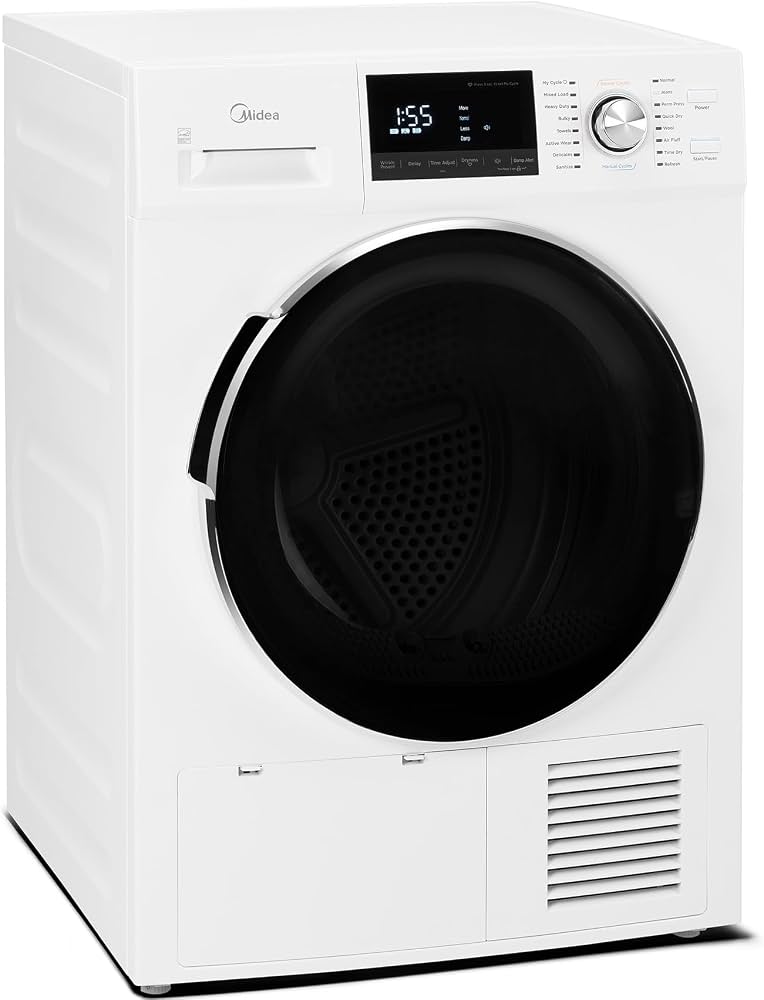
The Midea MLE27N5AWWC dryer is a compact, stackable, ventless heat pump dryer designed for apartments, condos, and other homes where space and venting are limited. With a 4.4 cu. ft. capacity, 16 preset drying cycles, and ENERGY STAR certification, it delivers efficient everyday drying while using less energy than many traditional electric dryers. Its heat pump design makes it a practical choice for users who want a modern laundry solution without requiring external venting, which is especially useful in tight utility closets and urban residences.
This model is built for convenience and flexibility, offering multiple dryness levels, temperature selections, and sensor-based drying for more consistent results. The compact 24-inch class footprint helps it fit into small laundry areas, and it can be stacked with a matching washer to save even more room. Homeowners looking for a space-saving electric dryer that balances efficiency, cycle variety, and easy installation will find the Midea MLE27N5AWWC dryer appealing. Based on current market listings, the estimated price range is typically around the mid-range compact dryer segment, often appearing near CAD $795 to $1,000 depending on retailer, promotions, and whether the unit is new or open-box. Availability is generally strongest through appliance retailers and Midea Canada channels, though stock can vary by region.
Midea MLE27N5AWWC Dryer Specifications and Key Features
- Model: Midea MLE27N5AWWC
- Type: Electric ventless heat pump dryer
- Capacity: 4.4 cu. ft. dry drum capacity
- Dimensions: 33.5 in. H x 23.4 in. W x 25.7-25.8 in. D
- Weight: About 121 lb
- Power: 240V electric connection
- Energy rating: ENERGY STAR certified
- Combined Energy Factor (CEF): 10.14
- Estimated annual energy use: 236 kWh/year
- Estimated test cycle time: 73 minutes
- Drying cycles: 16 preset cycles
- Dryness levels: More, Normal, Less, Damp
- Temperature options: High, Medium, Low, No Heat
- Installation: Stackable with matching compact washer
- Drum material: Aluminized steel or aluminized zinc, depending on listing
The Midea MLE27N5AWWC dryer stands out for its ventless heat pump system, which is more energy efficient than many conventional vented dryers. Compared with similar 24-inch compact dryers, it offers a strong mix of efficiency, cycle variety, and small-footprint design. Many competing compact ventless dryers provide similar capacity, but this model’s ENERGY STAR profile and 16-cycle selection make it especially attractive for users prioritizing utility savings and fabric care.
Troubleshooting the Midea MLE27N5AWWC Dryer: Common Problems and Fixes
If the dryer does not start, first confirm that the door is fully closed, the power cord is connected correctly, and the 240V supply is active. If drying takes too long, clean the lint filter, check that the load is not overloaded, and make sure the selected cycle matches the fabric type. Weak drying performance can also happen when the condenser area or airflow path is restricted by dust or poor installation clearance.
- Dryer won’t power on: Check household breaker, outlet supply, and door latch.
- Clothes remain damp: Reduce load size, select a stronger cycle, and clean the lint filter.
- Unusual noise or vibration: Level the unit and confirm shipping materials were removed.
- Long cycle times: Improve airflow around the dryer and avoid mixing heavy items with lightweight fabrics.
- Error display or fault code: Refer to the user manual for the exact code explanation and reset steps.
To prevent recurring issues, clean the lint filter after every load, keep the surrounding area clear, and avoid overloading the drum. Warranty coverage and support are typically handled through Midea Canada or the retailer where the appliance was purchased. For help, contact the retailer’s appliance support desk, visit Midea’s official customer support channels, or use the contact information listed in the product manual and warranty documentation.
Pros and Cons of the Midea MLE27N5AWWC Dryer
Pros
- Space-saving 24-inch design fits apartments, condos, and laundry closets.
- Ventless heat pump technology removes the need for external venting.
- ENERGY STAR efficiency helps reduce electricity usage over time.
- 16 drying cycles provide flexibility for everyday fabrics and mixed loads.
- Stackable format works well with compact washer/dryer setups.
- Good value for buyers who need a modern compact dryer with efficient operation.
Cons
- Smaller 4.4 cu. ft. capacity may not suit large families or bulky bedding.
- Heat pump drying can be slower than standard vented dryers.
- Requires a 240V connection, which may limit installation in some homes.
- Best performance depends on proper lint filter cleaning and load management.
- Compared with larger alternatives, it is more specialized for small-space use than high-volume laundry.
For buyers comparing compact appliances, the Midea MLE27N5AWWC dryer is best for efficiency-focused households rather than users who want the fastest possible dry times. Against other compact ventless dryers, it offers strong feature depth and a competitive value proposition.
Customer Reviews of the Midea MLE27N5AWWC Dryer
Customer feedback on the Midea MLE27N5AWWC dryer is generally positive, especially from users who need a compact laundry solution. Many owners praise the space-saving design, quiet operation, and the convenience of not needing a vent. Common ratings trend around 4 out of 5 stars for users who value efficiency and apartment-friendly installation.
- Praise: “Perfect for my condo laundry closet and dries clothes evenly.”
- Praise: “Great fit for a small space, and the ventless design made installation easy.”
- Complaint: Some users say cycle times are longer than expected.
- Complaint: A few buyers mention that bulky towels and bedding need extra drying time.
- Recommendation: Best for couples, small families, and apartment dwellers who want energy-efficient drying.
Overall, reviews suggest that buyers who understand the heat pump drying process are happiest with this model. If you want a compact, efficient, and stackable appliance for daily laundry, the Midea MLE27N5AWWC dryer is a strong choice.
Faqs
How do I set up the midea MLE27N5AWWC Dryer for the first time?
What should I do if the midea MLE27N5AWWC Dryer is not drying clothes completely?
Which laundry loads and fabric types work best with the midea MLE27N5AWWC Dryer?
What ventilation and electrical requirements does the midea MLE27N5AWWC Dryer need?
Why does the midea MLE27N5AWWC Dryer stop mid-cycle or take longer than usual?
How do I clean and maintain the midea MLE27N5AWWC Dryer to keep it performing well?
Can the midea MLE27N5AWWC Dryer handle bulky items like blankets and comforters?
What are the most useful cycle settings on the midea MLE27N5AWWC Dryer for everyday use?
More midea manuals
Leave a Comment