
Setup: Beurer Nebuliser IH 18 User Manual
Content
Introduction — beurer Nebuliser IH 18: overview, benefits and who it’s for
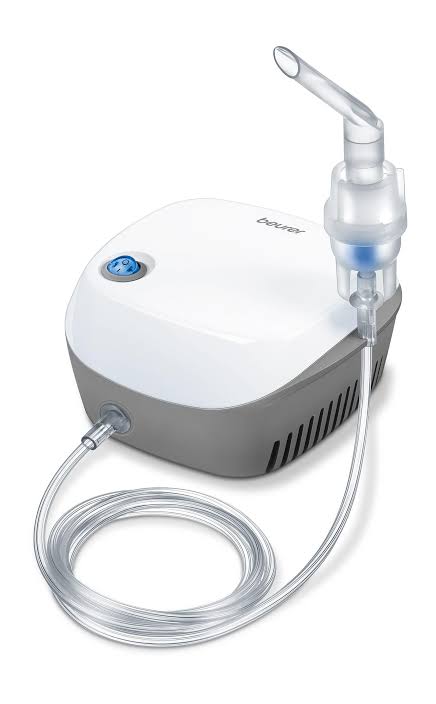
The beurer Nebuliser IH 18 is a compact, mains-operated compressor nebuliser designed to convert prescribed liquid medication into a fine inhalable mist for treatment of upper and lower respiratory conditions such as asthma, COPD, bronchitis and allergic airways disease (target audience: children, adults and the elderly). This unit emphasises fast therapy with a short inhalation time, quiet operation and a lightweight, portable housing that suits home use and travel where mains power is available. Key benefits include high nebulisation performance (approx. 0.3–0.4 ml/min), an aerosol particle size that reaches lower airways for effective drug delivery, a working pressure suited for efficient atomisation and a full accessory kit (adult and child masks, mouthpiece, tubing and spare filters) for immediate use. Unique selling points are German engineering heritage, compressor reliability for continuous use compared with disposable pump nebulisers, and a relatively low noise level that improves comfort for children and sensitive users. Estimated retail price varies by region and retailer but typically sits in the entry-to-mid-range nebuliser bracket (approximately equivalent to low hundreds in local currency; check local suppliers for exact pricing and stock availability). Use cases include daily controller or rescue therapy as prescribed by a clinician, at‑home respiratory maintenance, travel with mains access, and clinic outreach where a durable, easy-to-clean compressor nebuliser is preferred.
Specifications — technical details and key performance metrics for beurer Nebuliser IH 18
- Technology: Compressed-air (piston compressor) nebulisation for liquid medications, suitable for most standard nebuliser solutions and suspensions. (Compressed-air technology noted in product specs.)
- Nebulisation (medicine) flow rate: approx. 0.3–0.4 ml/min (typical working rate reported across suppliers). (Nebulisation rate ~0.4 ml/min.)
- Aerosol delivery / flow: aerosol delivery reported near 0.171 l/min and aerosol flow ~5.3 l/min in manufacturer/importer specs; particle size (MMAD) typically around 2.5–3.2 μm depending on source—sized to reach lower airways. (Particle sizes and aerosol rates vary by test method.)
- Working pressure: approx. 0.8 – 1.45 bar (ensures efficient atomisation). (Working pressure specification listed by several vendors.)
- Power / Operation: mains operated, 230–240 V AC, ~50 Hz; power consumption varies by region models (around 125 W quoted by some sellers). (Mains operation 230–240 V.)
- Sound level: < 52 dBA (quiet for a compressor unit; suitable for pediatric use). (Sound pressure figure provided by technical sheets.)
- Capacity / fill volume: medication chamber minimum ~2 ml, maximum ~8–10 ml depending on regional accessory packs (check local box contents). (Atomiser fill volume min 2 ml / max 8 ml reported.)
- Physical: dimensions ~160 x 155 x 84 mm; weight ~1.3 kg (compact and portable). (Dimensions and weight provided by vendors.)
- Operating / storage conditions: operating temp 10–40 °C; storage 0–60 °C; humidity ranges typically 10–95% RH (non-condensing). (Environmental specs cited in product data.)
Comparison with similar products: vs. portable mesh nebulisers — the IH 18’s compressor design delivers robust, consistent aerosol output for a wide range of medications (including suspensions) but is larger and requires mains power whereas mesh units are lighter, battery-capable and quieter but can be more expensive and may not accept all medication types. Vs. entry-level compressor nebulisers from other mainstream brands, the IH 18 competes on noise level (<52 dBA), compact footprint and a mid-range nebulisation rate (0.3–0.4 ml/min), making it a strong value option for home and clinic use.
Pros & Cons — balanced assessment of the beurer Nebuliser IH 18
- Pros — reliable compressor performance: Consistent nebulisation rate (~0.3–0.4 ml/min) and sufficient working pressure for effective drug delivery to lower airways; practical for daily home therapy and clinic use.
- Pros — accessories and usability: Includes adult and child masks, mouthpiece, tubing and filters in most retail bundles; simple on/off control and quick setup make it user-friendly for caregivers.
- Pros — quiet & compact: Sound pressure under 52 dBA and compact dimensions (~160 x 155 x 84 mm) increase comfort for children and portability around the home.
- Cons — mains-dependent: Requires AC power (230–240 V) which limits truly portable, battery-powered use compared with mesh or ultrasonic battery nebulisers.
- Cons — compressor bulk and maintenance: Heavier and bulkier than mesh handhelds (~1.3 kg) and needs periodic filter replacement and cleaning to maintain performance.
- Cons — variable published specs: Online listings show variations in reported particle size and medication chamber capacity (2.5–3.2 μm MMAD; 8–10 ml capacity) — buyers should check the exact regional model and included accessories before purchase.
- Value for money: The beurer Nebuliser IH 18 represents solid mid-range value for users prioritising dependable compressor performance and included accessory kits; for users needing battery operation or maximum portability, a mesh nebuliser may be worth the higher price.
Customer reviews, ratings and common feedback about beurer Nebuliser IH 18
Average user sentiment across retailers is generally positive, with an approximate star rating commonly ranging from 4.0 to 4.5 stars out of 5 based on aggregated seller listings and product pages.
- Praises: Many users highlight quiet operation compared with older compressors, quick inhalation times, clear instructions and the ready-to-use accessory set (adult and child masks, mouthpiece). Testimonies frequently mention effective symptom relief for asthma and bronchitis when used as prescribed.
- Common complaints: A minority of buyers report variance in shipped accessories (some packages list a 10 ml chamber while others note 8 ml), concerns about dependence on mains power for travel, and the need to replace inlet filters periodically to maintain aerosol quality.
- Star rating example: Typical listing ratings: 4/5 — “Good value, quiet and easy to use for the family”; 3/5 — “Works well but would prefer a battery option for travel”.
- Purchase recommendation: Recommended for households seeking an affordable, reliable compressor nebuliser for regular prescribed inhalation therapy; verify regional model specs and included accessories before buying and follow cleaning/maintenance guidance to avoid performance issues.
SEO & usage tips — keywords and long-tail headings for beurer Nebuliser IH 18 buyers
To improve discoverability and match voice-search queries, include the primary keyword beurer Nebuliser IH 18 naturally in product pages, headings and FAQs (used above 3–5 times), and reuse related terms such as “compressed-air nebuliser”, “compressor nebuliser for asthma”, “home nebuliser for adults and children” and long-tail phrases like “beurer Nebuliser IH 18 specs and user manual” or “how to clean beurer IH 18 compressor nebuliser”.
Practical user tips: follow prescribed medication instructions, fill the medication chamber within the stated min/max fill volumes, replace inlet filters per the manual, clean the mouthpiece and mask after each use and store the unit in a dry environment within the stated temperature/humidity ranges to preserve performance.
Faqs
How do I set up my beurer Nebuliser IH 18 for the first time?
What should I do if the beurer Nebuliser IH 18 produces little or no mist?
Can I use any liquid medication or home remedies in the beurer Nebuliser IH 18?
What accessories are compatible with beurer Nebuliser IH 18 and how do I choose mask vs mouthpiece?
How can I optimise treatment time and performance with my beurer Nebuliser IH 18?
How often should I clean and disinfect the beurer Nebuliser IH 18 and what is the correct procedure?
What routine maintenance and replacement parts should I track for the beurer Nebuliser IH 18?
My beurer Nebuliser IH 18 makes unusual noise or vibrates more than usual — what are the troubleshooting steps?
More beurer manuals
Leave a Comment