
Setup: Beurer Nebuliser IH 58 Kids User Manual
Content
Beurer Nebuliser IH 58 Kids: Comprehensive Product Manual and Guide
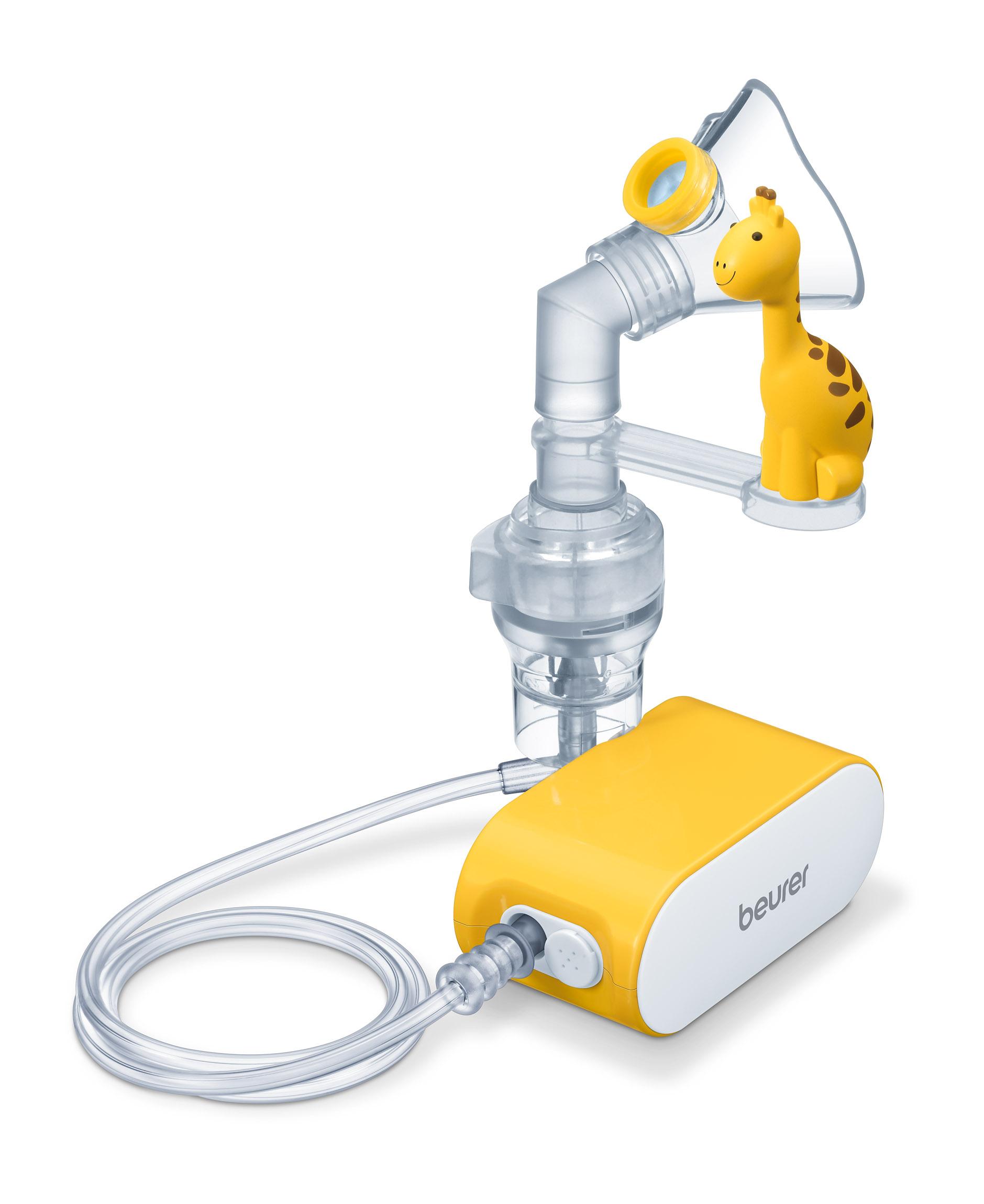
Introduction to Beurer Nebuliser IH 58 Kids
The Beurer Nebuliser IH 58 Kids is a compact, child-friendly compressor nebulizer designed for effective respiratory therapy, ideal for treating colds, asthma, and respiratory diseases in children from 6 months of age. Using advanced DC compressed-air technology, this portable inhaler delivers a high proportion of respirable particles with an average particle size of 4.12 µm and a nebulisation performance of approx. 0.25 ml/min, ensuring short inhalation times and targeted treatment of upper and lower airways.
Key benefits include whisper-quiet operation at just 45 dB(A), making it suitable for home or travel use without disturbing sleep, and simple one-button operation with an LED indicator (blue for ready status). It comes with an extensive year pack featuring child-specific accessories like a giraffe-shaped mask, adult and child facemasks, mouthpiece, nosepiece, storage bag, and replacement filters, promoting hygienic, reusable use after easy cleaning. This medical device is mains-operated via a detachable adapter with micro-USB cable, weighing under 180 grams for palm-sized portability.
Perfect for parents seeking a reliable kids nebulizer for asthma relief or cold symptoms, the Beurer IH 58 Kids supports all approved inhalation medications—consult a doctor for specifics. With a 5-year guarantee, it's a smart choice for families needing a quiet, efficient portable nebuliser for kids on the go. The estimated price range is €40-€60 or equivalent (around ₹5,615 in some markets), widely available online and in pharmacies.
Specifications
- Model: IH 58 Kids
- Type: IH 58
- Dimensions (W × H × D): 110 × 62 × 47 mm
- Weight: 176 g
- Operating Pressure:
- With Medication Container: Approx. 0.25 to 0.50 bar
- Without Medication Container: Approx. 0.35 to 0.60 bar
- Atomiser Filling Volume:
- Minimum: 2 ml
- Maximum: 6 ml
- Medication Flow Rate: Approx. 0.25 ml/min
- Sound Pressure: Max. 45 dBA (according to DIN EN 13544-1, Section 26)
- Mains Connection:
- Input: 100–240 V AC, 50–60 Hz, 0.5 A
- Output: 5 V DC, 2 A
- Expected Service Life: 400 hours
- Operating Conditions:
- Temperature: +10°C to +40°C
- Relative Humidity: 10% to 95%
- Ambient Pressure: 700 hPa to 1060 hPa
- Storage and Transportation Conditions:
- Temperature: -20°C to +60°C
- Relative Humidity: 10% to 95%
- Ambient Pressure: 700 hPa to 1060 hPa
- Aerosol Properties:
- Aerosol Delivery: 0.15 ml
- Aerosol Delivery Rate: 0.03 ml/min
- Particle Size (MMAD): 4.12 μm
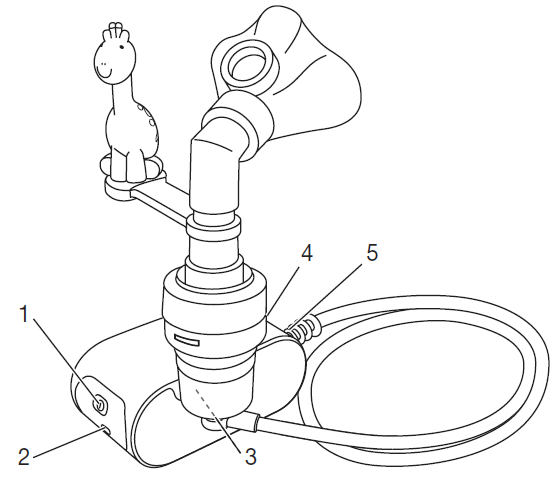
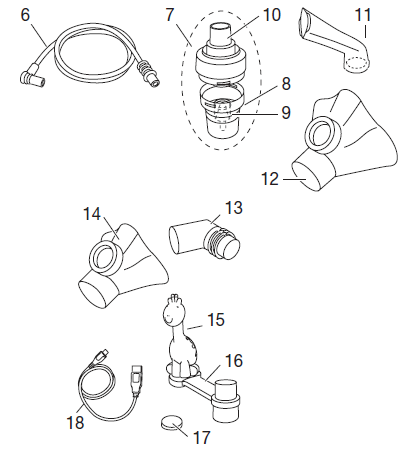
Description of the device and accessories
- On/Off Switch
- Micro USB Port
- Holder for Atomiser
- Filter Cap with Filter
- Hose Connector
- Compressed Air Hose
- Atomiser
- Medication Containers
- Atomiser Insert
- Atomiser Attachment
- Mouthpiece
- Silicone Children’s Mask
- Silicone Baby Mask
- Angled Fitting
- Removable Giraffe
- Adapter
- Replacement Filters
USB Cable
Initial Use
Setting Up the Device
- Take the device out of the packaging.
- Place the device on a flat surface.
- Before Using the Device for the First Time
Note: Clean and disinfect the atomiser and accessories before using them for the first time. See “Cleaning and Disinfection”. The adapter with the removable “giraffe” can optionally be attached to the atomiser. When attaching the atomiser, in combination with the adapter and removable “giraffe”, to the device, ensure that the centre of gravity is over the device. Otherwise, there is a risk of the device tipping. The cover photo of these instructions for use serves as an example.
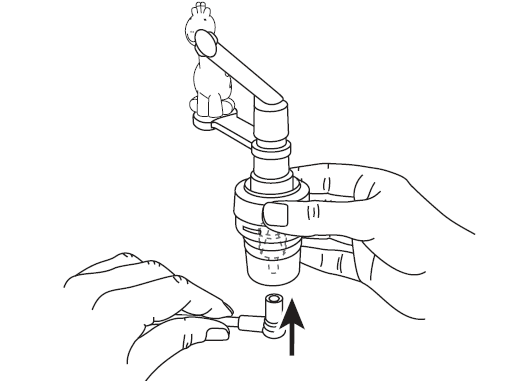
- Connect the compressed air hose to the bottom of the medication container.
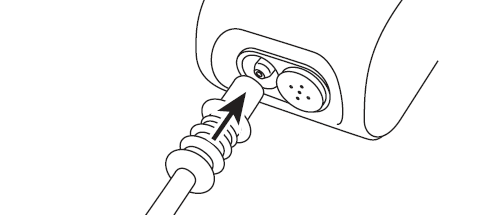
Connect the other end of the compressed air hose to the nebuliser hose connection by turning it slightly.
Switching On the Nebuliser
To switch on the nebuliser, proceed as follows:
- Plug the micro USB cable included in delivery into the micro USB port on the nebuliser. Plug the other end of the micro USB cable into the USB port on the mains adapter and insert the mains adapter into the socket.
- Press the ON/OFF button on the nebuliser. The ON/OFF button illuminates blue. The nebuliser is now operational.
Operation
Important
- For hygiene reasons, it is essential to clean the atomiser and the accessories after each treatment and to disinfect them after the last treatment of the day.
- The accessories may only be used by one person; use by several people is not recommended.
- If the treatment involves inhaling several different medications one after the other, please be aware that the atomiser must be rinsed under warm tap water following every usage. See “Cleaning and Disinfection”.
- Please observe the notes on changing the filter in these instructions for use.
- Check that hose connectors are firmly attached to the nebuliser and the atomiser before each use of the device.
- Before use, check the device is working correctly by briefly switching on the nebuliser (together with the connected atomiser, but without medication). If air comes out of the atomiser, the device is working.
Inserting the Atomiser Insert
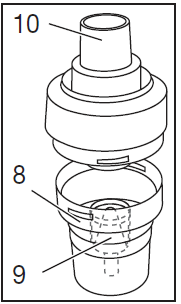
- Open the atomiser by twisting the top anticlockwise against the medication container. Place the atomiser insert into the medication container.
- Ensure that the cone for administering medication fits well on the cone for the air duct inside the atomiser.
- Ensure that the atomiser attachment is attached to the top of the atomiser.
Filling the Atomiser
- Fill with an isotonic saline solution or pour the medication directly into the medication container. Avoid overfilling. The maximum recommended filling quantity is 6 ml.
- Use medication only as instructed by your doctor and ask about the appropriate inhalation period and quantity for you.
If the prescribed quantity of medication is less than 2 ml, top this up to at least 2 ml with isotonic saline solution. Dilution is also necessary with viscous medications. Here too, please observe the instructions of your doctor.
Closing the Atomiser
- Close the atomiser by twisting the top clockwise against the medication container. Ensure that the connection is correct.
Connecting Accessories to the Atomiser
- Attach the desired accessory to the atomiser. The mouthpiece or nosepiece can be attached using the nebuliser attachment. The children’s mask and baby mask must be attached to the atomiser using the angled fitting.
Note
The most effective form of nebulisation is by using the mouthpiece. Nebulisation using a mask is only recommended if it is not possible to use a mouthpiece (e.g. for children who are not yet able to inhale using a mouthpiece). When using a mask to inhale, take care to ensure the mask fits well and the eyes are unobstructed.
- Before the treatment, pull the atomiser upwards out of the holder.
- Start the nebuliser using the On/Off switch.
- Spray mist pouring out of the atomiser indicates that the device is operating correctly.
Treatment
- Hold or place the baby or infant to be treated in the most upright position possible. Do not use the device when the baby or infant to be treated is lying down.
- When inhaling, older children and adults should sit upright and relaxed at a table and not in an armchair to avoid compressing the airways and therefore impairing the effectiveness of the treatment.
- Breathe in the atomised medication deeply.
Important
The device is not suitable for continuous operation; after 30 minutes of operation, it must be switched off for 30 minutes.
Note
During the treatment, hold the atomiser straight (vertically); otherwise, the atomisation will not work and faultless functionality is not guaranteed. Depending on the battery charge status and accessory used, the inhalation time stated may vary.
Stopping Inhalation
Once the mist is only coming out in an irregular flow or if the sound changes when inhaling, you can stop the treatment.
- Switch off the nebuliser after treatment using the On/Off switch and disconnect it from the mains.
- Place the atomiser back in its holder after the treatment.
Cleaning
See “Cleaning and Disinfection”.
Changing the Filter
In normal operating conditions, the air filter must be replaced after approximately 100 operating hours or one year.
Please check the air filter regularly (after 10–12 nebulisation procedures). Replace the used filter if it is very dirty or clogged. If the filter has become damp, it must also be exchanged for a new filter.
Important
- Do not attempt to clean the used filter and reuse it.
- Only use the manufacturer’s original filter; otherwise, your nebuliser may become damaged, and sufficiently effective treatment cannot be guaranteed.
- Do not repair or maintain the air filter while it is in use.
- Never operate the device without a filter.
To replace the filter, proceed as follows:
Important
- First, switch the device off and disconnect it from the mains.
- Allow the device to cool down.
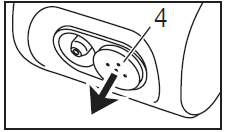
Pull off the filter cap towards the front.
Cleaning and Disinfection
Atomiser and Accessories
Adhere to the following hygiene instructions to avoid health risks. The atomiser and accessories are designed for multiple use. Please note that different areas of application involve different requirements in terms of cleaning and hygienic preparation.
Notes:
- Do not clean the atomiser or the accessories mechanically using a brush or similar device, as this could cause irreparable damage and it will mean that the best treatment results can no longer be guaranteed.
- Please consult your doctor about the additional requirements in terms of the hygienic preparation required (hand care, handling of medication/inhalation solutions) for high-risk groups (e.g. patients with cystic fibrosis).
- Ensure thorough drying after each cleaning or disinfection process. Residual moisture or wetness can represent an increased risk of bacterial growth.
Preparation
- Immediately after each treatment, all parts of the atomiser and the accessories used must be cleaned of residual medication and contamination.
- Remove the mouthpiece, masks or the nosepiece from the atomiser.
- Disassemble the nosepiece if you have used it with the comfort attachment.
- Remove the masks from the angled fitting.
- Disassemble the atomiser by twisting the top anticlockwise against the medication container.
- Remove the atomiser insert from the medication container. Remove the atomiser attachment.
- Reassembly is carried out in reverse order.
Cleaning
Important
The device must be switched off, disconnected from the mains and allowed to cool down each time before cleaning. The atomiser and the accessories used, such as the mouthpiece, mask, etc., must be washed with hot but not boiling water after each use. Dry the parts carefully using a soft cloth. Put the parts together again when they are completely dry and place them in a dry, sealed container or disinfect them. When cleaning, ensure that any residue is removed. Never use any substances for cleaning that could potentially be toxic if they came into contact with the skin or mucous membranes, or if they were swallowed or inhaled. Use a soft, dry cloth and non-abrasive cleaning products to clean the device. Do not use any abrasive cleaning products and never submerge the device in water.
Condensation, Hose Care
Condensation may form in the hose depending on the ambient conditions. It is essential to remove the moisture to prevent bacterial growth and ensure proper treatment. To do so, proceed as follows:
- Remove the compressed air hose from the atomiser.
- The hose must remain connected to the nebuliser.
- Operate the nebuliser until the moisture is removed by the air passing through.
- In the event of heavy contamination, replace the hose.
Disinfection
Please carefully observe the points below when disinfecting your atomiser and accessories. We recommend disinfecting the individual parts daily after the last use as a minimum measure. All you need for this is a little white vinegar and distilled water. Ethanol 70 vol% can also be used (for 10 minutes) to disinfect the PVC masks and the air tubes.
- First, clean the atomiser and accessories as described in the “Cleaning” section.
- Place the disassembled atomiser, the mouthpiece, the silicone masks and the disassembled nosepiece in boiling water for 5 minutes.
Drying
Place the individual parts on a clean, dry and absorbent surface and leave them to dry completely (at least 4 hours).
Durability of Materials
- As with any plastic parts, atomisers and their accessories are affected by a certain amount of wear and tear when used and hygienically prepared on a frequent basis. Over time, this can lead to a change in the aerosol, which can hurt the efficiency of the treatment. We therefore recommend that you replace the atomiser and other accessories after a year.
- The following point should be observed when selecting the cleaning product or disinfectant: only use a mild cleaning product or disinfectant in the concentration and volume prescribed by the manufacturer.
Storage
- Do not store in damp conditions (such as in a bathroom) and do not transport with any damp items.
- When storing and transporting, protect from prolonged direct sunlight.
- The accessories can be stowed securely in the accessory compartment. Store the device in a dry place, ideally in the original packaging.
Pros and Cons of Beurer Nebuliser IH 58 Kids
Pros
- Highly portable and lightweight: Under 180g with storage bag, ideal for travel and daily use as a compact kids compressor nebulizer.
- Quiet operation: Only 45 dB(A), allowing relaxed nebulisation even during naps, unlike louder alternatives.
- Child-friendly design: Includes a giraffe mask and baby accessories for easier inhalation, reducing stress for young users.
- Efficient performance: 0.25 ml/min rate and high respirable particles shorten sessions; automatic cut-out prevents overheating.
- Great value: 5-year warranty, year pack included, and easy cleaning make it cost-effective compared to pricier ultrasonic models.
Cons
- Mains-powered only: Requires an adapter, less convenient than battery options for extended outings, though micro-USB adds flexibility.
- Regular maintenance needed: Filters every 6-8 weeks and thorough cleaning post-use to avoid blockages, more hands-on than some disposables.
- Limited to approved meds: Not for all liquids; consult professionals, and no individual steam/air flow regulation.
Overall, the Beurer Nebuliser IH 58 Kids offers excellent value for money, outperforming bulkier models in portability while matching efficacy for pediatric respiratory care.
Customer Reviews and Feedback on Beurer Nebuliser IH 58 Kids
Users praise the Beurer Nebuliser IH 58 Kids for its quiet, portable design and child-friendly accessories, often rating it 4.5-5 stars. Common positives include short treatment times and ease of use: "Perfect for my toddler's asthma— the giraffe mask makes it fun, and it's so quiet!" (5/5 stars). Parents highlight travel convenience: "Compact enough for holidays, works worldwide with adapter" (4.8/5).
Frequent praises: Reliable performance, hygienic cleaning, and included year pack. Complaints are minor, like occasional filter needs or adapter dependency: "Great but wish it was battery-powered" (4/5). No widespread issues reported; early reviews note durability. Recommended for families needing a best portable nebulizer for kids—over 80% repurchase intent based on similar models.
Faqs
How do I set up the beurer Nebuliser IH 58 Kids for the first time?
What should I do if the beurer Nebuliser IH 58 Kids is not producing mist?
How do I properly use the beurer Nebuliser IH 58 Kids with a child's mask?
Is the beurer Nebuliser IH 58 Kids compatible with baby accessories?
How can I optimize performance of the beurer Nebuliser IH 58 Kids?
How often should I clean and maintain the beurer Nebuliser IH 58 Kids?
What medications can I use with the beurer Nebuliser IH 58 Kids?
Why is the beurer Nebuliser IH 58 Kids ideal for travel with kids?
More beurer manuals
Leave a Comment