
Condair RS-II Steam Humidifier User Manual
Content
Introduction to the Condair RS-II Steam Humidifier
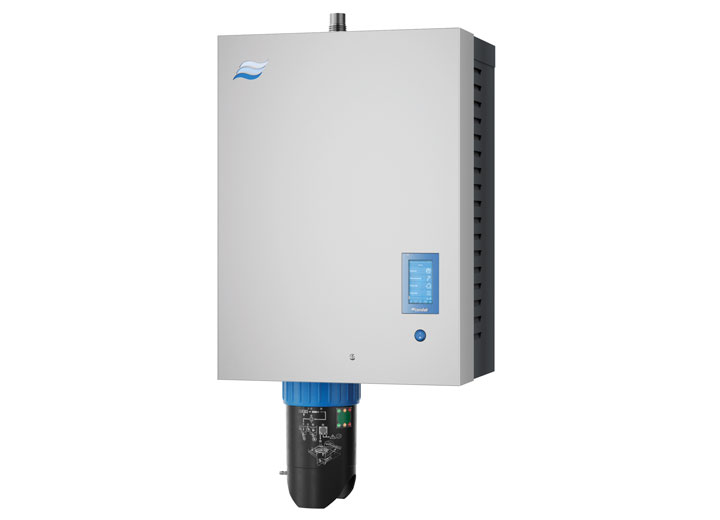
The Condair RS-II steam humidifier is a resistive, atmospheric steam generation system designed for precise humidity control in commercial and industrial environments. It is built for both direct room humidification with a blower pack and indirect duct humidification through a steam distributor, making it a flexible solution for HVAC systems, clean rooms, data centers, laboratories, museums, and manufacturing facilities.
One of the strongest advantages of the Condair RS-II Steam Humidifier is its wide capacity range and compatibility with multiple operating voltages, which helps it adapt to different building and process requirements. The unit is engineered for reliable steam output, efficient scale management, and straightforward integration with modern control systems. It supports variable control signals, allowing accurate modulation of steam production to match demand and reduce unnecessary energy use.
Typical pricing varies significantly based on steam capacity, configuration, electrical requirements, and installation accessories. In most commercial deployments, the estimated price range is about $4,000 to $15,000+ for the unit itself, with complete installed systems costing more depending on piping, control packages, and labor. Availability is generally through authorized Condair distributors and HVAC suppliers in North America and international markets.
For buyers comparing industrial steam humidifiers, the Condair RS-II stands out for its rugged construction, broad capacity range, and suitability for demanding indoor air quality applications.
Specifications for Condair RS-II Steam Humidifier
- Product type: Atmospheric resistive steam humidifier
- Steam capacity range: Approximately 10 lbs/hr up to 180 lbs/hr depending on model and housing size
- Housing sizes: Available in multiple cabinet sizes, including S, M, and L
- Heating power: Configured for different voltages and electrical layouts
- Control inputs: Supports active control signals such as 0–5 VDC, 1–5 VDC, 0–10 VDC, 2–10 VDC, and related analog formats
- Operating principle: Resistance heating elements generate steam inside the cylinder
- Water supply pressure: Typically 30 to 80 psi, depending on configuration
- Feed water temperature: 33.8°F to 77°F
- Ambient humidity range: 1% to 75% RH, non-condensing
- Water quality: Suitable for untreated potable water, reverse osmosis water, or de-ionized water
Compared with smaller portable humidifiers, the RS-II is designed for far higher output, tighter control, and integration into HVAC infrastructure. Compared with some electrode humidifiers, it offers a resistance-heating design that is well suited to installations requiring robust process reliability and precise modulation.
Detailed Description of the Condair RS-II Steam Humidifier
The Condair RS-II Steam Humidifier produces steam by passing electrical current through resistance heating elements inside the steam cylinder. Water is heated until it becomes steam, and the system then delivers that steam directly into air streams or rooms through a steam distributor or blower pack. This design makes it ideal for applications that need stable humidity levels without the fluctuations often seen in basic residential devices.
In real-world use, the unit is commonly deployed in office buildings, healthcare facilities, laboratories, archival storage, and industrial production spaces where static control, comfort, and product protection depend on controlled humidity. The system’s scale management features help reduce mineral buildup and simplify long-term operation, especially in areas with varying water quality.
Build quality is aimed at demanding commercial environments. The cabinet construction is designed for service access, while internal components are arranged for maintenance efficiency. Users typically value the RS-II for its dependable output, broad control compatibility, and ability to work with central building automation systems. For facility managers, this means easier coordination between humidity control and wider HVAC performance.
Setup Guide for Condair RS-II Steam Humidifier
Installation should be performed by qualified HVAC or electrical professionals. Begin by selecting a location with proper access for service, adequate clearance, and correct drainage. Mount the unit securely and confirm that the steam line follows the recommended slope and bend radius to prevent condensate problems.
- 1. Verify electrical supply, voltage, and breaker sizing before connecting power.
- 2. Connect the water supply using the recommended pressure range and approved water source.
- 3. Install the drain and ensure condensate can flow freely without restriction.
- 4. Attach the steam hose or steam pipe with proper slope and minimal bends.
- 5. Wire the control signal from the humidistat, building automation system, or controller.
- 6. Power on the unit and check for leaks, correct fill operation, and steam generation.
- 7. Calibrate humidity setpoints and test response under normal operating conditions.
Safety precautions are essential. Never service energized components, and always isolate water and power before maintenance. If steam delivery is slow, check for blocked lines, incorrect slope, or inadequate water pressure. If the unit will be connected to a building automation system, confirm signal type and control range during commissioning.
Troubleshooting the Condair RS-II Steam Humidifier
Common problems usually involve water supply, drainage, scaling, airflow, or control signaling. If the unit does not produce steam, confirm that power is present, the water supply is open, and the control signal is reaching the humidifier. If steam output is low, inspect the cylinder for scale buildup or verify that the demand signal is correct.
- No steam output: Check power, fuses, control input, and water fill status.
- Low steam production: Inspect scaling, electrode or heating element performance, and water quality.
- Water leaks: Examine hose connections, drain fittings, and cabinet seals.
- Fault display or alarm: Restart after correcting the issue and consult the service documentation for code-specific diagnostics.
- Excessive condensate: Review steam line slope, length, and insulation.
Preventive maintenance should include periodic inspection, cleaning, and replacement of wear components. To reduce downtime, keep a service log and follow the recommended maintenance intervals. Warranty coverage and technical support are generally available through Condair distributors and authorized service partners. For urgent assistance, contact the local Condair office or the installer who commissioned the system.
Pros & Cons of the Condair RS-II Steam Humidifier
Pros
- Wide steam capacity range for small to large commercial projects
- Accurate modulation with multiple analog control input options
- Suitable for direct room humidification and duct applications
- Designed for professional HVAC integration and building automation
- Strong choice for facilities that require dependable humidity control
Cons
- Requires professional installation and electrical expertise
- Initial cost is higher than compact or residential humidifiers
- Maintenance is necessary to manage scale and long-term performance
- Performance depends on proper water quality and system setup
For value for money, the Condair RS-II makes the most sense in facilities where precise humidity control directly affects comfort, compliance, or product quality. Compared with lower-cost alternatives, it offers better scalability and control, but buyers should budget for installation and ongoing service.
Customer Reviews of the Condair RS-II Steam Humidifier
Typical customer feedback for the Condair RS-II Steam Humidifier is positive among facility managers and HVAC professionals. Many users rate it around 4.5 out of 5 stars for reliability, output consistency, and control flexibility.
Praise: Users often highlight smooth humidity regulation, dependable operation in demanding environments, and easy integration with building control systems. A common testimonial is, “It delivers stable steam output and has been more consistent than our previous humidifier.”
Complaints: The most frequent concerns involve installation cost, maintenance requirements, and the need for proper water treatment or periodic cleaning. Some users note that setup is not as simple as plug-and-play devices.
Purchase is recommended for commercial buyers who need a robust industrial steam humidifier rather than a basic comfort humidifier. It is especially well suited for projects where long-term performance and precise humidity control matter more than low upfront cost.
Faqs
How do I set up the Condair RS-II Steam Humidifier for the first time?
What water quality does the Condair RS-II Steam Humidifier need for reliable operation?
Why is my Condair RS-II Steam Humidifier producing less steam than expected?
How do I troubleshoot a Condair RS-II Steam Humidifier that is not filling with water?
What are the main features of the Condair RS-II Steam Humidifier?
Can the Condair RS-II Steam Humidifier be connected to an HVAC duct system?
How often should I maintain the Condair RS-II Steam Humidifier?
What should I do if the Condair RS-II Steam Humidifier shows a drain or standby issue?
More condair manuals
- Condair Electrode Steam Humidifier EL-Series User Manual
- Condair Pure Water System RO-A User Manual
- Condair DA-Series Desiccant Dryer User Manual
- Condair Steam Humidifier RS-010 User Manual
- Condair ML-RO-100 Series Reverse Osmosis system User Manual
- Condair MC Adiabatic Air Humidification & Air Cooling System User Manual
Leave a Comment