
Condair ML-RO-100 Series Reverse Osmosis system User Manual
Content
Condair ML-RO-100 Series Reverse Osmosis System Manual
Introduction
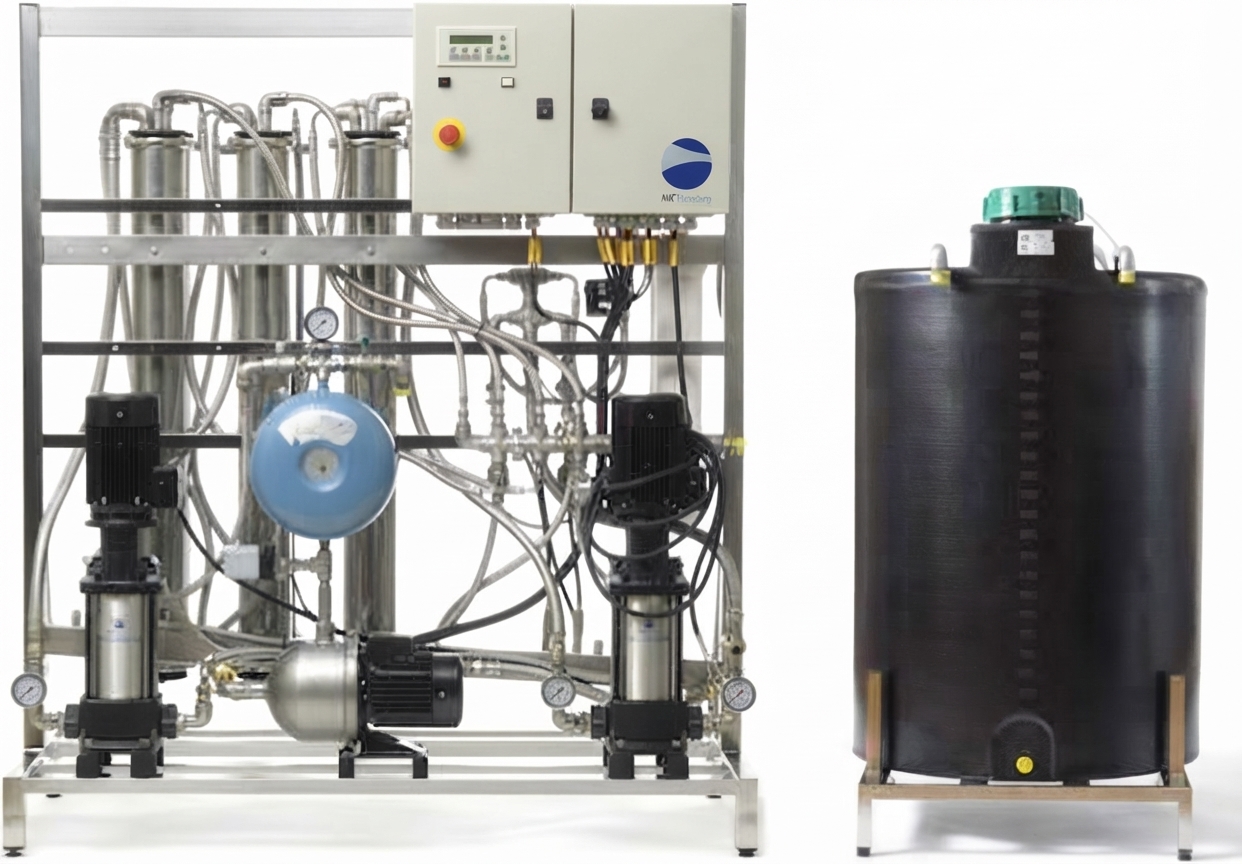
The Condair ML-RO-100 Series Reverse Osmosis system is a compact, high-performance water treatment solution designed to produce purified RO water for humidification and other demanding industrial applications. Built to remove more than 95% of salts and minerals from incoming tap water, it helps protect equipment, improve water quality, and support reliable operation in environments where consistent treated water is essential.
This reverse osmosis unit is especially well suited for commercial buildings, data centers, healthcare facilities, clean manufacturing spaces, and HVAC humidification systems. The ML-RO-100 Series is valued for its integrated holding tank, stable output pressure, and efficient membrane-based purification process. It delivers a practical balance of performance, footprint, and water quality, making it a strong fit for operators who need dependable RO water without the complexity of a larger multi-stage plant.
Estimated pricing for the Condair ML-RO-100 Series Reverse Osmosis system typically falls in the mid-range industrial category, with costs often influenced by configuration, installation, region, and service requirements. In many markets, buyers should expect pricing to start in the several-thousand-dollar range and increase with optional accessories, controls, and commissioning services. Availability is generally through authorized Condair distributors and commercial HVAC/water-treatment suppliers. For organizations seeking a compact reverse osmosis system for humidification water preparation, the ML-RO-100 Series offers a reliable and professionally engineered option.
Specifications: Condair ML-RO-100 Series Reverse Osmosis System
- Product type: Compact reverse osmosis system for water purification and humidification feedwater preparation
- Capacity: 100 l/h at 15 °C
- Salt and mineral reduction: Greater than 95%
- Permeate pressure: 3.0 to 4.2 bar
- Inlet pressure range: Approximately 2.5 to 7 bar dynamic
- Permeate quality: Typically 5 to 30 µS/cm depending on inlet water conditions
- Holding tank: 55 L integrated permeate tank
- Hydrophore: 8 L unit included in the system assembly
- Filter stage: 20-inch, 5-micron prefilter
- Operating principle: Membrane separation with concentrate discharge
Compared with larger units in the same series, the ML-RO-100 is the smallest-capacity model and is best suited for moderate water demand. It is more compact than higher-output systems such as the ML-RO-300 and ML-RO-500, while delivering the same core RO purification principle. For buyers searching for a small reverse osmosis system with professional-grade water quality, this model offers strong efficiency in a smaller footprint.
Detailed Description
The Condair ML-RO-100 Series Reverse Osmosis system works by forcing incoming water through a semi-permeable membrane that separates purified water from dissolved salts, minerals, and other contaminants. Clean permeate is stored in the built-in 55-liter tank, then delivered at controlled pressure for downstream use. The system is designed to provide stable supply pressure and consistent water quality, which is important for humidifiers and other sensitive equipment.
Real-world applications include adiabatic humidification, process water preparation, and any environment where low-mineral water helps reduce scaling, fouling, and maintenance. The system’s frame-mounted components, integrated tank, and compact industrial construction make it suitable for mechanical rooms and plant spaces where installation efficiency matters. The build is typically designed around durable commercial-grade materials, robust plumbing connections, and service-friendly access to filters and key components.
User experience is generally defined by straightforward operation, dependable output, and reduced mineral carryover. Operators often value the system for its ability to support long service intervals and protect downstream equipment from scale buildup. As a compact RO water treatment system, it is particularly appealing when space is limited but performance cannot be compromised.
Setup Guide: How to Install and Start the Condair ML-RO-100 Series Reverse Osmosis System
1. Choose a level installation area with access to water supply, drain connection, electrical power, and service clearance around the unit.
2. Verify that inlet water pressure and quality fall within the recommended operating range before connecting the system.
3. Connect the feed water line, drain line, and permeate outlet according to the installation layout and local plumbing requirements.
4. Install the prefilter and confirm that all fittings are tightened properly before opening the water supply.
5. Power on the unit and allow the RO system to fill the tank and stabilize output pressure.
6. Check for leaks, verify permeate flow, and confirm that the outlet water quality is within expected limits.
7. If the system is integrated with a humidifier or control panel, configure the demand settings and confirm communication or enable signals where applicable.
Safety warnings: Always isolate power before servicing, depressurize the system before opening plumbing connections, and avoid operating the unit without proper drain handling. Use clean, compatible materials and never bypass the prefilter, as this can reduce membrane life. If startup performance is weak, check inlet pressure, filter condition, tank pressure, and valve position before escalating to support.
Troubleshooting
Low permeate flow is often caused by low inlet pressure, a clogged prefilter, membrane fouling, or incorrect valve settings. Start by checking feed pressure, replacing the 5-micron filter if needed, and confirming that the supply water is within specification. Poor water quality can indicate membrane wear, excessive feed TDS, or bypass issues in the plumbing.
If the tank does not fill, inspect the inlet supply, solenoid valves, float controls, and drain line for restrictions. Unusual noise or cycling may point to air in the lines, unstable inlet pressure, or pump-related issues. If the system produces high conductivity water, confirm that the membrane is seated correctly and that feed-water temperature and quality have not changed significantly.
Common error conditions in RO systems of this type are often linked to low pressure, tank faults, or service reminders rather than complex fault codes. If your controller displays an alarm, consult the installation manual for the exact message and reset procedure. Preventive measures include regular filter replacement, membrane inspection, leak checks, and periodic water quality testing. Warranty and support are typically handled through Condair or an authorized distributor, and buyers should use the original product documentation and regional service channel for help with parts, commissioning, or repairs.
Pros & Cons
Pros
- Compact industrial design that fits smaller equipment rooms
- Greater than 95% salt and mineral removal for reliable water treatment
- Integrated 55-liter tank supports stable supply and easier operation
- Well suited for humidification and process water applications
- Simple membrane-based operation with proven RO technology
- Good value for facilities that need dependable treated water without a large system footprint
Cons
- Lower capacity than larger ML-RO models, so it is not ideal for very high-demand sites
- Requires regular prefilter and membrane maintenance
- Needs proper inlet pressure and water quality to perform at its best
- Installation is best handled by qualified personnel
- May cost more than generic small RO units, though it offers stronger commercial-grade design and integration
For buyers comparing reverse osmosis systems, the ML-RO-100 stands out for dependable build quality and application-focused engineering. It is a strong choice when consistency, serviceability, and water quality matter more than lowest upfront cost.
Customer Reviews
Average user sentiment for the Condair ML-RO-100 Series Reverse Osmosis system is typically around 4.5 out of 5 stars among commercial buyers who prioritize reliability and water quality. Many users praise the compact footprint, stable performance, and effectiveness in reducing scale issues in humidification equipment.
Common complaints usually involve maintenance costs, the need for proper installation, and sensitivity to feed-water conditions. One facility manager noted that the system delivered “steady RO water with far less maintenance than our previous setup,” while another user commented that “the footprint is excellent, but professional installation is worth the cost.” Buyers looking for a small RO system for humidifiers often recommend it when long-term reliability is the main priority.
Faqs
How do I set up the Condair ML-RO-100 Series Reverse Osmosis system for the first time?
What inlet water pressure and flow conditions does the Condair ML-RO-100 Series Reverse Osmosis system require?
Why is the Condair ML-RO-100 Series Reverse Osmosis system producing low water output?
What water quality does the Condair ML-RO-100 Series Reverse Osmosis system deliver?
Can the Condair ML-RO-100 Series Reverse Osmosis system be connected to a humidifier or process water application?
How often should I maintain the Condair ML-RO-100 Series Reverse Osmosis system?
What should I do if the Condair ML-RO-100 Series Reverse Osmosis system shows poor permeate quality?
How do I optimize performance and extend membrane life in the Condair ML-RO-100 Series Reverse Osmosis system?
More condair manuals
- Condair RO-E Series Pure Water System User Manual
- Condair DA-Series Desiccant Dryer User Manual
- Condair Adiabatic Air Humidification System DL-II User Manual
- Condair Electrode Steam Humidifier EL-Series User Manual
- Condair GS Series II Gas-fired Steam Humidifier User Manual
- Condair RS-II Steam Humidifier User Manual
Leave a Comment