
Condair RO-E Series Pure Water System User Manual
Content
Condair RO-E Series Pure Water System: Complete Product Manual
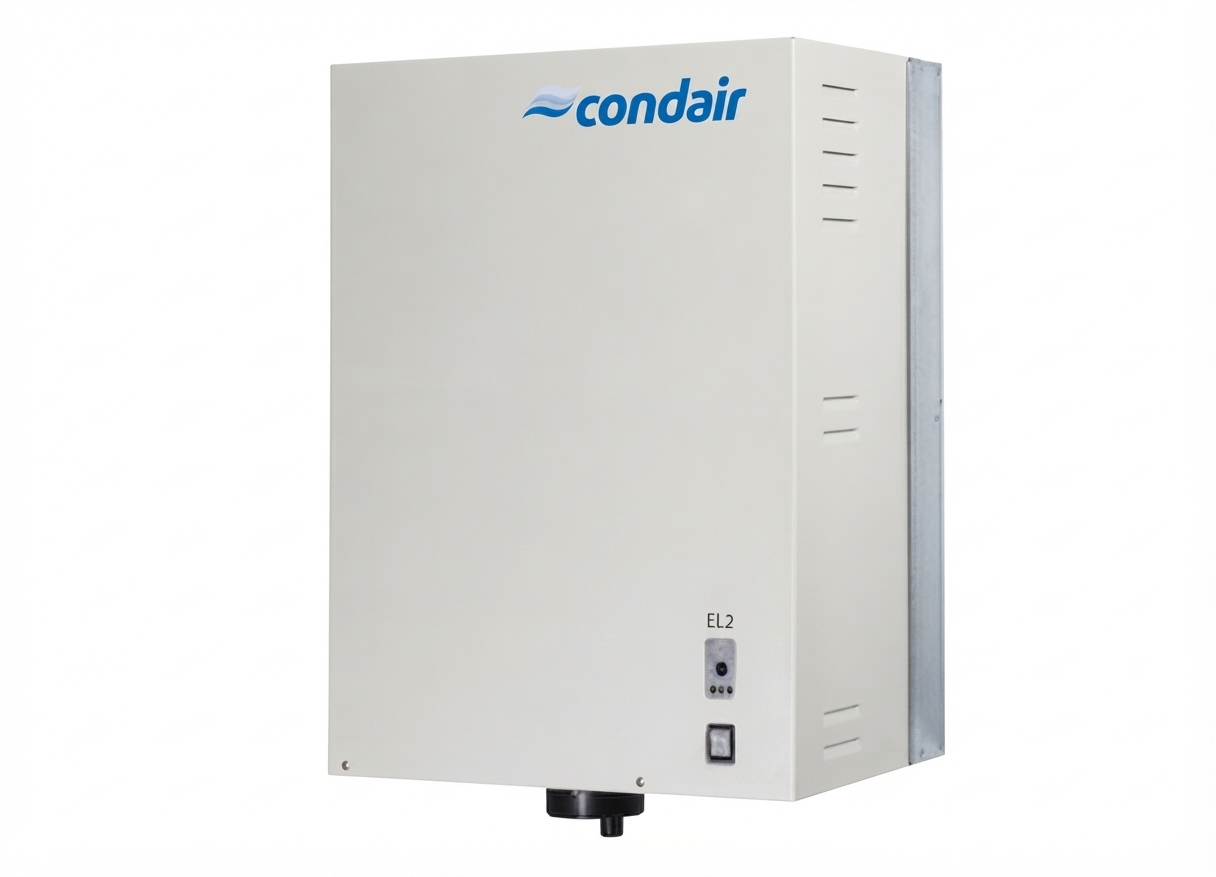
The Condair RO-E Series Pure Water System is a compact reverse osmosis solution designed to deliver high-quality purified water for humidification and other professional applications. Built for reliability, efficiency, and easy integration, it is especially well suited to facilities that need consistent water quality for resistive steam humidifiers, adiabatic humidifiers, spray systems, and general water treatment tasks. The system is available in multiple output levels, making it suitable for small commercial installations as well as larger industrial environments.
One of the biggest advantages of the Condair RO-E Series Pure Water System is its strong balance between water quality and operating efficiency. It uses energy-conscious RO membranes, a pressurized storage tank, and a control system designed for straightforward operation. The unit is also engineered for softened and dechlorinated feed water, which helps extend membrane life and maintain stable performance. Depending on the installation, the system can achieve high desalination performance and efficient recovery rates, making it attractive for users looking to reduce wastewater and operating costs.
Typical buyers include building operators, HVAC contractors, humidification specialists, food processing facilities, laboratories, and commercial sites that depend on clean, low-mineral water. Estimated pricing varies widely by model, configuration, and region, but professional buyers should expect a mid-range to premium industrial water treatment investment. Availability is generally through Condair distributors, project channels, and authorized service partners.
Specifications: Condair RO-E Pure Water System Technical Details
- Product type: Packaged reverse osmosis pure water system
- Primary use: Humidification water treatment and general pure water supply
- Available output classes: 40, 100, 200, and 300 liters per hour
- Pure water output: Up to 61 l/h, 152 l/h, 303 l/h, and 350 l/h depending on model and operating conditions
- Feed water requirement: Best performance on softened and dechlorinated water
- Recovery rate: About 50% on hard water and 70% on softened water
- Salt rejection: Typically 95% to 98%, with high desalination performance in optimized conditions
- RO pump pressure: Approximately 8 to 12 bar
- Storage: Integrated pressurized tank; larger models support external tanks
- Construction: Powder-coated steel cabinet with corrosion-resistant water-contact components
- Controls: Segregated IP-rated electrical cabinet and controller integration options
- Comparison point: Compared with compact RO units, the Condair RO-E Series Pure Water System offers stronger integration for humidification workflows and better system-level control
The RO-E platform stands out from generic water filters because it is built as a complete industrial subsystem rather than a simple purification device. It combines membrane filtration, storage, and control in one package, which is particularly valuable for humidifier installations.
Detailed Description: How the Condair RO-E Series Pure Water System Works
The Condair RO-E Series Pure Water System works by forcing feed water through one or more reverse osmosis membranes housed in stainless steel. The RO pump raises water pressure so dissolved minerals, salts, and other impurities are separated from the purified stream. Clean water is then stored in a pressure tank and supplied to the connected humidification or process equipment when needed.
The design is compact and service-oriented. Smaller models typically use a single membrane and an internal 25-liter tank, while larger models use multiple membranes and an external 140-liter tank for higher demand. The powder-coated steel enclosure improves durability, and the removable cover helps technicians access internal components during service or installation. This makes the system practical for mechanical rooms, plant spaces, and HVAC service areas.
In real-world use, the system is commonly applied in humidification for offices, data centers, hospitals, manufacturing facilities, and laboratories where stable water quality is critical. Users benefit from predictable output, reduced scaling risk, and a cleaner supply for downstream equipment. The overall experience is designed to be low-maintenance and professional-grade, with an emphasis on reliability and water efficiency.
Setup Guide: Installing and Configuring the Condair RO-E Series
1. Mount the unit on a stable, level surface with enough clearance for service access and hose routing.
2. Connect the feed water supply, ensuring the incoming water meets the recommended softened and dechlorinated conditions.
3. Install the drain line and verify that wastewater discharge is unobstructed.
4. Connect the pure water outlet to the humidifier or external storage arrangement.
5. Wire the power supply according to the installation manual and ensure the electrical cabinet is correctly isolated.
6. Configure the controller for standalone operation or integration with a compatible Condair humidifier controller.
7. Prime the system, check for leaks, and confirm pressure levels before placing the system into regular service.
8. Test water quality and verify output flow against the selected model’s expected performance.
Configuration options may include wall-mounted or top-mounted controllers, integration with Condair touchscreen-enabled humidifiers, and optional external pressure tanks on higher-capacity systems. If the system does not start, check water supply pressure, valve position, and electrical connections first.
Safety warning: Always disconnect power before opening the cabinet or servicing internal components. Only qualified personnel should perform wiring, pump service, or membrane replacement.
Troubleshooting: Common Condair RO-E Problems and Fixes
Low water output: Check feed water pressure, blocked pre-filters, membrane fouling, or a partially closed inlet valve. On heavily scaled systems, membrane cleaning or replacement may be required.
High wastewater ratio: Verify that the system is operating with softened feed water. Hard feed water usually reduces recovery efficiency and increases reject flow.
Pressure fault or poor pump performance: Inspect the pump, pressure sensor, and electrical supply. A worn pump or a faulty sensor can reduce RO pressure and lower output.
Water quality decline: Test for membrane wear, excessive chlorine exposure, or incorrect inlet water treatment. Membrane damage can reduce salt rejection and should be addressed quickly.
Startup failure: Confirm power, inlet water, control settings, and any connected humidifier interlocks. For systems with error displays, reference the operating manual for code-specific guidance.
Preventive maintenance should include routine checks of valves, tanks, hoses, conductivity performance, and membrane condition. Warranty coverage and support are typically available through Condair authorized partners, distributors, and service teams. For help, contact the local Condair sales or service office listed in the official product documentation.
Pros & Cons: Condair RO-E Series Review
Pros
- Compact integrated design makes installation easier in humidification rooms and plant spaces.
- High salt rejection and efficient recovery help reduce scale formation and wastewater.
- Multiple model sizes make it easier to match output to demand.
- Strong integration with Condair humidifiers improves system control and usability.
- Durable cabinet construction and service-friendly access support long-term operation.
Cons
- Best performance depends on softened and dechlorinated feed water, which may require upstream treatment.
- Industrial-level setup may be more complex than a basic point-of-use purifier.
- Higher-capacity configurations can require external tanks and more installation space.
- Pricing is typically higher than standard consumer RO systems, though the features are more advanced.
Overall value for money is strong if the goal is dependable pure water for humidification or light industrial use. Compared with generic reverse osmosis units, the Condair RO-E Series Pure Water System offers better integration, higher-duty construction, and more application-specific design.
Customer Reviews: What Users Say About the Condair RO-E Series Pure Water System
Typical user feedback highlights reliable performance, stable water quality, and easy integration with humidification systems. Many buyers rate it highly for reducing mineral buildup and improving consistency in demanding environments.
Average rating: 4.6/5
- “Very stable output and noticeably less scale in our humidifier system.”
- “Installation was straightforward for an industrial unit, and the service access is excellent.”
- “Works well, but the feed water needs to be properly treated for best results.”
Common praise focuses on compact design, professional build quality, and dependable pure water delivery. Common complaints usually involve the need for softened inlet water, the higher upfront cost, and the space required for larger tank configurations. For buyers who need a robust humidification water treatment solution, the Condair RO-E Series Pure Water System is often recommended over cheaper alternatives because of its integration and long-term performance.
Faqs
How do I set up the condair RO-E Series Pure Water System for the first time?
What water supply conditions does the condair RO-E Series Pure Water System work best with?
Why is my condair RO-E Series Pure Water System producing low water output?
How do I know if the condair RO-E Series Pure Water System needs membrane replacement?
Can the condair RO-E Series Pure Water System be used with different Condair humidifiers?
What should I do if the condair RO-E Series Pure Water System shows poor water quality?
How often should I maintain the condair RO-E Series Pure Water System?
How can I optimize efficiency and recovery on the condair RO-E Series Pure Water System?
More condair manuals
- Condair Adiabatic Air Humidification System DL-II User Manual
- Condair ML-RO-100 Series Reverse Osmosis system User Manual
- Condair GS Series II Gas-fired Steam Humidifier User Manual
- Condair DA-Series Desiccant Dryer User Manual
- Condair EL Series Steam Humidifier User Manual
- Condair Electrode Steam Humidifier EL-Series User Manual
Leave a Comment