
Condair DA-Series Desiccant Dryer User Manual
Content
Condair DA-Series Desiccant Dryer: Product Manual and Buyer Guide
Introduction
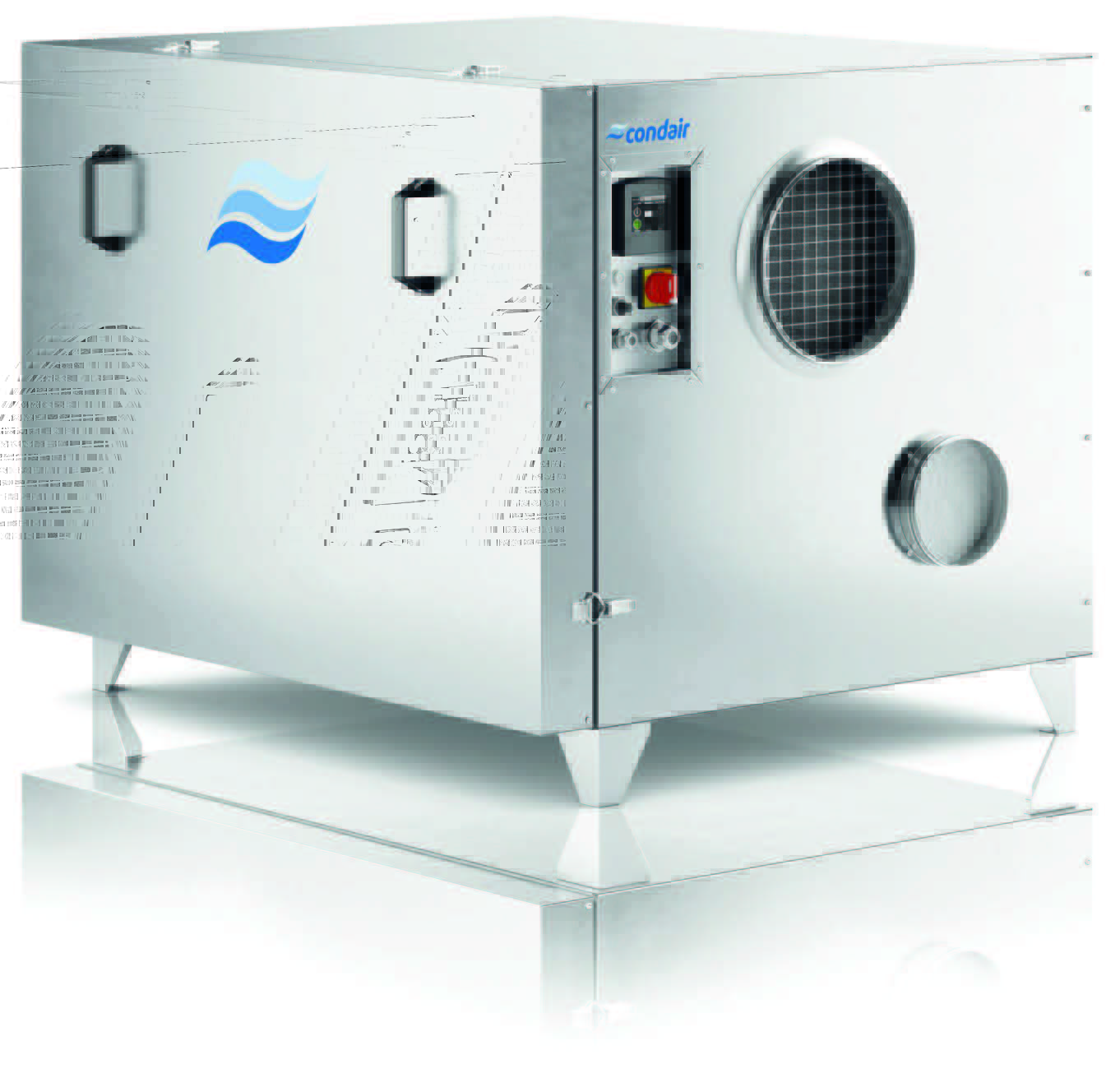
The Condair DA-Series Desiccant Dryer is a floor-mounted industrial desiccant dehumidifier designed for demanding humidity control applications where standard refrigeration systems cannot deliver low enough moisture levels. Built for continuous operation, it uses a high-performance rotor and self-regulating electric regeneration heating to remove moisture efficiently across a wide operating range. This makes it a strong fit for pharmaceutical production, food processing, cold storage, museums, electronics manufacturing, cleanrooms, and other moisture-sensitive environments.
One of the biggest advantages of the Condair DA-Series Desiccant Dryer is its ability to deliver dry air even in low-temperature or high-humidity conditions, where condensation risk and corrosion are common. The series is known for compact packaging, insulated construction, reliable airflow handling, and a variety of control options for integration into building systems. Depending on the model, drying capacity can range from roughly 3.3 kg/h to much higher industrial output levels, giving buyers flexibility to size the unit for small rooms or larger process areas.
Estimated pricing typically starts around the mid-thousands for smaller units and rises significantly for larger-capacity systems, custom configurations, and installation packages. Availability is generally through authorized industrial HVAC distributors and direct sales channels, with lead times varying by region and configuration. For organizations that need precise humidity control, the DA-Series offers an effective balance of performance, durability, and long-term value.
Specifications for Condair DA-Series Desiccant Dryer
The Condair DA-Series Desiccant Dryer combines industrial-grade moisture removal with configurable airflow and heating options. Exact specifications vary by model, but the series commonly includes the following capabilities:
- Drying capacity: approximately 3.3 kg/h to 20.0 kg/h in the standard DA 500–4000 range, with larger series extending well beyond this for higher-volume applications.
- Process air volume: from about 500 m³/h in smaller models to 4,000 m³/h in larger standard units.
- Reactivation air volume: scaled to match performance needs, ranging from about 150 m³/h to 850 m³/h depending on model.
- Operating range: standard units are designed for 0 to 40 °C and 0 to 100% relative humidity.
- Power supply: commonly 208/3/60 or 230/1/50 depending on market and configuration.
- Electrical load: model-dependent, with power consumption increasing as drying capacity rises.
- Construction: insulated, double-walled housing with corrosion-resistant materials for quiet and efficient operation.
- Control options: selectable operating modes and integration-ready controls for facility management systems.
Compared with standard refrigerant dehumidifiers, the DA-Series performs better in low dew point and low-temperature environments. Compared with smaller desiccant units, it offers stronger airflow, better scalability, and more industrial features for continuous duty use.
How to Set Up a Condair DA-Series Desiccant Dryer
Proper installation is essential for safe and efficient operation of the Condair DA-Series Desiccant Dryer. Begin by placing the unit on a level, stable surface with adequate clearance for service access, airflow, and maintenance. Verify that the room can support the unit’s weight and that ventilation paths remain unobstructed.
- Inspect the shipment for damage and confirm all accessories, filters, and documentation are present.
- Position the unit near the process air intake, dry air outlet, and regeneration air routing.
- Connect process air and dry air ducting according to the specified diameter and layout.
- Wire the unit to the correct voltage and phase supply by a qualified technician only.
- Set the control mode, target humidity, and any external enable signals or BMS connections.
- Run a test cycle and check airflow, heater response, and sensor readings.
Safety precautions include locking out power before wiring, keeping combustible materials away from heater components, and ensuring proper exhaust routing. If airflow is incorrect, check duct restrictions, belt tension, and fan operation before full commissioning.
Troubleshooting Condair DA-Series Desiccant Dryer Problems
Most issues with the Condair DA-Series Desiccant Dryer can be traced to airflow problems, heater faults, sensor errors, or incorrect configuration. Start by checking basic power supply, filters, and duct connections before replacing components.
- Low drying performance: Confirm the process air volume matches specification, check for clogged filters, inspect rotor condition, and verify regeneration heat output.
- Unit will not start: Confirm all phases are live, verify control signals, and check emergency stop or safety interlock status.
- High humidity alarm: Inspect setpoint configuration, confirm sensor placement, and make sure doors or duct leaks are not introducing excess moisture.
- Overtemperature or heater fault: Check airflow across the reactivation side and inspect the heater circuit for proper operation.
- Unusual noise or vibration: Examine fans, belts, bearings, and mounting stability.
Preventive maintenance should include routine filter replacement, fan inspection, belt checks, and sensor calibration. Warranty coverage and service terms depend on the distributor and region, so owners should keep purchase records and commissioning reports available. For support, contact the authorized Condair dealer, local HVAC service partner, or the regional Condair service department listed in the product documentation.
Pros and Cons of the Condair DA-Series Desiccant Dryer
Pros
- Excellent low-humidity performance for demanding industrial environments.
- Works reliably in temperature and humidity conditions where refrigeration units struggle.
- Wide capacity range makes it suitable for small rooms and larger process applications.
- Industrial construction and insulated housing support long service life and quieter operation.
- Flexible control options improve integration with facility automation systems.
Cons
- Higher upfront cost than basic refrigerant dehumidifiers.
- Requires proper installation and ducting for best results.
- Uses more energy than simpler consumer-grade units in many applications.
- May be oversized for light-duty office or home use.
For organizations that need precise moisture control, the value for money is strong because the unit helps prevent product loss, corrosion, downtime, and quality failures. Compared with alternative industrial dehumidifiers, the DA-Series is especially attractive when low dew points and continuous duty are priorities.
Customer Reviews and User Feedback on Condair DA-Series Desiccant Dryer
User feedback on the Condair DA-Series Desiccant Dryer is generally positive, with many customers praising its stable humidity control, durable build, and performance in challenging environments. Typical ratings fall in the 4 to 5 star range for industrial buyers who value reliability over low initial cost.
- Praise: “It keeps our production room at the target humidity even during winter.”
- Praise: “Very dependable for continuous operation and easy to integrate with our controls.”
- Complaint: “The installation was more involved than expected.”
- Complaint: “Energy use is higher than a standard dehumidifier, but the performance justifies it.”
The most common recommendation is to buy the correct model size from the start and use a qualified installer. Customers who need a robust industrial desiccant dryer for mission-critical humidity control usually report strong satisfaction with long-term performance and process reliability.
Faqs
How do I set up a condair DA-Series Desiccant Dryer for the first time?
What should I check if my condair DA-Series Desiccant Dryer is not reaching the target humidity level?
Can the condair DA-Series Desiccant Dryer be used in cold rooms or freezer environments?
What are the main features of the condair DA-Series Desiccant Dryer that improve moisture control?
How often should I perform maintenance on a condair DA-Series Desiccant Dryer?
What is the best way to troubleshoot unusual noise or vibration in a condair DA-Series Desiccant Dryer?
What installation requirements should I plan for before buying a condair DA-Series Desiccant Dryer?
How can I optimize the energy efficiency of a condair DA-Series Desiccant Dryer?
More condair manuals
- Condair ML-RO-100 Series Reverse Osmosis system User Manual
- Condair Electrode Steam Humidifier EL-Series User Manual
- Condair RO-E Series Pure Water System User Manual
- Condair RS-II Steam Humidifier User Manual
- Condair Adiabatic Air Humidification System DL-II User Manual
- Condair Pure Water System RO-A User Manual
Leave a Comment