
Honeywell HE300 Humidifier User Manual
Content
Honeywell HE300 Humidifier Manual and Product Guide
Introduction
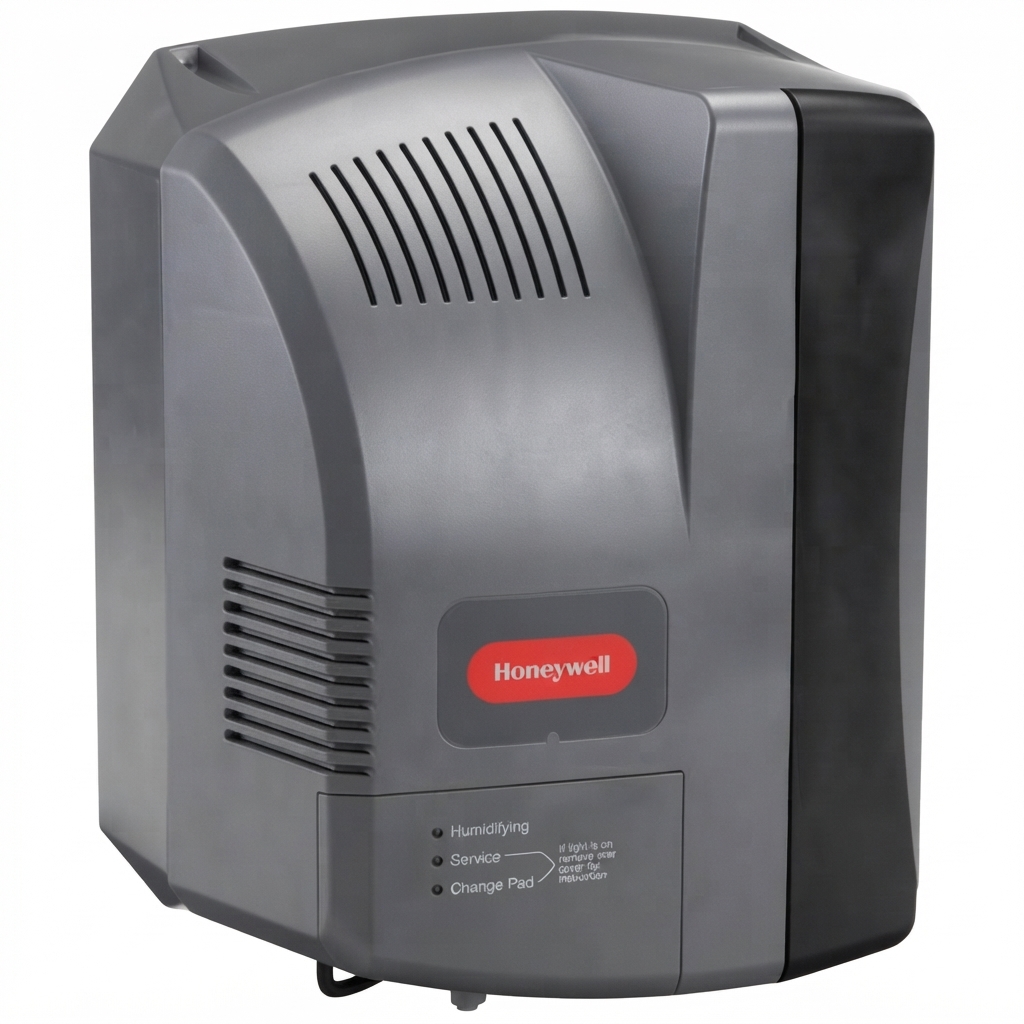
The Honeywell HE300 Humidifier is a fan-powered evaporative whole-house humidifier designed to deliver consistent moisture control for larger homes and demanding HVAC systems. Built for duct-mounted installation, it helps reduce dry air issues such as static electricity, dry skin, cracked wood, and discomfort during winter heating seasons. As part of the TrueEASE line, the HE300 is positioned as an advanced solution for homeowners who want automatic humidity management with strong coverage and dependable performance.
This model is especially useful for homes with up to 24,000 cubic feet of conditioned space, making it a practical choice for medium to large properties. Its evaporative fan-powered design supports efficient moisture delivery, while the external humidistat and outdoor temperature sensor help maintain balanced indoor humidity levels. The Honeywell HE300 Humidifier is also a strong fit for users who prefer a set-it-and-forget-it system that works alongside a forced-air furnace.
Typical pricing for the HE300 varies by retailer and installation package, but the estimated product range generally falls between $400 and $1,100, depending on whether it is sold as a standalone unit or bundled with controls and installation accessories. Availability is usually good through HVAC supply distributors, appliance parts sellers, and professional resellers. For homeowners comparing whole-house humidifiers, the Honeywell HE300 Humidifier stands out for its capacity, smart humidity control, and reliable ducted performance.
Specifications for Honeywell HE300 Humidifier
- Humidification type: Fan-powered evaporative whole-house humidifier
- Capacity: 18 gallons per day
- Coverage: Up to 24,000 cubic feet
- Electrical rating: 120 VAC, 60 Hz, 1 A maximum
- Operating temperature range: 34°F to 90°F
- Operating humidity range: 0% to 95% RH, non-condensing
- Dimensions: Approximately 15.5 in W x 16.8 in H x 10.3 in D
- Plenum opening: 14-1/16 in H x 13-1/2 in W
- Duct size: 6 in
- Mounting type: Duct/plenum installation
- Control type: External humidistat with outdoor temperature sensor
- Typical use: Residential forced-air HVAC systems
Compared with smaller models in the same family, the HE300 offers higher output and wider coverage, making it more suitable for larger homes than entry-level whole-house humidifiers. It is also more practical than portable room humidifiers because it humidifies the entire home through the HVAC system rather than one room at a time.
Pros and Cons of the Honeywell HE300 Humidifier
Pros
- Strong output at 18 gallons per day for large-home performance
- Fan-powered design improves moisture delivery through the duct system
- Automatic humidity control helps reduce over-humidification
- Works well with forced-air heating systems for whole-home comfort
- Good value for homeowners who want a premium duct-mounted humidifier
- Useful features such as an outdoor sensor and reminder-based maintenance support
Cons
- Professional installation is usually recommended, which adds total cost
- Requires periodic pad or wick replacement for best performance
- Not ideal for renters or users looking for a portable solution
- Higher upfront cost than simple bypass humidifiers
- Performance depends on proper HVAC setup and duct compatibility
For value for money, the Honeywell HE300 Humidifier is strongest when installed in a larger home that needs consistent, automated humidity control. Buyers comparing it with bypass humidifiers will usually notice better output and control, while those comparing it with compact portable models will see a major jump in whole-home coverage.
Customer Reviews and User Feedback
Overall user sentiment for the Honeywell HE300 Humidifier is generally positive, with many homeowners rating it around 4 out of 5 stars for comfort and home-wide moisture control. Customers often praise its ability to reduce dry indoor air, improve sleep comfort, and limit static electricity during winter months.
Common complaints usually focus on installation complexity, maintenance requirements, and the need for regular filter or pad changes. Some users also note that results depend heavily on correct sizing and professional setup. A typical testimonial might read: “After installation, the house felt much more comfortable within a few days, and the dry air problem was gone.”
Buyers who want a dependable whole-house humidifier for a larger HVAC system are the best match for this model. Those who prefer minimal maintenance or a lower-cost option may want to compare it with simpler bypass units before purchasing.
Final Buying Advice
The Honeywell HE300 Humidifier is a strong choice for homeowners who need reliable whole-house humidity control, especially in larger homes with forced-air heating. It combines solid output, automatic operation, and practical HVAC integration in a package that supports long-term indoor comfort. If you are searching for a high-capacity evaporative humidifier with dependable performance, the Honeywell HE300 Humidifier remains one of the most capable options in its class.
Faqs
How do I set up the honeywell HE300 Humidifier for the first time on a furnace system?
Why is my honeywell HE300 Humidifier not adding enough moisture to the house?
What humidistat setting should I use with the honeywell HE300 Humidifier in winter?
Can the honeywell HE300 Humidifier work with any forced-air HVAC system?
Why does my honeywell HE300 Humidifier make the furnace area damp or leave water spots?
How often should I replace the water panel in the honeywell HE300 Humidifier?
What are the most common honeywell HE300 Humidifier problems and easy fixes?
How can I maintain the honeywell HE300 Humidifier for better performance and longer life?
More honeywell manuals
- Honeywell HM700A1000 Electrode Steam Humidifier User Manual
- Honeywell HE105 Bypass Humidifier User Manual
- Honeywell TH5000 Series Non-Programmable Thermostat TH5110D User Manual
- Honeywell RTH8580WF Wi-Fi Touchscreen Thermostat User Manual
- Honeywell TC500A Commercial Thermostat User Manual
- Honeywell TH7000 Series Touch-Screen Thermostat User Manual
Leave a Comment