
How to Use: Fitbit Charge 3 User Manual
Content
Fitbit Charge 3
Introduction
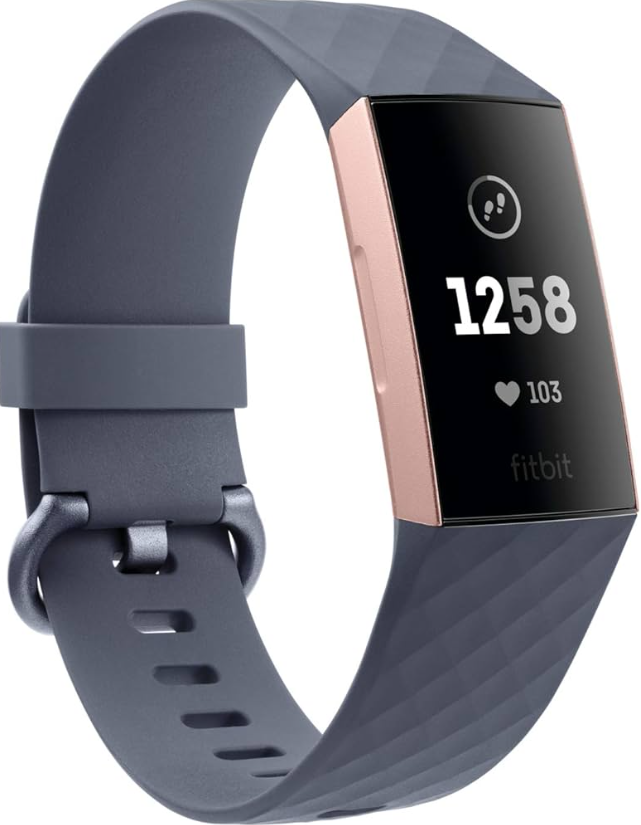
The Fitbit Charge 3 is an advanced fitness tracker designed for users who want detailed health insights, smart notifications, and sleek style—all in a lightweight, swim-proof device. As a significant upgrade over its predecessor, the Charge 3 features a larger, more responsive grayscale touchscreen, improved battery life, and a refined aluminum case, making it suitable for both gym sessions and professional settings
Key benefits include 24/7 heart rate monitoring, automatic exercise recognition, sleep tracking, and water resistance up to 50 meters, allowing for swim tracking in pools.. The device also offers smartphone notifications, guided breathing sessions, and period tracking, making it a versatile companion for daily wellness. Unique selling points include Fitbit’s PurePulse heart rate technology, connected GPS (using your phone’s GPS), and up to seven days of battery life on a single charge.
The Fitbit Charge 3 targets health-conscious individuals, fitness enthusiasts, and professionals seeking a discreet yet powerful wearable. It’s ideal for tracking workouts, monitoring sleep quality, and staying connected without constantly checking your phone. The device is widely available online and in electronics retailers, with prices typically ranging from $100 to $150, depending on the edition and accessories
What's in the box
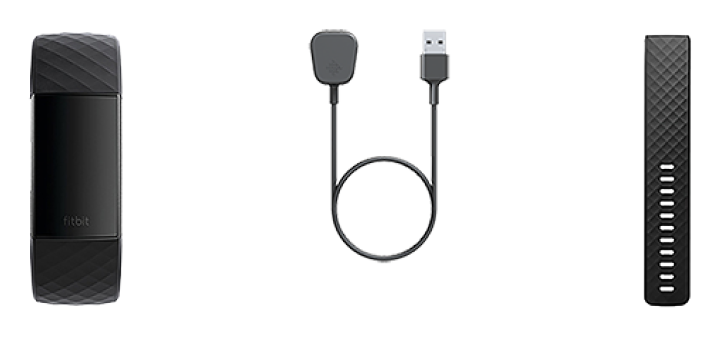
Your Charge 3 box includes:
Charge your tracker
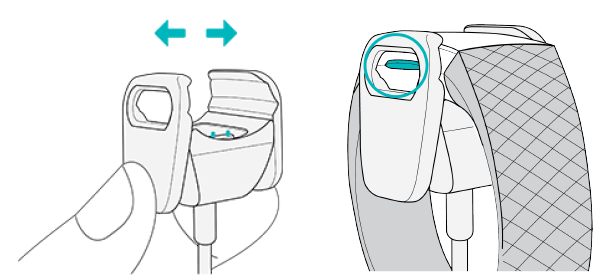
- Plug the charging cable into the USB port on your computer, a UL-certified USB wall charger, or another low-energy charging device.
- Clip the other end of the charging cable to the port on the back of Charge 3. The pins on the charging clip must lock securely with the gold contacts on the back of the tracker. Charge 3 vibrates, and a battery icon appears on the screen.
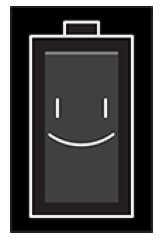
Charging fully takes about 1-2 hours. While the tracker charges, you can press the buttons to check the battery level. A fully-charged tracker shows a solid battery icon with a smile.
Set up with your phone
Set up Charge 3 with the Fitbit app for iPhones and iPads or Android phones. The Fitbit app is compatible with most popular phones.
To get started:.
- Download the Fitbit app:
Apple App Store for iPhones
Google Play Store for Android phones - Install the app, and open it.
- Tap Sign in with Google, and follow the on-screen instructions to set up your device.
When you're done with setup, read through the guide to learn more about your new tracker and then explore the Fitbit app.
- For more information, see the related help article.
- See your data in the Fitbit app
- Open the Fitbit app on your phone to see your health metrics, activity and sleep data, choose a workout or mindfulness session, and more.
Wear Charge 3
Placement for all-day wear vs. exercise
When you're not exercising, wear Charge 3 a finger's width above your wrist bone.
In general, it's always important to give your wrist regularlyar basis by removing your tracker for around an hour after extended wear. We recommend removing your tracker while you shower. Although you can shower while wearing your tracker, not doing so reduces the potential for exposure to soaps, shampoos, and conditioners, which can cause long-term damage to your tracker and may cause skin irritation.
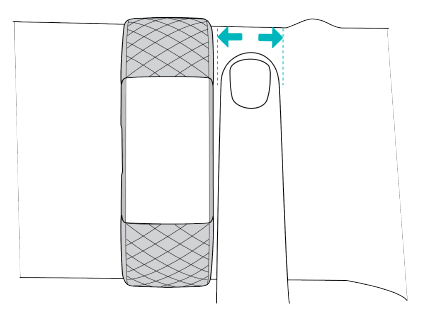
For optimized heart-rate tracking while exercising:
During a workout, experiment with wearing your tracker a bit higher on your wrist for an improved fit. Many exercises, such as bike riding or weight lifting, cause you to bend your wrist frequently, which could interfere with the heart-rate signal if the tracker is lower on your wrist.
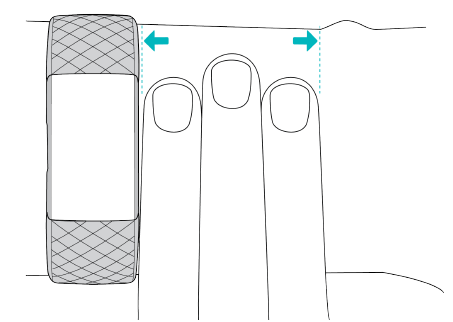
- Wear your tracker on top of your wrist, and make sure the back of the device is in contact with your skin.
Consider tightening your band before a workout and loosening it when you’re done. The band should be snug but not constricting (a tight band restricts blood flow, potentially affecting the heart-rate signal).
Handedness
For greater accuracy, you must specify whether you wear Charge 3 on your dominant or non-dominant hand. Your dominant hand is the one you use for writing and eating. To start, the Wrist setting is set to non-dominant. If you wear Charge 3 on your dominant hand, change the Wrist setting in the Fitbit app:
From the Today tab in the Fitbit app, tap the icon  in the top left >Charge 3 tile> Wrist> Dominant.
Wear and care tips
- Clean your band and wrist regularly with a soap-free cleanser.
- If your tracker gets wet, remove it and dry it completely after your activity.
- Take your tracker off from time to time.
- For more information, visit the Fitbit Wear & Care page.
Change the band
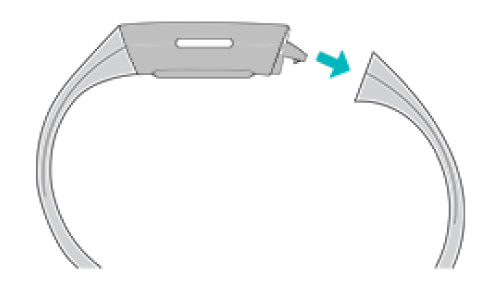
Remove a band
- Turn over Charge 3 and find the band latches.
- To release the latch, press down on the flat button on the band.
- Gently pull the band away from the tracker to release it.
- Repeat on the other side.
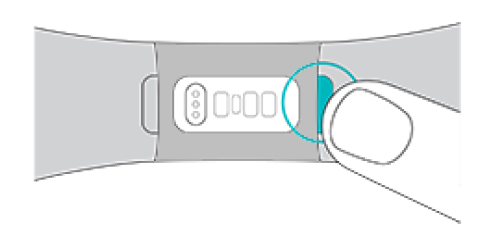
Attach a new band
To attach a new band, press it into the end of the tracker until you feel it snap into place.
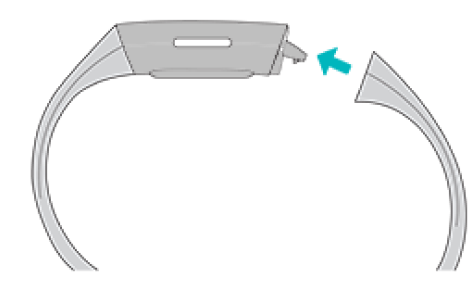
- If you have trouble attaching the band or if it feels loose, gently move the band back and forth to make sure it's attached to the tracker.
Troubleshooting
If Charge 3 isn't working properly, see our troubleshooting steps below.
Heart-rate signal missing
Charge 3 continuously tracks your heart rate while you're exercising and throughout the day. If the heart-rate sensor on your tracker has difficulty detecting a signal, dashed lines appear.
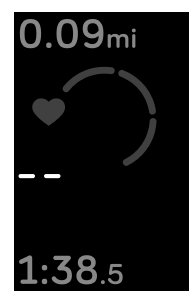
If your tracker doesn't detect a heart-rate signal, first make sure heart-rate tracking is turned on in the Settings app on your tracker. Next, make sure you're wearing your tracker correctly, either by moving it higher or lower on your wrist or by tightening or loosening the band. Charge 3 should be in contact with your skin. After holding your arm still and straight for a short time, you should see your heart rate again.
For more information, see the related help article.
GPS signal missing
Environmental factors, including tall buildings, dense forest, steep hills, and thick cloud cover, can interfere with your phone's ability to connect to GPS satellites. If your phone is searching for a GPS signal during an exercise, connecting appears at the top of the screen.
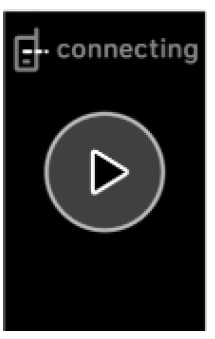
For best results, wait for your phone to find the signal before you start your workout.
Other issues
If you experience any of the following issues, restart your tracker:
- Won't sync
- Won't respond to taps, swipes, or button presses
- Won't track steps or other data
- Won't show notifications
General Info
Sensors and Components
Fitbit Charge 3 contains the following sensors and motors:
- Optical heart-rate tracker
- An altimeter, which tracks altitude changes
- 3-axis accelerometer, which tracks motion patterns
- Vibration motor
- Materials
The housing and buckle on Charge 3 are made of anodized aluminum. While anodized aluminum can contain traces of nickel, which can cause an allergic reaction in someone with nickel sensitivity, the amount of nickel in all Fitbit products meets the European Union's stringent Nickel Directive.
The Charge 3 classic band is made of a flexible, durable elastomer material similar to that used in many sports watches. - Wireless technology
Charge 3 contains a Bluetooth 4.0 radio transceiver, and Fitbit-Pay enabled devices contain an NFC chip. - Haptic feedback
Charge 3 contains a vibration motor for alarms, goals, notifications, and reminders. - Battery
Charge 3 contains a rechargeable lithium-polymer battery. - Memory
Charge 3 stores your data, including daily stats, sleep information, and exercise history, for 7 days. See your historical data in the Fitbit app. - Display
Charge 3 has an OLED display. - Band size
Band sizes are shown below. Note that accessory bands sold separately may vary slightly.- Small band
Fits a wrist between 5.5 - 7.1 inches (140 mm - 180 mm) in circumference - Large band
Fits a wrist between 7.1 - 8.7 inches (180 mm - 220 mm) in circumference
- Small band
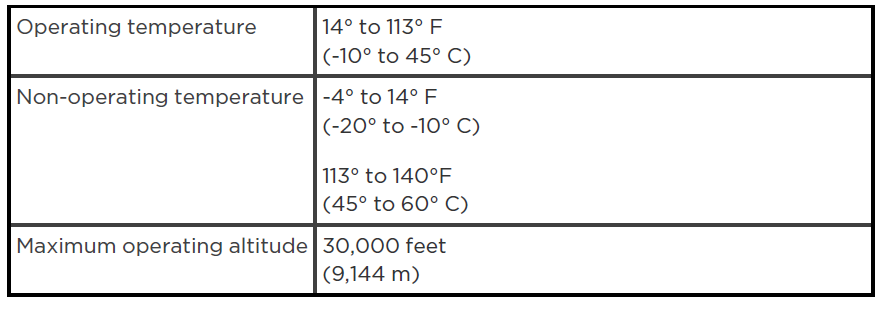
Environmental conditions
Return policy and warranty
Find warranty information and the policy on our website.
Fitbit Charge 3: Detailed Specifications
- Display: 0.8-inch grayscale OLED touchscreen with Corning Gorilla Glass 3, 40% larger than Charge 2
- Battery: Up to 7 days of use; lithium-polymer, charges fully in about 2 hours
- Dimensions & Weight: 35.8mm x 22.7mm x 11.8mm; 30g; available in small (140–180mm wrist) and large (180–220mm wrist) bands
- Memory & Storage: Stores 7 days of detailed motion data, daily totals for 30 days, and heart rate data at varying intervals
- Sensors: 3-axis accelerometer, optical heart rate monitor, altimeter, SpO2 sensor (blood oxygen), vibration motor, NFC for Fitbit Pay (Special Edition only)
- Water Resistance: 5ATM rated (up to 50m), suitable for swimming
- Exercise Modes: 15+ preloaded modes, including running, swimming, and interval training; SmartTrack auto-recognizes activities
- Smart Features: Call, text, calendar, and app notifications; Quick Replies (Android only); music control; weather app; customizable clock faces
- Connectivity: Bluetooth 4.0, connected GPS (uses phone’s GPS), WiFi sync
- Compatibility: Works with iOS 13+, Android 8.0+, Windows 10
- Operating System: Fitbit OS
Compared to similar trackers, the Fitbit Charge 3 stands out for its long battery life, robust swim tracking, and comprehensive health metrics. However, it lacks built-in GPS, relying instead on your phone for run tracking.
Fitbit Charge 3: Troubleshooting Guide
- Device Not Syncing: Ensure Bluetooth is enabled on your phone and the Fitbit app is open. Restart both devices if needed..
- Battery Drains Quickly: Reduce screen brightness, turn off all-day sync, and close unused apps. A full reset may help if issues persist.
- Heart Rate Inaccuracies: Wear the band snugly, clean the sensor area, and avoid wearing during high-intensity vibrations.
- Screen Unresponsive: Restart the device. If problems continue, perform a factory reset via the Fitbit app.
- Water Damage: While water-resistant, avoid exposing to soap, hot water, or open water. Dry thoroughly after swimming..
Preventive Measures: Regularly update firmware, avoid extreme temperatures, and use only approved chargers. For warranty and support, visit the Fitbit website or contact customer service. Warranty typically covers manufacturing defects for one year..
Fitbit Charge 3: Pros & Cons
Pros
- Long Battery Life: Up to 7 days on a single charge
- Comfortable Design: Lightweight, slim profile, and stylish bands for all occasions
- Comprehensive Tracking: 24/7 heart rate, sleep stages, 15+ exercise modes, and auto-activity detection
- Swim Proof: Tracks swimming and is safe for pool use
- Smart Notifications: Stay connected with calls, texts, and app alerts
Cons
- No Built-in GPS: Relies on connected GPS from your phone
- Monochrome Display: Lacks color, which may disappoint some users
- Android-Only Quick Replies: iPhone users miss out on this feature
- Accessory Costs: Additional bands and accessories are sold separately
The Fitbit Charge 3 offers excellent value for those seeking detailed health insights and smart features without the bulk or price of a full smartwatch. It outperforms many rivals in battery life and swim tracking but may not suit users needing onboard GPS or a color display.
Fitbit Charge 3: Customer Reviews & Feedback
User reviews highlight the Fitbit Charge 3’s comfort, accurate sleep tracking, and reliable heart rate monitoring as standout features. Many appreciate the device’s automatic workout detection, especially for running, cycling, and swimming, though some note that manual tracking for swimming doesn’t capture heart rate data as effectively.
Common praises include the intuitive app interface, long battery life, and water resistance for pool workouts. Criticisms often focus on the lack of built-in GPS and the monochrome screen. Most users rate the Charge 3 between 4 and 4.5 stars, citing it as a great mid-range fitness tracker for everyday use and moderate workouts.
Purchase recommendations emphasize the Charge 3 for users seeking a balance of features, battery life, and price. It’s especially recommended for swimmers and those who value sleep and heart rate insights. Potential buyers should consider their need foGPa anddd a color display before choosing.
More fitbit manuals
- Setup: Fitbit Charge 4 Fitness Tracker Instruction Manual
- How to Use: Fitbit Charge 3 Fitness Tracker User Manual
- How to Use: Fitbit Charge 5 Fitness Tracker User Manual
- Fitbit Alta Smart Fitness Tracker Version 1.3 User Guide
- How to Use: Fitbit Flex Wireless Activity + Sleep Wristband User Manual
- How to Use: Fitbit Blaze 101 Smart Fitness Watch FB502SBUS User Manual
Leave a Comment