
Setup: Fitbit Charge 4 Fitness Tracker Instruction Manual
Content
Fitbit Charge 4 Fitness Tracker
Introduction
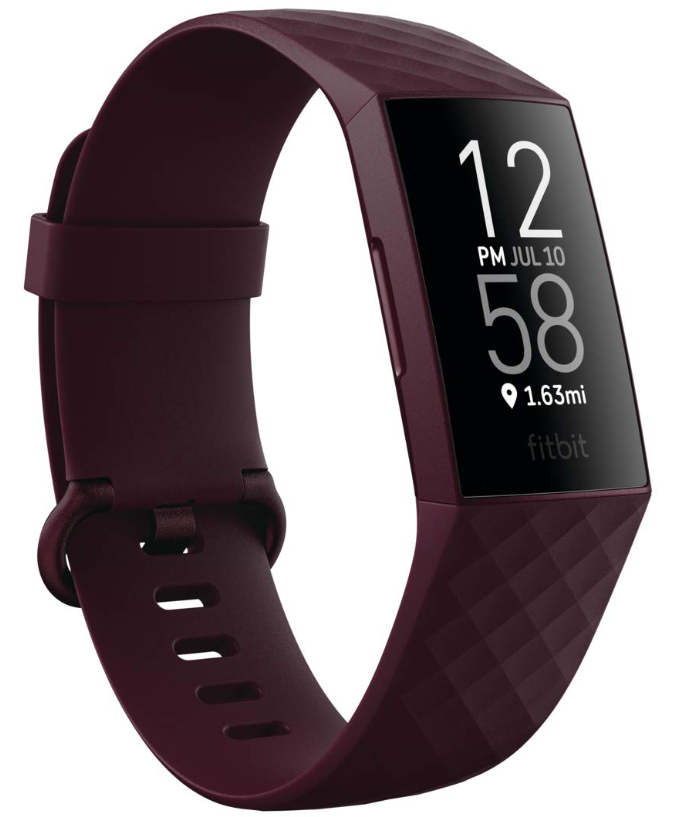
The Fitbit Charge 4 Fitness Tracker is a feature-rich wearable designed to help users achieve their health and fitness goals with precision and ease. As one of Fitbit’s most popular activity bands, the Charge 4 stands out with its built-in GPS, 24/7 heart rate monitoring, sleep tracking, and water resistance up to 50 meters, making it a versatile companion for both daily life and intense workouts.
Unlike many fitness trackers in its class, the Fitbit Charge 4 offers automatic workout detection for activities like running, swimming, cycling, and even team sports, thanks to its SmartTrack technology. This means you don’t have to manually start a session—your tracker recognizes your activity and logs it for you. The device also provides personalized heart rate zones, helping you optimize your effort during exercise and track progress over time.e
Additional benefits include up to 7 days of battery life, Spotify controls (on some models), and compatibility with a wide range of interchangeable bands. The Fitbit app offers in-depth analytics, including a workout intensity map, sleep score, and progress toward daily activity goals, giving users a comprehensive view of their health metrics.cs
The Fitbit Charge 4 Fitness Tracker is ideal for active individuals, fitness enthusiasts, and anyone looking to improve their overall wellness. Whether you’re training for a marathon, monitoring your sleep, or simply aiming to move more each day, this device delivers actionable insights and motivation. The estimated price range is around $150, with wide availability through major retailers and online stores.
With its sleek design, robust feature set, and user-friendly interface, the Fitbit Charge 4 remains a top choice for those seeking a reliable, all-in-one fitness tracker that balances advanced technology with everyday practicality.
Get started
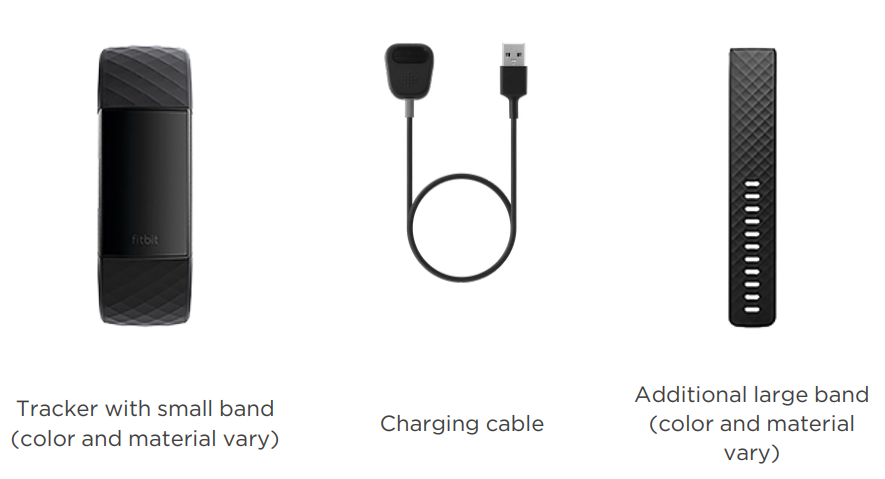
What's in the box
Your Charge 4 box includes:
Set up Charge 4
Use the Fitbit app for iPhones and Android phones.
To create a Fitbit account, you're prompted to enter your birthdate, height, weight, and sex to calculate your stride length and to estimate distance, basal metabolic rate, and calorie burn. After you set up your account, your first name, last initial, and profile picture are visible to all other Fitbit users. You have the option to share other information, but most of the information you provide to create an account is private by default.
Charge your tracker
A fully-charged Charge 4 has a battery life of 7 days. Battery life and charge cycles vary with use and other factors; actual results will vary.
Note: The Charge 4 charging cable has a gray connector on the base of the clip. The Charge 3 charger doesn’t work with Charge 4.
To charge Charge 4:
- Plug the charging cable into the USB port on your computer, a UL-certified USB wall charger, or another low-energy charging device.
- Clip the other end of the charging cable to the port on the back of Charge 4. The pins on the charging clip must lock securely with the gold contacts on the back of the tracker. Charge 4 vibrates, and a battery icon appears on the screen.
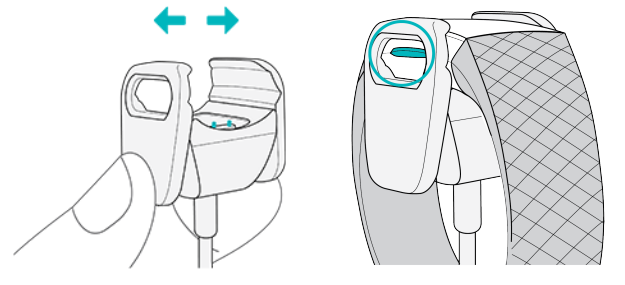
Charging fully takes about 1-2 hours. While the tracker charges, you can press the buttons to check the battery level. A fully-charged tracker shows a solid battery icon with a smile.

Set up with your phone.
Set up Charge 4 with the Fitbit app for iPhones and iPads or Android phones. The Fitbit app is compatible with most popular phones.
To get started:
- Download the Fitbit app:
Apple App Store for iPhones
Google Play Store for Android phones - Install the app, and open it.
- Tap Sign in with Google, and follow the on-screen instructions to set up your device.
When you're done with setup, read through the guide to learn more about your new tracker and then explore the Fitbit app.p
See your data in the Fitbit app.
Open the Fitbit app on your phone to see your health metrics, activity, and sleep data, choose a workout or mindfulness session, and more.
Unlock Fitbit Premium
Fitbit Premium is your personalized resource in the Fitbit app that helps you stay active, sleep well, and manage stress. A Premium subscription includes programs tailored to your health and fitness goals, personalized insights, hundreds of workouts from fitness brands, guided meditations, and more.
For more information, see the related help article.
Wear Charge 4
- Wear Charge 4 around your wrist. If you need to attach a different size band, or if you purchased another band, see the instructions in "Change the band" on page 14.
- Placement for all-day wear vs. exercise
- When you're not exercising, wear Charge 4 a finger's width above your wrist bone.
- In general, it's always important to give your wrist a break regularly by removing your tracker for around an hour after extended wear. We recommend removing your tracker while you shower. Although you can shower while wearing your tracker, not doing so reduces the potential for exposure to soaps, shampoos, and conditioners, which can cause long-term damage to your tracker and may cause skin irritation.
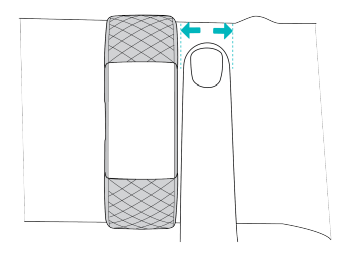
For optimized heart-rate tracking while exercising:
During a workout, experiment with wearing your tracker a bit higher on your wrist for an improved fit. Many exercises, such as bike riding or weight lifting, cause you to bend your wrist frequently, which could interfere with the heart-rate signal if the tracker is lower on your wrist.
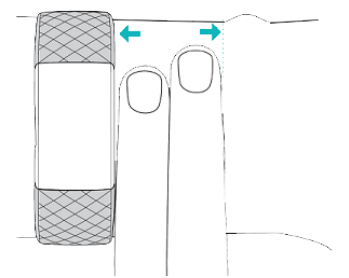
- Wear your tracker on top of your wrist, and make sure the back of the device is in contact with your skin.
- Consider tightening your band before a workout and loosening it when you’re done. The band should be snug but not constricting (a tight band restricts blood flow, potentially affecting the heart-rate signal).
Handedness
For greater accuracy, you must specify whether you wear Charge 4 on your dominant or non-dominant hand. Your dominant hand is the one you use for writing and eating. To start, the Wrist setting is set to non-dominant. If you wear Charge 4 on your dominant hand, change the Wrist setting in the Fitbit app:
From the Today tab in the Fitbit app, tap the icon in the top left >Charge 4 tile> Wrist >Dominant.
Wear and care tips
- Clean your band and wrist regularly with a soap-free cleanser.
- If your tracker gets wet, remove it and dry it completely after your activity.
- Take your tracker off from time to time.
For more information, visit the Fitbit Wear & Care page.
Change the band
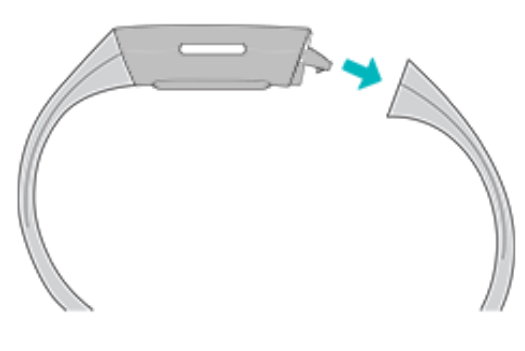
Remove a band
- Turn over Charge 4 and find the band latches.
- To release the latch, press down on the flat button on the band.
- Gently pull the band away from the tracker to release it.
- Repeat on the other side.
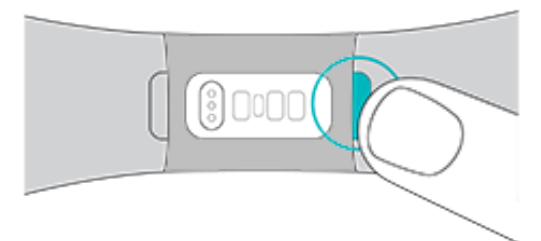
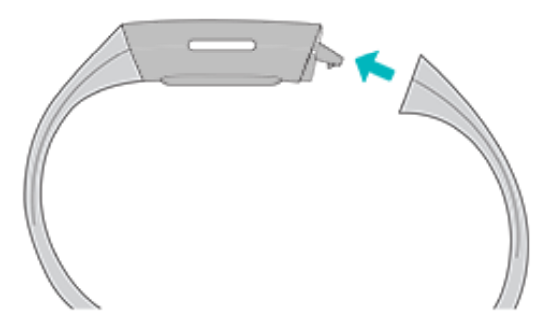
Attach a new band
To attach a new band, press it into the end of the tracker until you feel it snap into place.
If you have trouble attaching the band or if it feels loose, gently move the band back and forth to make sure it's attached to the tracker.
Troubleshooting
If Charge 4 isn't working properly, see our troubleshooting steps below.
Heart-rate signal missing
Charge 4 continuously tracks your heart rate while you're exercising and throughout the day. If the heart-rate sensor on your tracker has difficulty detecting a signal, dashed lines appear.
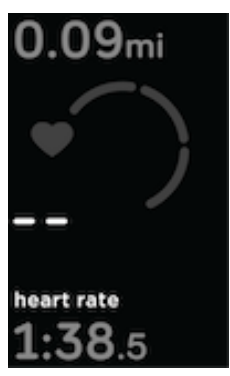
If your tracker doesn't detect a heart-rate signal, first make sure heart-rate tracking is turned on in the Settings app on your tracker. Next, make sure you're wearing your tracker correctly, either by moving it higher or lower on your wrist or by tightening or loosening the band. Charge 4 should be in contact with your skin.
After holding your arm still and straight for a short time, you should see your heart rate again.
For more information, see the related help article.
GPS signal missing
Environmental factors, including tall buildings, dense forest, steep hills, and thick cloud cover, can interfere with your tracker's ability to connect to GPS satellites. If your tracker is searching for a GPS signal during an exercise, you’ll see “ connecting” appear at the top of the screen. If Charge 4 can't connect to a GPS satellite, the tracker stops trying to connect until the next time you start a GPS exercise.
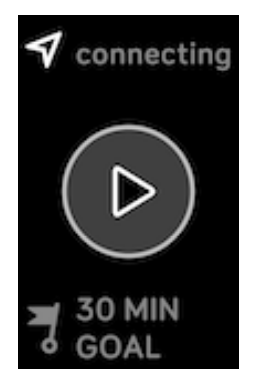
For best results, wait for Charge 4 to find the signal before you start your workout. For more information, see the related help article.
Other issues
If you experience any of the following issues, restart your tracker:
- Won't sync
- Won't respond to taps, swipes, or button presses
- Won't track steps or other data
- Won't show notifications
For instructions, see "Restart Charge 4" on page 48.
General Info and Specifications
Sensors and Components
Fitbit Charge 4 contains the following sensors and motors:
- Optical heart-rate tracker
- An altimeter, which tracks altitude changes
- 3-axis accelerometer, which tracks motion patterns
- Built-in GPS receiver, which tracks your location during a workout
- Vibration motor
- Materials
The housing on Charge 4 is plastic. The Charge 4 classic band is made of a flexible, durable elastomer material similar to that used in many sport watches and includes a surgical-grade stainless steel buckle. - Wireless technology
Charge 4 contains a Bluetooth 4.0 radio transceiver and NFC chip. - Haptic feedback
Charge 4 contains a vibration motor for alarms, goals, notifications, reminders, and apps. - Battery
Charge 4 contains a rechargeable lithium-polymer battery. - Memory
Charge 4 stores your data, including daily stats, sleep information, and exercise history, for 7 days. See your historical data in the Fitbit app. - Display
Charge 4 has a PMOLED display. - Band size
Band sizes are shown below. Note that accessory bands sold separately may vary slightly.- Small band
Fits a wrist between 5.5 - 7.1 inches (140 mm - 180 mm) in circumference - Large band
Fits a wrist between 7.1 - 8.7 inches (180 mm - 220 mm) in circumference
- Small band
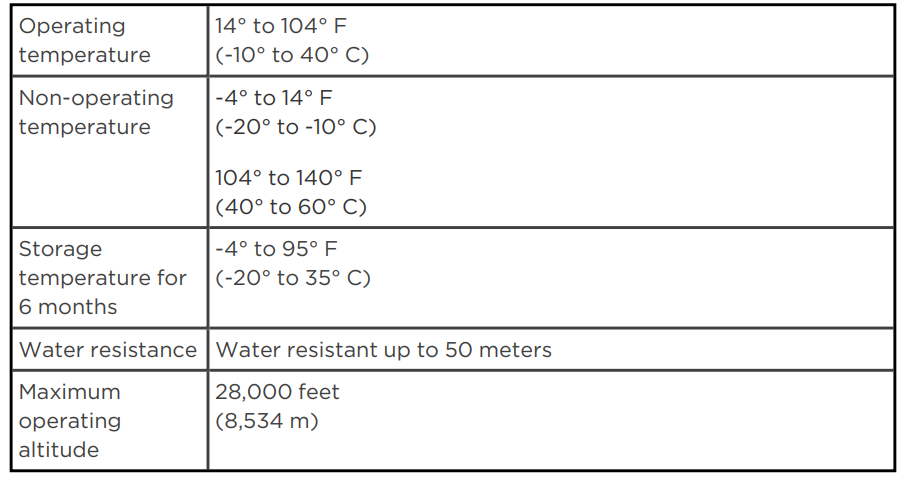
Environmental conditions
Return policy and warranty
Find warranty information and return policy on our website.
Pros and Cons of the Fitbit Charge 4 Fitness Tracker
Advantages
- Built-in GPS: Accurately tracks outdoor activities like running and cycling without needing a smartphone, providing pace, distance, and route maps directly on your wrist
- Comprehensive Health Tracking: Monitors heart rate continuously, tracks sleep stages, estimates calories burned, and records steps, distance, and floors climbed[
- Long Battery Life: Lasts up to 7 days on a single charge, and up to 5 hours with GPS active—ideal for long workouts and trips
- Water Resistance: Safe for swimming, showering, and water sports, with automatic swim tracking
- SmartTrack Automatic Exercise Recognition: Detects and logs workouts automatically, including runs, swims, elliptical sessions, and more
- Personalized Insights: Offers heart rate zones, sleep scores, and progress toward daily goals, helping users tailor their routines for better results[
- Value for Money: Packs premium features at a mid-range price, making it accessible for most users
Limitations
- No Music Storage: While some models offer Spotify controls, there’s no onboard music storage for offline listening.
- Basic Display: Features a grayscale OLED touchscreen, which lacks the vibrancy and color of more advanced models like the Charge
- No Advanced Health Sensors: Lacks ECG and stress monitoring features found in newer Fitbit models
- Calorie Estimation Limitations: Calorie calculations during swimming are estimates since heart rate isn’t tracked in water
- Manual Lap Tracking: Automatic lap detection is generally reliable , but may occasionally miss a lap during swimming
Comparison to Alternatives
The Fitbit Charge 4 Fitness Tracker offers a compelling mix of features for its price, but those seeking more advanced health metrics (like ECG or stress tracking) may prefer the Fitbit Charge 5 or other premium wearables. However, the Charge 4 remains a strong value for users who prioritize fitness tracking, battery life, and GPS accuracy without needing the latest health sensors.
Customer Reviews and User Feedback
Users consistently praise the Fitbit Charge 4 Fitness Tracker for its accurate GPS, long battery life, and comprehensive activity tracking. Many highlight how easy it is to use, with the Fitbit app providing detailed insights into daily activity, sleep patterns, and workout performance.e
Common compliments include the device’s comfortable fit, water resistance for swimming, and the convenience of automatic exercise detection. The ability to set and track personalized goals is also frequently mentioned as a motivator for staying active.
However, some users note limitations such as the lack of a color display, occasional inaccuracies in lap counting during swimming, and the absence of advanced health features like ECG found in newer models. Battery life, while generally good, can vary with heavy GPS use.
Star ratings for the Fitbit Charge 4 Fitness Tracker typically range from 4 to 4.5 out of 5 across major retailers, reflecting its reliability and value. Most customers recommend it for anyone seeking a dependable, feature-packed fitness tracker at a reasonable price.
For those considering a purchase, the Fitbit Charge 4 is best suited for users who want robust fitness tracking, GPS capability, and sleep insights without the need for cutting-edge health sensors. If advanced health monitoring is a priority, newer models like the Charge 5 may be a better fit.
Faqs
How do I set up my fitbit Charge 4 Fitness Tracker for the first time?
What should I do if my fitbit Charge 4 Fitness Tracker is not syncing with the app?
How can I use the built-in GPS feature on the fitbit Charge 4 Fitness Tracker?
Is the fitbit Charge 4 Fitness Tracker compatible with both Android and iOS devices?
How long does the battery last on the fitbit Charge 4 Fitness Tracker, and how can I optimize its performance?
What are Active Zone Minutes on the fitbit Charge 4 Fitness Tracker and how do I use them?
How do I clean and maintain my fitbit Charge 4 Fitness Tracker to ensure accurate tracking?
Why is my fitbit Charge 4 Fitness Tracker not tracking my heart rate correctly, and how can I fix it?
More fitbit manuals
- How to Use: Fitbit Charge 5 Fitness Tracker User Manual
- How to Use: Fitbit Charge 3 User Manual
- How to Use: Fitbit Flex Wireless Activity + Sleep Wristband User Manual
- How to Use: Fitbit Charge 3 Fitness Tracker User Manual
- Setup: Fitbit Flex 2 Wristband User Guide
- Fitbit Alta Smart Fitness Tracker Version 1.3 User Guide
Leave a Comment