
Features & Specs: Honeywell TP30WK Smart Dehumidifier User Manual
Content
Honeywell TP30WK Smart Dehumidifier Review and Product Manual
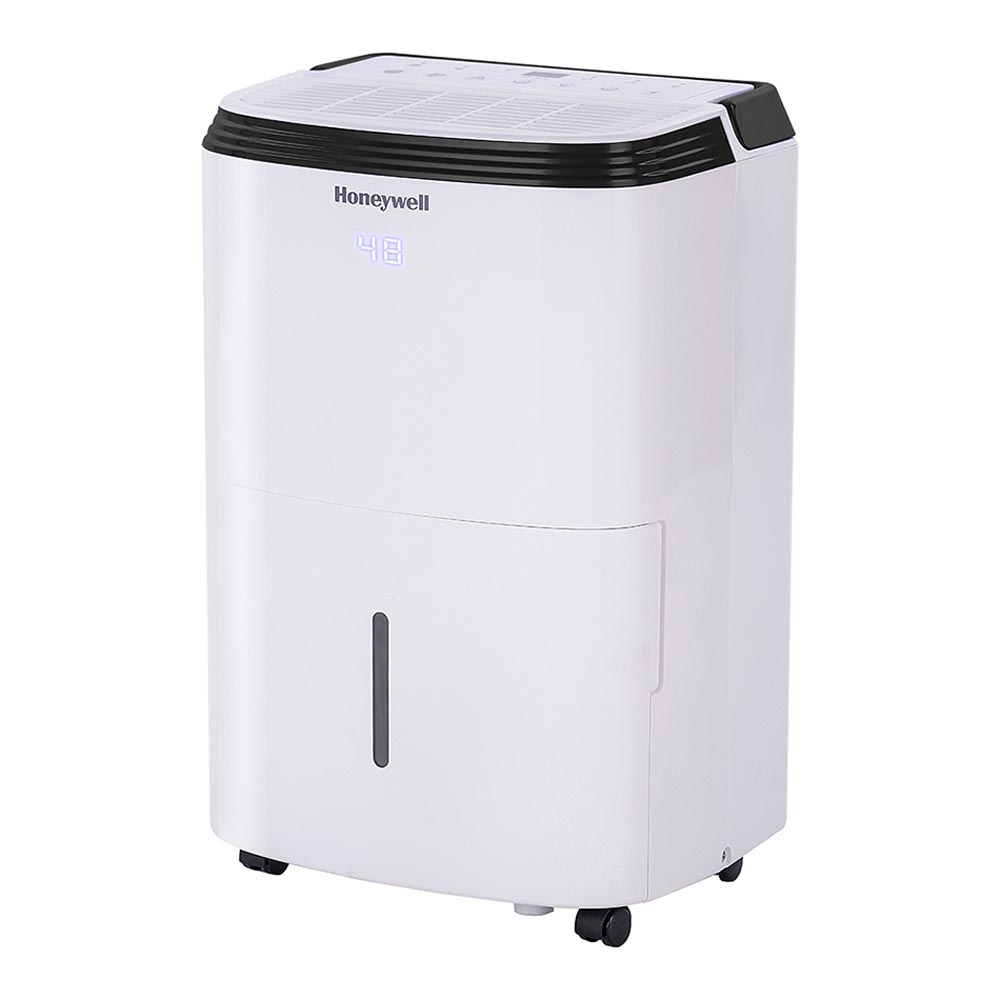
The Honeywell TP30WK Smart Dehumidifier is a compact, energy-efficient moisture control solution designed for smaller homes, apartments, basements, and bedrooms that struggle with excess humidity. As a smart dehumidifier in Honeywell’s popular 30-pint class, it combines automatic humidity sensing, reliable compressor-based performance, and user-friendly controls in a format that is easy to move and maintain. It is a strong fit for users who want dependable dehumidification without the bulk or energy draw of larger whole-home units.
One of the biggest advantages of the Honeywell TP30WK Smart Dehumidifier is its balance of size, coverage, and convenience. It is built to help protect walls, furniture, clothing, and electronics from mold, mildew, and damp odors while keeping indoor air more comfortable. Features such as automatic shutoff, continuous drainage support, washable filtration, and restart protection make it practical for everyday use. Depending on the retailer and model variant, pricing commonly falls in the mid-range category, with typical estimates around $200 to $300, while availability is generally good through major appliance stores, home improvement retailers, and online marketplaces.
This model is best for homeowners and renters who need a compact dehumidifier for rooms up to about 1,000 to 2,000 square feet, depending on moisture conditions and the exact model variant. It is especially useful in laundry rooms, finished basements, storage rooms, and humid living spaces where quiet operation and simple maintenance matter. For buyers searching for a smart dehumidifier that is easy to install and efficient to run, the Honeywell TP30WK Smart Dehumidifier offers a practical mix of performance and value.
Honeywell TP30WK Smart Dehumidifier Specifications and Key Features
- Dehumidification capacity: Approximately 20 pints per day under newer DOE-style ratings, often marketed as 30-pint class performance.
- Coverage area: Commonly listed for small to medium spaces, with real-world coverage typically ranging from 1,000 to 2,000 square feet depending on humidity levels.
- Tank capacity: About 7 pints, with automatic shutoff when the bucket is full.
- Airflow: Around 118 CFM, supporting steady moisture removal in enclosed rooms.
- Power use: Roughly 298 watts in typical operation, making it efficient for everyday use.
- Noise level: About 49.5 dBA, which is moderate for a compressor dehumidifier.
- Controls: Digital humidity control with auto restart and full-tank alert features.
- Drain options: Continuous drain support for low-maintenance operation.
- Filter: Washable mesh filter with filter-clean reminder.
- Operating range: Typically works in temperatures from about 41°F to 90°F.
- Mobility: Built-in casters and side handles make room-to-room movement easier.
- Refrigerant: Uses R410A in commonly listed versions.
Compared with similar dehumidifiers in the same class, the Honeywell TP30WK Smart Dehumidifier stands out for offering strong daily moisture removal, practical drainage options, and a well-balanced form factor. It is less powerful than larger 50-pint dehumidifiers, but it is more compact, quieter, and easier to position in smaller spaces. Against budget competitors, it often feels more polished in build quality and control layout.
Pros and Cons of the Honeywell TP30WK Smart Dehumidifier
Pros
- Good moisture removal for its size: Handles everyday humidity in bedrooms, basements, and laundry areas effectively.
- Smart humidity control: Automatically adjusts operation to maintain a more consistent indoor environment.
- Continuous drain support: Ideal for users who do not want to empty the tank frequently.
- Easy maintenance: The washable filter and simple bucket design reduce upkeep effort.
- Energy-conscious operation: It offers a solid balance between performance and power consumption.
- Strong value for money: A good option for buyers who want dependable brand-name performance without moving into premium-priced models.
Cons
- No built-in pump: Continuous drainage works well, but water removal depends on gravity drainage.
- Not suited for very large or extremely damp spaces: Users with heavy moisture problems may need a 50-pint model or larger.
- Moderate noise level: Quiet enough for many rooms, but not silent during compressor cycles.
- Tank size is average: In very humid conditions, the bucket can fill quickly if continuous drain is not used.
- Smart features may be limited: Depending on the exact version sold, app-based controls may not be included.
Overall, the Honeywell TP30WK Smart Dehumidifier is best viewed as a dependable mid-tier choice. It compares favorably with many alternative 30-pint models from Frigidaire, GE, and Midea when ease of use, efficiency, and brand support matter more than advanced extras.
Customer Reviews for Honeywell TP30WK Smart Dehumidifier
Customer feedback for the Honeywell TP30WK Smart Dehumidifier is generally positive, with many buyers rating it around 4.2 out of 5 stars. Users frequently praise its ability to lower humidity quickly in small and medium rooms, along with its simple controls and dependable automatic shutoff. One common testimonial theme is that it “starts working fast and keeps the basement comfortable without constant monitoring.”
Common complaints focus on the lack of a built-in pump, which limits drainage flexibility, and the fact that the compressor noise is noticeable when running on longer cycles. Some customers also mention that the bucket may need frequent emptying in very damp environments. Even so, most reviewers feel the unit delivers solid value for the price, especially for buyers who want a reliable smart dehumidifier from a trusted brand.
Purchase it if you need a compact, energy-efficient moisture remover for a bedroom, office, basement, or storage area. Skip it if you need whole-house coverage, pump-assisted drainage, or advanced app-based controls. For most everyday humidity problems, the Honeywell TP30WK Smart Dehumidifier remains a practical and purchase-worthy choice.
Faqs
How do I set up the honeywell TP30WK Smart Dehumidifier for the first time in a room?
Why is my honeywell TP30WK Smart Dehumidifier running but not reducing humidity?
How do I connect the honeywell TP30WK Smart Dehumidifier to Wi-Fi and control it remotely?
What should I do if the honeywell TP30WK Smart Dehumidifier keeps shutting off unexpectedly?
Can the honeywell TP30WK Smart Dehumidifier run continuously with a drain hose?
How do I choose the best humidity level on the honeywell TP30WK Smart Dehumidifier for everyday use?
How often should I clean and maintain the honeywell TP30WK Smart Dehumidifier?
Is the honeywell TP30WK Smart Dehumidifier suitable for bedrooms, basements, and laundry rooms?
More honeywell manuals
- Honeywell PB112C-GA Thermostat User Manual
- Setup & Features: Honeywell UtilityPROTM Series Touchscreen Programmable Demand Control Thermostat Owner Manual
- Honeywell RTH6500WF Wi-Fi Programmable Thermostat User Manual
- Setup: Honeywell T10 & T10+ Pro Smart Thermostat with RedLINK 3.0 User Manual
- Honeywell HumidiPRO H6062 Digital Humidity Control User Manual
- Setup: Honeywell T4 Pro Programmable Thermostat User Manual
Leave a Comment