
Lenovo ideapad 710S Plus User Guide | Specifications
Content
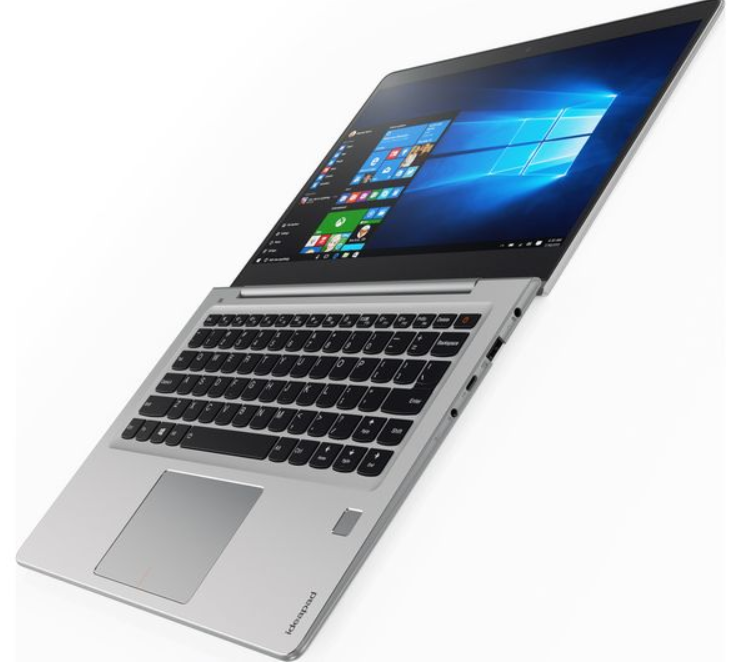
Lenovo IdeaPad 710S Plus
Introduction
The Lenovo IdeaPad 710S Plus is a sleek and powerful laptop designed for productivity and entertainment on the go. With its lightweight design and high-performance features, it offers a seamless computing experience.
Specifications
- Processor: Intel Core i7-7500U
- Memory: 8GB DDR4 RAM
- Storage: 256GB SSD
- Display: 13.3" Full HD IPS
- Graphics: Intel HD Graphics 620
- Operating System: Windows 10
- Battery Life: Up to 8 hours
- Weight: 2.6 lbs (1.2 kg)
Instructions
- Unbox the Lenovo IdeaPad 710S Plus.
- Connect the power adapter to the laptop and plug it into a power source.
- Press the power button to turn on the laptop.
- Follow the on-screen instructions to set up Windows 10.
- Once the setup is complete, you can start using the laptop.
Chapter 1. Getting to know your computer
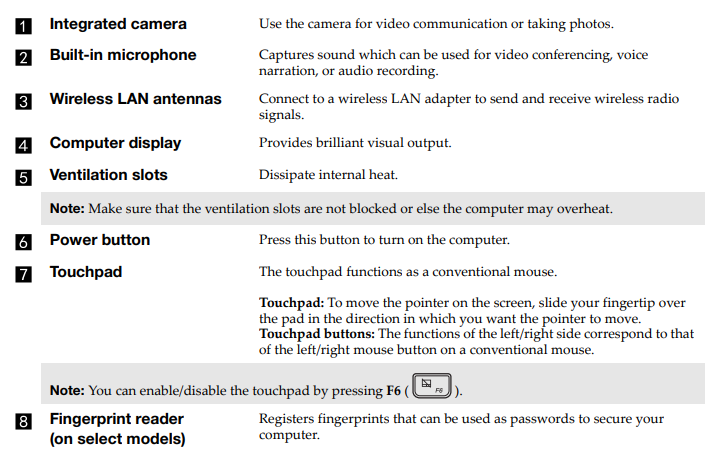
Top view
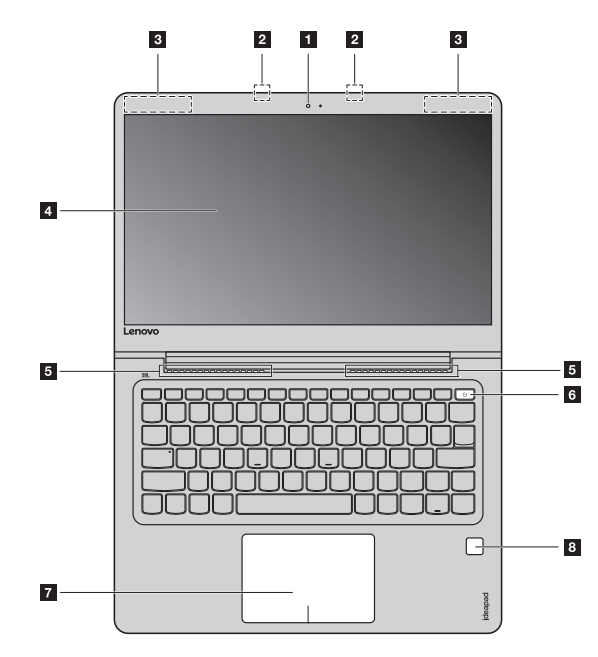
Note: The dashed areas indicate parts that are not visible externally.
Attention:
- Do not open the display panel beyond 180 degrees. When closing the display panel, be careful not to leave pens or any other objects in between the display panel and the keyboard. Otherwise, the display panel may be damaged.
Using the keyboard
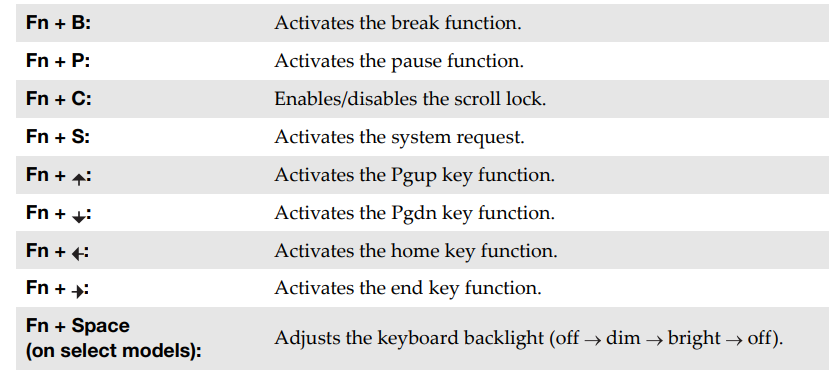
Function key combinations
Through the use of the function keys, you can change operational features instantly. To use this function, press and hold Fn 1; then press one of the function keys 2.
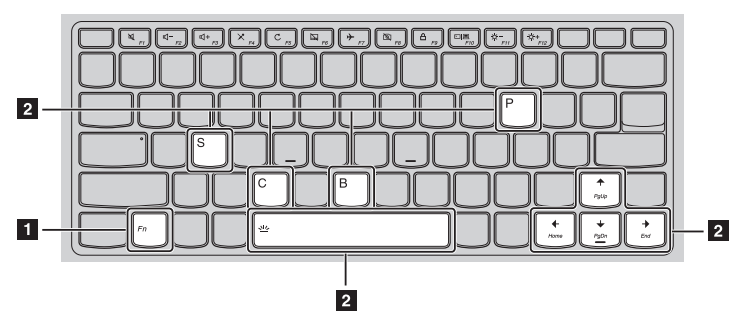
The following describes the features of each function key.
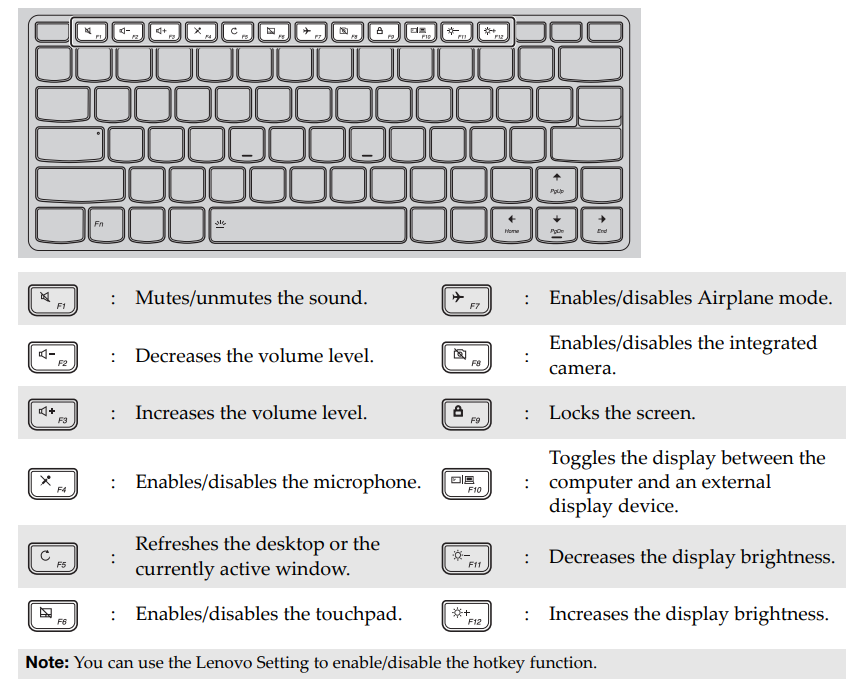
Hotkeys
You can access certain system settings quickly by pressing the appropriate hotkeys.
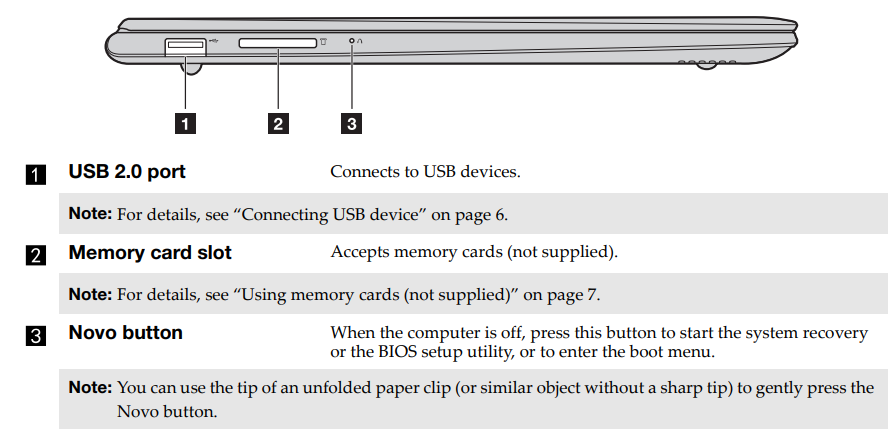
Left-side view
Connecting USB device
You can connect a USB device to your computer by inserting its USB plug (Type A) into the USB port on your computer.
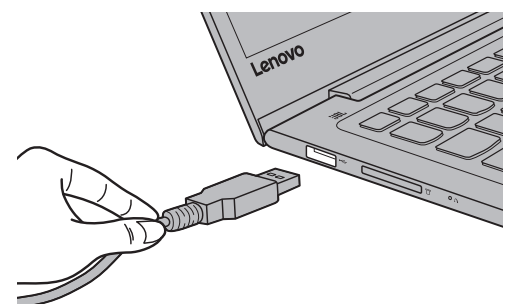
The first time you plug a USB device into a particular USB port on your computer, Windows automatically installs a driver for that device. After the driver has been installed, you can disconnect and reconnect the device without performing any additional steps.
Note: Typically, Windows detects a new device after it has been connected, and then installs the driver automatically. However, some devices may require you to install the driver before connecting. Check the documentation provided by the device’s manufacturer before connecting the device.
Before disconnecting a USB storage device, make sure your computer has finished transferring data to that device. Click the Safely Remove Hardware and Eject Media icon in the Windows notification area to remove the device before disconnecting.
Note: If your USB device uses a power cord, connect the device to a power source before connecting it. Otherwise, the device may not be recognized.
Using memory cards (not supplied)
Your computer supports the following types of memory cards:
- Secure Digital (SD) card
- Secure Digital High Capacity (SDHC) card
- Secure Digital eXtended Capacity (SDXC) card
- MultiMediaCard (MMC)
Notes:
- Insert only one card in the slot at a time.
- This card reader does not support SDIO devices (e.g., SDIO Bluetooth, etc.).
Inserting a memory card
Insert the memory card until it touches the bottom of the slot.
Removing a memory card
Gently pull the memory card out of the memory card slot.
Note: Before removing the memory card, disable it by using the Windows safely remove hardware and eject media utility to avoid data corruption.
Right-side view
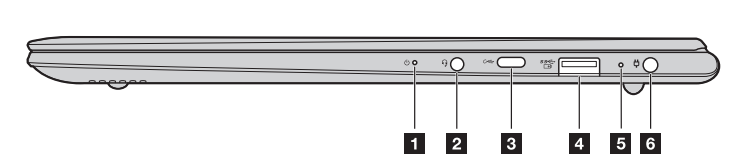
Power status indicator

Combo audio jack
Connects to headsets.
Notes:
- The combo audio jack does not support conventional microphones.
- The recording function might not be supported if third-party headphones or headsets are connected, due to different industry standards.
Type-C port
Connects to Type-C devices.
USB 3.0 port
Connects to USB devices.
Note: For details, see “Connecting USB device”
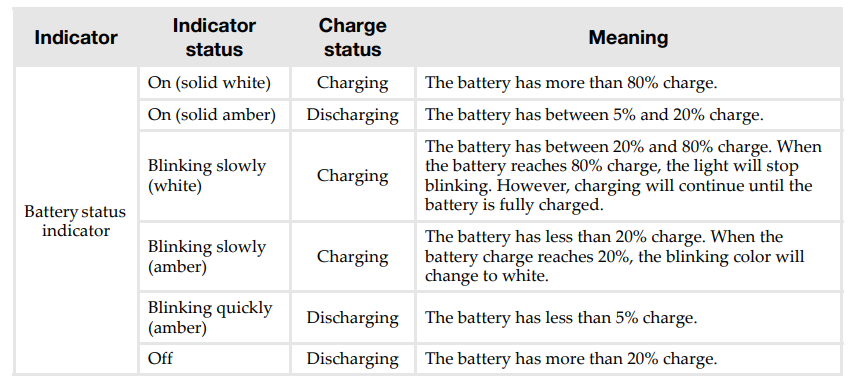
Battery status indicator
AC power adapter jack
Connects to the AC power adapter.
Bottom view
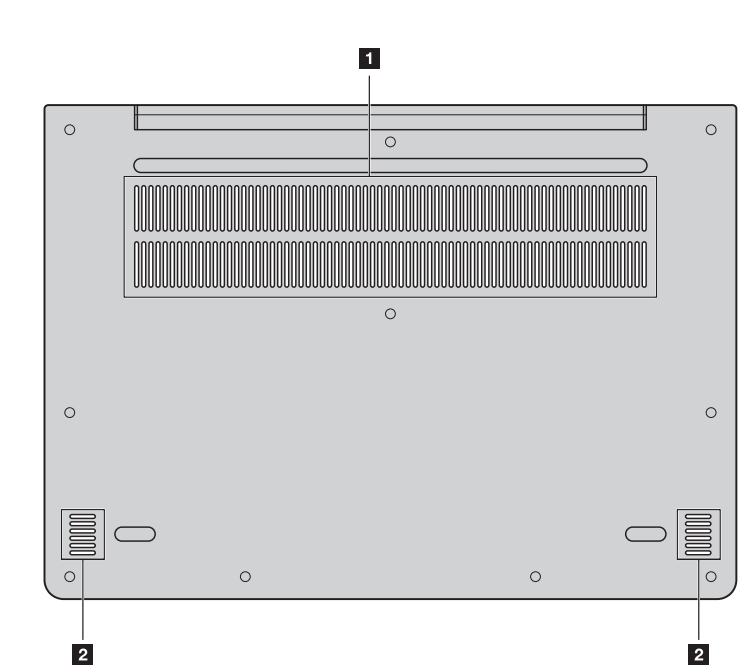
Louvers
Allow air to enter the computer for cooling.
Speakers
Provide audio output.
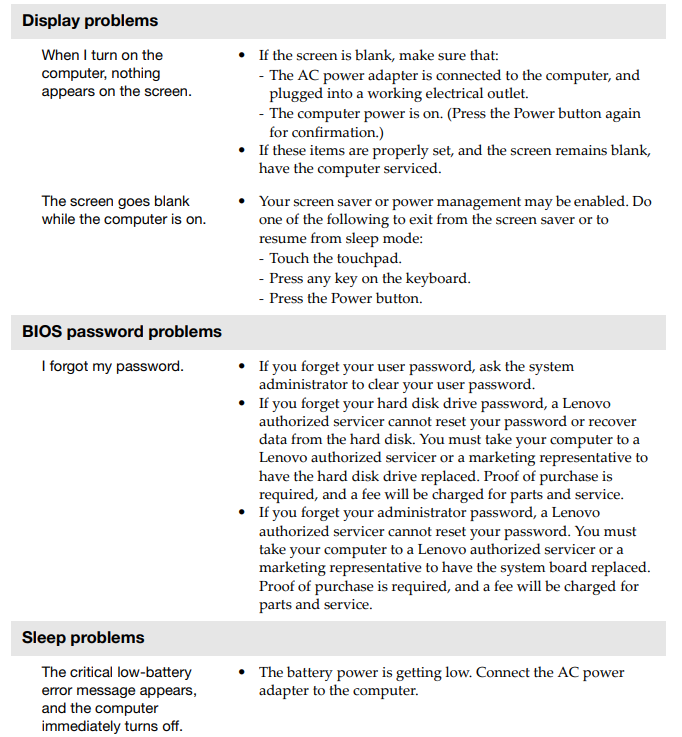
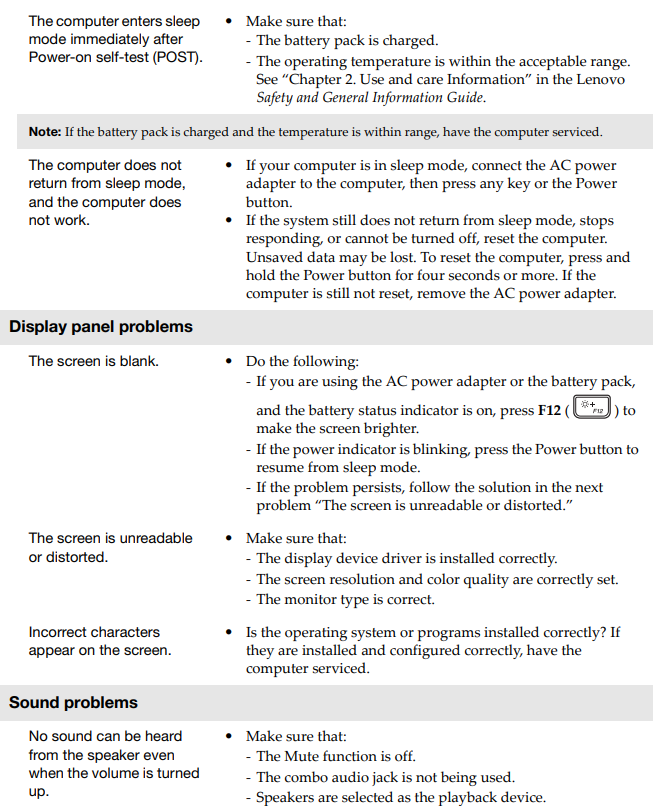
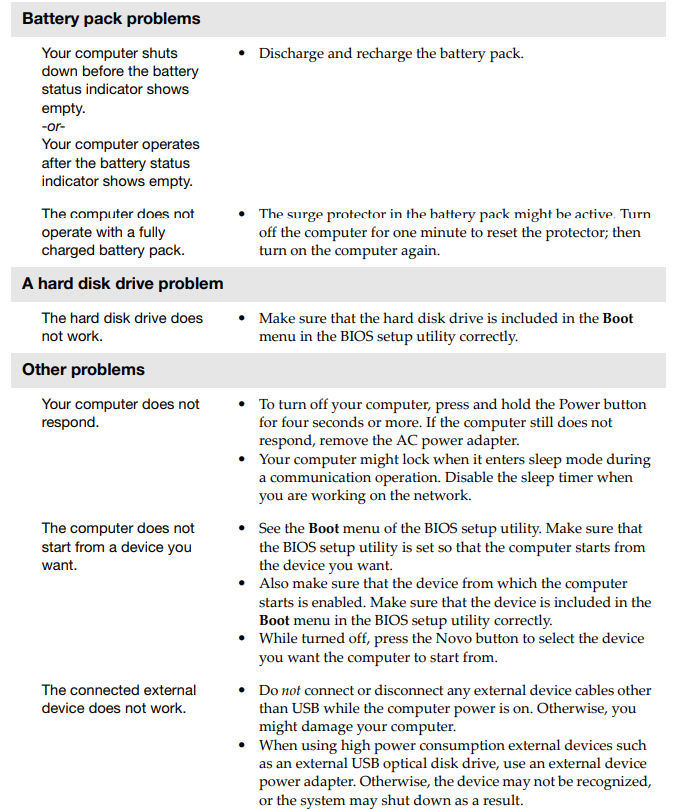
Troubleshooting
When do I need to change the boot mode?
The default boot mode for your computer is UEFI mode. If you need to install a legacy operating system, such as Windows, Linux or Dos, etc. (that is, any operating system before Windows 8) on your computer, you must change the boot mode to Legacy Support. The legacy operating system, such as Windows, Linux or Dos, etc. cannot be installed if you don't change the boot mode.
Getting help
How can I contact the customer support center?
Faqs
Is the RAM upgradeable?
Does it have a backlit keyboard?
Can I connect an external monitor?
Does it have a touchscreen?
Is the battery replaceable?
Does it have a fingerprint reader?
Is it compatible with Wi-Fi 6?
Does it come with a carrying case?
Can I upgrade the storage?
Does it have a dedicated graphics card?
More lenovo manuals
- How to Use & Set: Lenovo TAB 2 A10-30 User Guide
- How to Use : Lenovo YOGA BOOK YB1-X90F User Guide
- Lenovo K6 NOTE V1.0 Smartphone User Guide | Specs & Features
- Lenovo Legion T5 26AMR5 User Guide | Specifications
- Lenovo IdeaPad Gaming 3 16ARH7 User Guide | Specifications
- Lenovo IdeaPad Slim 5 14IRL8 User Guide | Connectivity
Leave a Comment