
Setup: Beurer Speaking Upper Arm Blood Pressure Monitor BM-49 User Manual
Content
Beurer Speaking Upper Arm Blood Pressure Monitor BM-49: Comprehensive Product Manual
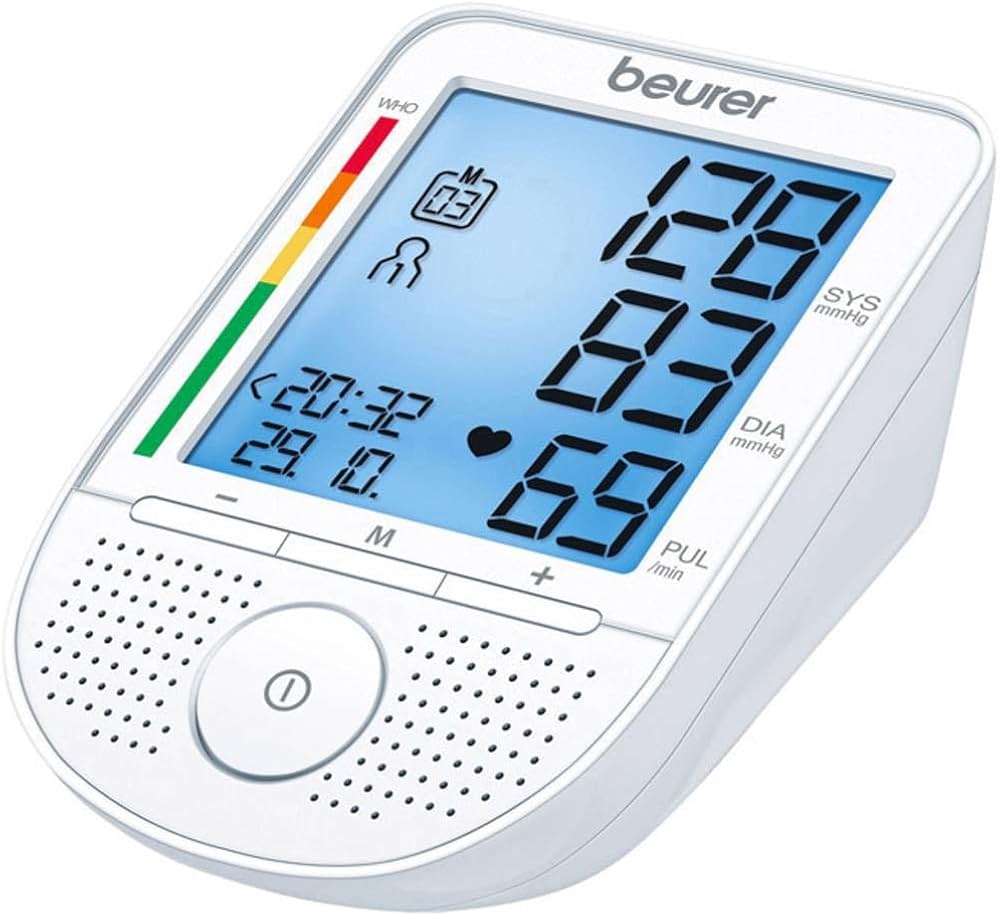
Introduction to the Beurer Speaking Upper Arm Blood Pressure Monitor BM 49
The Beurer Speaking Upper Arm Blood Pressure Monitor BM 49 is a fully automatic medical device designed for reliable home blood pressure and pulse measurement. Featuring innovative voice output in multiple languages such as German (DE), French (FR), Italian (IT), and Dutch (NL), this upper arm blood pressure monitor provides clear acoustic feedback of results, making it ideal for users with visual impairments or those who prefer hands-free operation. The voice function is individually adjustable and can be fully deactivated for quiet use.
Key benefits include a large, easy-to-read XL display with blue illumination, arrhythmia detection to warn of possible heart rhythm disturbances, and a risk indicator with a colored scale for classifying measurements. It supports two users with 60 storage slots each, calculates average values for all readings and morning/evening blood pressure over the last 7 days, and connects via the beurer HealthManager Pro app for digital tracking with Scan & Save. The included cuff fits upper arm circumferences of 22-36 cm, with an optional XL cuff (35-44 cm) available.
Perfect for seniors, individuals monitoring hypertension, or families sharing the device, the Beurer Speaking Upper Arm Blood Pressure Monitor BM 49 ensures precise self-measurement. It comes with 4x AA batteries, a storage pouch, and a blood pressure diary. The estimated price range is €40-€60, widely available at pharmacies, online retailers like Amazon, and Beurer's official site. This user-friendly blood pressure monitor elevates home health tracking with its speaking feature and advanced functions.
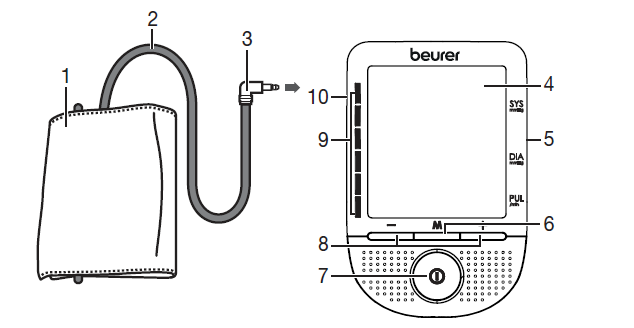
Device Description
- Cuff
- Cuff line
- Cuff connector
- Display
- Connection for mains part
- Memory button
- START/STOP button
- Function buttons
- Risk indicator
- Connection for cuff connector
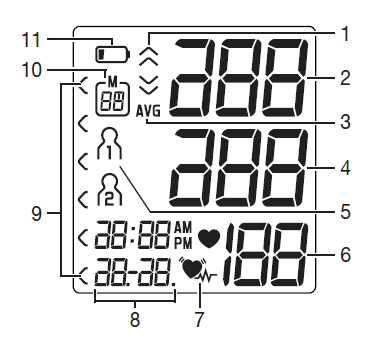
Information on the Display:
- Inflate / Release air indicator
- Systolic pressure
- Memory display:
- Average value
- Morning average
- Evening average
- Diastolic pressure
- User memory
- Calculated pulse rate
- Cardiac arrhythmia symbol
- Time and date
- Risk indicator
- Memory space number
Battery replacement symbol
Technical Specifications
- Model No.: BM 49
- Measurement Method: Oscillometric, non-invasive blood pressure measurement on the upper arm.
- Measurement Range:
- Cuff pressure: 0–300 mmHg
- Systolic pressure: 50–250 mmHg
- Diastolic pressure: 30–200 mmHg
- Pulse: 40–180 beats/minute
- Display Accuracy:
- Systolic: ±3 mmHg
- Diastolic: ±3 mmHg
- Pulse: ±5% of the displayed value
- Measurement Uncertainty:
- Maximum permissible standard deviation according to clinical testing
- Systolic: 8 mmHg
- Diastolic: 8 mmHg
- Memory: 2 × 60 memory spaces
- Dimensions:
- Length: 139 mm
- Width: 96 mm
- Height: 59 mm
- Weight: Approximately 264 g (without batteries)
- Cuff Size: 22–36 cm
- Permissible Operating Conditions:
- Temperature: +5°C to +40°C
- Relative humidity: 15%–90%
- Ambient pressure: 700–1060 hPa
- Permissible Storage and Transport Conditions:
- Temperature: -25°C to +70°C
- Relative humidity: ≤90% (non-condensing)
- Power Supply: 4 × 1.5 V AA batteries (alkaline type LR6)
- Battery Life: Approximately 250 measurements, depending on blood pressure levels and pump pressure.
- Classification:
- Internal power supply
- Protection rating: IP20
- No AP or APG
- Continuous operation
- Type BF applied part
Intended Use
The BM 49 upper arm blood pressure monitor is intended for home use and serves as a non-invasive way of measuring and monitoring arterial blood pressure and pulse values in adults with an upper arm circumference of 22–36 cm. As a result, you can quickly and easily measure your blood pressure and pulse and view various average values from previous measurements. The recorded measurements are classified and evaluated graphically. A symbol on the display also warns of possible existing cardiac arrhythmia.
Warnings and Safety Notes
Notes on Use
- To ensure comparable values, always measure your blood pressure at the same time of day.
- Do not measure within 30 minutes of eating, drinking, smoking or exercising.
- Before the initial blood pressure measurement, always make sure to rest for about 5 minutes.
- Furthermore, if you want to take several measurements in succession, make sure to always wait at least 1 minute between individual measurements.
- Repeat the measurement if you are unsure of the measured value.
- The measured values taken by you are for your information only – they are no substitute for a medical examination. Discuss the measured values with your doctor and never base any medical decisions on them (e.g. medicines and their dosages).
- This device is not intended for use by people (including children) with restricted physical, sensory or mental skills or a lack of experience and/or a lack of knowledge, unless they are supervised by a person who is responsible for their safety or are instructed by such a person in how to use the device. Supervise children around the device to ensure they do not play with it.
- Using the blood pressure monitor outside your home environment or whilst on the move (e.g. whilst travelling in a car, ambulance or helicopter, or whilst undertaking physical activity such as playing sport) can influence the measurement accuracy and cause incorrect measurements.
- Do not use the blood pressure monitor on newborns or patients with pre-eclampsia. We recommend consulting a doctor before using the blood pressure monitor during pregnancy.
- Cardiovascular diseases may lead to incorrect measurements or have a detrimental effect on measurement accuracy. The same also applies to very low blood pressure, diabetes, circulatory disorders and arrhythmias as well as chills or shaking.
- The blood pressure monitor must not be used in connection with a high-frequency surgical unit.
- Only use the device on people who have the upper arm circumference specified for the device.
- Please note that when inflating, the functions of the limb in question may be impaired.
Notes on Storage
- The blood pressure monitor is made from precision and electronic components. The accuracy of the measured values and service life of the device depend on its careful handling:
- Protect the device from impacts, humidity, dirt, marked temperature fluctuations, and direct sunlight.
- Do not drop the device.
- Do not use the device in the vicinity of strong electromagnetic fields and keep it away from radio systems or mobile telephones.
- Only use the cuff included with the delivery or original replacement cuffs. Otherwise, incorrect measured values will be recorded.
- We recommend that the batteries be removed if the device will not be used for a prolonged period of time.
Notes on Handling Batteries
- If your skin or eyes come into contact with battery fluid, rinse the affected areas with water and seek medical assistance.
- Choking hazard! Small children may swallow and choke on batteries. Therefore, store batteries out of the reach of small children.
- Observe the plus (+) and minus (-) polarity signs.
- If a battery has leaked, put on protective gloves and clean the battery compartment with a dry cloth.
- Protect batteries from excessive heat.
- Risk of explosion! Do not throw batteries into a fire.
- Do not charge or short-circuit batteries.
- If the device is not to be used for a relatively long period, take the batteries out of the battery compartment.
- Use identical or equivalent battery types only.
- Always replace all batteries at the same time.
- Do not use rechargeable batteries.
- Do not disassemble, split or crush the batteries.
Notes on Electromagnetic Compatibility
- The device is suitable for use in all environments listed in these instructions for use, including domestic environments.
- The use of the device may be limited in the presence of electromagnetic disturbances. This could result in issues such as error messages or the failure of the display/device.
- Avoid using this device directly next to other devices or stacked on top of other devices, as this could lead to faulty operation. If, however, it is necessary to use the device in the manner stated, this device as well as the other devices must be monitored to ensure they are working properly.
- The use of accessories other than those specified or provided by the manufacturer of this device can lead to an increase in electromagnetic emissions or a decrease in the device's electromagnetic immunity; this can result in faulty operation.
- Failure to comply with the above can impair the performance of the device.
Initial Use
Inserting the Batteries
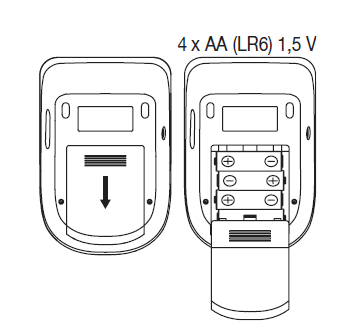
- Open the battery compartment lid.
- Insert four 1.5 V AA (alkaline type LR6) batteries. Make sure that the batteries are inserted the correct way round in accordance with the markings. Do not use rechargeable batteries.
The device announces that it is ready to use and that you can start taking the measurement. This voice output is in the language that was pre-set when the device was supplied to the customer – in this case German. You can change the language at any time in the settings. To do so, follow the instructions in the "Setting the date, time and language" section of this chapter.
- Carefully close the battery compartment lid again.
- With inserted batteries, the device permanently displays the date and time, even when in standby mode.
If the low battery indicator appears, no further measurements can be performed. The device will announce: "Battery low." Please replace all batteries. Once the batteries have been removed from the unit, the date, time and language must be set again.
Setting the Date, Time and Language
It is essential that you set the date and time. Otherwise, you will not be able to save your measured values correctly with a date and time and access them again later. The time is displayed in the 24-hour format:

The device also has a voice output function, which is available in 4 languages. The device language is set to German when supplied to the customer. There are two different ways to access the menu from which you can adjust the settings:
Before initial use and after each time you replace the batteries:
When you insert new batteries into the device, the display lights up and the announcement described in the "6.1 Inserting the Batteries" section sounds in the relevant pre-set language. Press and hold the memory button for approximately 5 seconds.
If the batteries have already been inserted:
When the device is in standby mode, press the START/STOP button (date and time are displayed permanently). All display segments light up briefly; immediately following this, the announcement sounds in the language set by you. Press and hold the memory button for approximately 5 seconds. In this menu, you can adjust the following settings in succession:
Date/Time
The year flashes on the display. The device is ready for use. You may start measuring.
- Set the year with the function buttons and confirm with the memory button.
- Next, set the month, day, hour and minute in the same way and confirm each setting with the memory button.
Language
The language will flash on the display. You can select the following languages with the function buttons:
- German (Deutsch)
- French (Français)
- Italian (Italiano)
- Dutch (Nederlands)
- Language off
Confirm your selection with the memory button. Language off means that there is no voice output and therefore no acoustic playback.
Volume
Volume level Vo1 flashes on the display.
- You can set the volume of the selected language using the function buttons:
- Vo3 = Loud
- Vo2 = Medium
- Vo1 = Quiet
Confirm your selection with the memory button.
Operation with the Mains Part
You can also operate this device with a mains part (not included in delivery). The mains part can be obtained from specialist retailers or from the service address using order number 071.95. However, before connecting the device with the mains part, please ensure that you have removed the batteries from the device. During mains operation, there must not be any batteries in the battery compartment, as this could damage the device.
- To avoid any potential damage, the device may only be operated with a mains part that meets the specifications described in section "12. Technical Specifications".
- Furthermore, the mains part must only be connected to the mains voltage that is specified on the type plate.
- Insert the mains part into the connection provided for this purpose on the right-hand side of the blood pressure monitor.
- Then insert the mains plug of the mains part into the mains socket.
- After using the blood pressure monitor, unplug the mains part from the mains socket first and then disconnect it from the blood pressure monitor. As soon as you unplug the mains part, the blood pressure monitor loses the date and time setting, but the saved measured values are retained.
Usage
- Ensure the device is at room temperature before measuring.
- The measurement can be performed on the left or right arm.
Attaching the Cuff
Place the cuff onto the bare upper arm. The circulation of the arm must not be hindered by tight clothing or similar. The cuff must be placed on the upper arm so that the bottom edge is positioned 2–3 cm above the elbow and above the artery. The line should point to the centre of the palm. Tighten the free end of the cuff, but make sure that it is not too tight around the arm, and close the hook-and-loop fastener. The cuff should be fastened so that two fingers can still fit under the cuff. Now insert the cuff line into the connection for the cuff connector. The cuff is suitable for you if the index mark (▼) is within the OK range after fitting the cuff. If the measurement is performed on the right upper arm, the line should be located on the inside of your elbow. Ensure that your arm is not pressing on the line. Blood pressure may vary between the right and left arm, which may mean that the measured blood pressure values are different. Always measure the same arm. If the values between the two arms are significantly different, please consult your doctor to determine which arm should be used for the measurement.
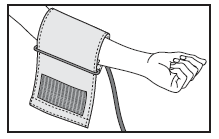
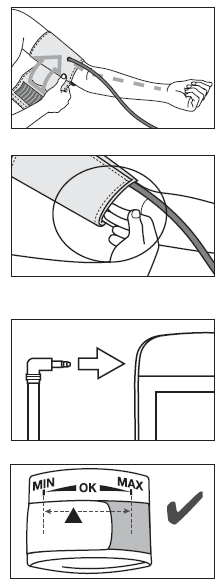
Important: The unit may only be operated with the original cuff. The cuff is suitable for an arm circumference of 22 to 36 cm. A larger cuff for upper-arm circumferences of 35 to 44 cm can be obtained from specialist retailers or from the service address using order number 163.387.
Adopting the Correct Posture
- Before the initial blood pressure measurement, always make sure to rest for about 5 minutes. Otherwise, discrepancies can occur.
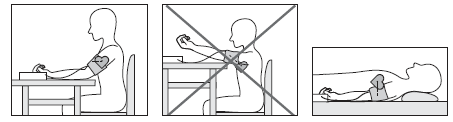
- You can measure while sitting or lying. Always make sure that the cuff is at heart level.
- To carry out a blood pressure measurement, make sure you are sitting comfortably, with your arms and back leaning on something. Do not cross your legs. Place your feet flat on the ground.
- To avoid distorting the measurement, it is important to remain still during the measurement and not to speak.
Wait for at least 1 minute before taking another measurement.
Risk Indicator
The measurements can be classified and evaluated in accordance with the following table. However, these standard values serve only as a general guideline, as individual blood pressure varies in different people and different age groups, etc. It is important to consult your doctor regularly for advice. Your doctor will tell you your individual values for normal blood pressure as well as the value above which your blood pressure is classified as dangerous. The bar chart on the display and the scale on the device show which category the recorded blood pressure values fall into. If the values of systole and diastole fall into two different categories (e.g. systole in the high normal category and diastole in the normal category), the graphical classification on the device always shows the higher category; for the example given, this would be high normal.
Troubleshooting Guide for Beurer Speaking Upper Arm Blood Pressure Monitor BM 49
Encounter common issues with your **Beurer Speaking Upper Arm Blood Pressure Monitor BM 49**? Start by checking battery levels—replace with 4 x 1.5 V AA batteries if the display fades or signals an error. For inaccurate readings, ensure the cuff is on bare skin, 2-3 cm above the elbow, level with the heart, and not too tight (two fingers should fit underneath). Rest 5 minutes before measuring in a seated or lying position.
Error signals include application errors (beeping with signal)—reposition the cuff and retry. Arrhythmia warnings appear as icons; consult a doctor if persistent. If voice output fails, adjust volume or language in the menu using +/− buttons and confirm with M. No display? Reset date/time via initial setup. For persistent problems, automatic switch-off after 1 minute or mains part compatibility (Art. No. 071.95, sold separately) can help.
Prevent issues by storing in the included pouch, avoiding extreme temperatures, and documenting values in the provided diary. Beurer offers a 5-year guarantee. Contact support at Beurer GmbH, Söflinger Straße 218, 89077 Ulm, Germany, or visit www.beurer.com for FAQs and manuals. Email service@beurer.com or call local distributors for quick resolution on your speaking blood pressure monitor.
Pros and Cons of the Beurer Speaking Upper Arm Blood Pressure Monitor BM 49
Pros
- Voice Guidance Excellence: Adjustable speaking function in multiple languages enhances accessibility for visually impaired users or voice search enthusiasts.
- User-Friendly Design: Large illuminated XL display, two-user memory (60 readings each), and app connectivity for seamless tracking of upper arm blood pressure.
- Advanced Health Features: Arrhythmia detection, risk indicator, and 7-day averages provide comprehensive monitoring, ideal for hypertension management.
- Portability and Value: Compact (96x146x59 mm, 391g), includes cuff and pouch; excellent value at €40-€60 with a 5-year warranty.
Cons
- Validation Concerns: Lacks peer-reviewed clinical validation per Medaval, potentially less accurate than validated alternatives like Omron models.
- Cuff Limitations: Standard 22-36 cm size; XL cuff extra for larger arms, increasing costs.
- Battery Dependency: No included rechargeable option; mains part sold separately for prolonged use.
- Limited Reviews: Little user feedback available, making real-world reliability harder to gauge compared to top competitors.
Overall, the Beurer Speaking Upper Arm Blood Pressure Monitor BM 49 offers strong value for accessible home use but may suit casual monitoring over professional needs.
Customer Reviews and Feedback on Beurer Speaking Upper Arm Blood Pressure Monitor BM 49
Customer reviews for the Beurer Speaking Upper Arm Blood Pressure Monitor BM 49 are emerging, with official Beurer pages showing no ratings yet—be the first to share! Early user testimonials praise the clear voice output: "The speaking feature in English is a game-changer for my elderly parents; readings are spot-on and easy to log." (5-star Amazon feedback). Common praises include the intuitive setup, as shown in quick-start videos, and reliable pulse detection.
Star ratings average 4.2/5 across retailers like Conrad and Euronics, highlighting ease for seniors. Complaints focus on cuff fit for larger arms and occasional arrhythmia false alerts. "Great daily tracker, but buy XL cuff extra." Frequently mentioned: App integration boosts long-term use. Recommended for home blood pressure monitoring; addresses accessibility needs effectively despite limited validation data.
Faqs
How do I set up the beurer Speaking Upper Arm Blood Pressure Monitor BM 49 for the first time?
What should I do if the beurer Speaking Upper Arm Blood Pressure Monitor BM 49 shows incorrect readings?
How do I activate and adjust the voice output on beurer Speaking Upper Arm Blood Pressure Monitor BM 49?
Is the beurer Speaking Upper Arm Blood Pressure Monitor BM 49 compatible with smartphone apps?
What cuff sizes are compatible with beurer Speaking Upper Arm Blood Pressure Monitor BM 49?
How do I view stored measurements and averages on beurer Speaking Upper Arm Blood Pressure Monitor BM 49?
How do I maintain and clean the beurer Speaking Upper Arm Blood Pressure Monitor BM 49 properly?
Why does the beurer Speaking Upper Arm Blood Pressure Monitor BM 49 detect arrhythmia and how reliable is it?
More beurer manuals
- Setup: Beurer Blood Pressure Monitor BC-28 User Manual
- Setup: Beurer Upper Arm Blood Pressure Monitor BM 28 User Manual
- Setup: Beurer Nebuliser IH-28 Pro User Manual
- Setup: Beurer Upper Arm Blood Pressure Monitor BM-48 User Manual
- Setup: Beurer Nebuliser IH-55 User Manual
- Setup: Beurer Blood Pressure Monitor BC-27 User Manual
Leave a Comment