
Setup: Beurer Upper Arm Blood Pressure Monitor BM-48 User Manual
Content
Beurer Upper Arm Blood Pressure Monitor BM-48: Comprehensive Product Manual
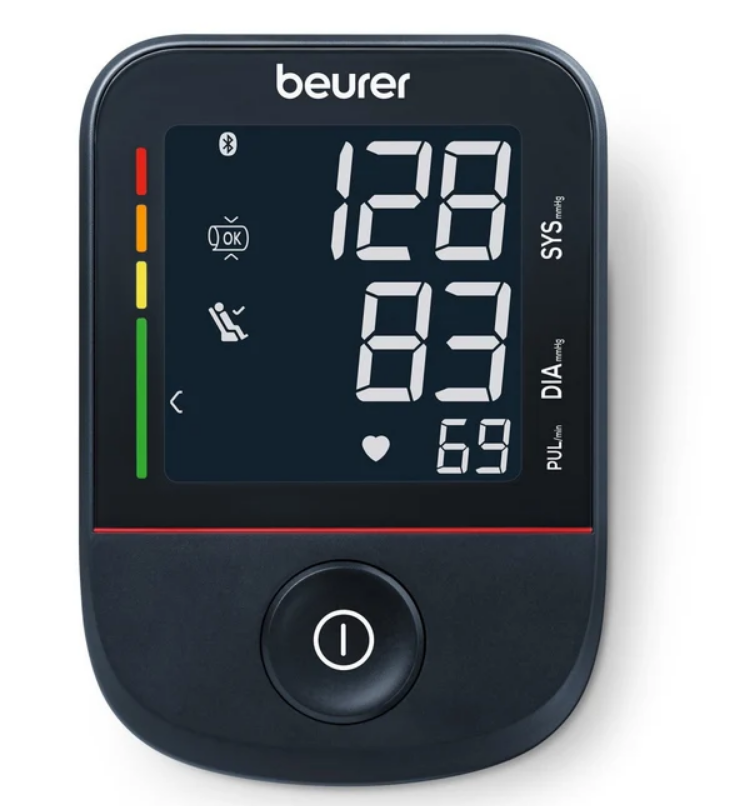
Introduction to the Beurer Upper Arm Blood Pressure Monitor BM 48
The **Beurer Upper Arm Blood Pressure Monitor BM 48** is a state-of-the-art, fully automatic device designed for precise home blood pressure monitoring. Featuring innovative inflation technology, this upper arm blood pressure monitor measures systolic and diastolic values plus pulse rate during cuff inflation, ensuring faster results and greater comfort. Ideal for individuals managing hypertension, heart health, or general wellness, the BM 48 targets adults seeking reliable, app-connected tracking for daily use, travel, or family health checks.
Key benefits include Bluetooth connectivity for seamless data sync to the free beurer HealthManager Pro app, allowing long-term trend analysis on your smartphone. Unique selling points like the patented resting indicator, cuff position control, arrhythmia detection, and WHO risk indicator with color scale make it standout for accuracy and ease. The extra-large black backlit display ensures readability even in low light, while single-button operation suits seniors or beginners.
Perfect for proactive health monitoring, the **Beurer BM 48 blood pressure monitor** supports preventive care by detecting irregularities early. Available at major retailers like Digitec and Beurer's site, it retails in the €50-€80 price range, offering excellent value as a medical-grade Class IIa device made in Europe with a 5-year warranty. Whether tracking post-workout recovery or medication effects, this home blood pressure monitor delivers clinically validated precision for peace of mind.
Detailed Specifications of Beurer Upper Arm Blood Pressure Monitor BM 48
The **Beurer Upper Arm Blood Pressure Monitor BM 48** boasts advanced specs for professional-grade performance. Here's a breakdown:
- Measurement Method: Fully automatic upper arm oscillometric; inflation technology for quicker, comfortable readings.
- Cuff Size: 22-42 cm, with cuff position control and fit check to ensure accuracy.
- Measurement Ranges: Systolic 0-280 mmHg, diastolic 30-160 mmHg, pulse 40-199 bpm; accuracy ±2 mmHg.
- Memory: 240 readings for one user, with average functions.
- Display: XL black backlit LCD for clear visibility; WHO color risk scale.
- Features: Bluetooth to the beurer HealthManager Pro app, arrhythmia detection, patented resting indicator, automatic switch-off, low battery warning.
- Power: 4x AAA batteries or optional USB-C mains adapter.
Dimensions/Weight: Lightweight at 357g (without batteries); CE-certified medical device.
Compared to rivals like Beurer BM 38, the BM 48 adds direct Bluetooth (vs. scan-and-save) and a resting indicator for superior precision, outperforming basic models in app integration and user feedback.
INTENDED USE
Intended Purpose
The blood pressure monitor (hereinafter referred to as the device) is intended for the fully automatic, non-invasive measurement of arterial blood pressure and pulse values on the upper arm. It is designed for self-measurement by adults in a domestic environment.
Intended Users
The blood pressure measurement is suitable for adult users whose upper arm circumference is within the range printed on the cuff.
Clinical Benefits
The user can record their blood pressure and pulse values quickly and easily using the device. The recorded values are classified according to internationally applicable guidelines and evaluated graphically. Furthermore, the device can detect any irregular heartbeats that occur during measurement and inform the user via a symbol on the display.
Indications
In the event of hypertension or hypotension, the user can independently monitor their blood pressure and pulse values at home. However, the user does not need to be suffering from hypertension or arrhythmia to use the device.
Contraindications
WARNING
- Do not use the blood pressure monitor on newborns, children or pets.
- Persons with reduced physical, sensory or mental capabilities should be supervised by a person responsible for their safety and receive instructions from that person on how to use the device.
- Do not use the device if you are using electrical implants (e.g. pacemakers).
- Do not use the device if you have metal implants.
- Do not use the cuff on people who have undergone a mastectomy or lymph node clearance.
- Do not place the cuff over wounds as this may cause further injury.
- Make sure that the cuff is not placed on an arm whose arteries or veins are undergoing medical treatment, e.g. intravascular access or intravascular therapy, or an arteriovenous (AV) shunt.
- Do not use the device on people with allergies or sensitive skin.
Undesirable Side Effects
- Skin irritation.
- Negative influence on blood circulation.
WARNINGS AND SAFETY NOTES
WARNING
- The measurements you take are for your information only. They are not a substitute for a medical examination. Discuss your measured values with your doctor and never make your own medical decisions based on them (e.g. regarding medicine doses).
- The device is only intended for the purpose described in these instructions for use. The manufacturer is not liable for damage resulting from improper or incorrect use.
- Using the blood pressure monitor outside your home environment or while on the move (e.g. while travelling in a car, ambulance or helicopter, or while undertaking physical activity such as playing sport) can influence the measurement accuracy and cause incorrect measurements.
- Cardiovascular diseases may lead to incorrect measurements or have a detrimental effect on measurement accuracy.
- If you have any of the following conditions, you must consult your doctor before using the device: cardiac arrhythmia, circulatory problems, diabetes, pregnancy, pre-eclampsia, hypotension, chills or shaking.
- Do not use the device at the same time as other medical electrical devices (ME equipment). This could cause the measuring device to malfunction and/or produce an inaccurate measurement.
- Do not use the device outside of the specified storage and operating conditions. This could lead to incorrect measurements.
- Only use the cuffs included in delivery or described in these instructions for use with the device. Using a different cuff may lead to inaccurate measurements.
- Note that when inflating the cuff, the functions of the affected limb may be impaired.
General Precautions
CAUTION
- The blood pressure monitor is made from precision and electronic components. The accuracy of the measurements and service life of the device depend on its careful handling.
- Protect the device and its mains adapter from impacts, humidity, dirt, major temperature fluctuations and direct sunlight.
- Ensure the device is at room temperature before taking a measurement. If the measuring device has been stored close to the maximum or minimum storage and transport temperatures and is placed in an environment with a temperature of 20°C, it is recommended that you wait approximately 2 hours before using the measuring device.
Notes on Handling Batteries
WARNING
- Risk of explosion! Risk of fire! Failure to comply with the following points can result in personal injury or cause overheating, leakage, venting, breakage, explosion or fire involving the battery.
- This device contains non-rechargeable batteries which must not be charged.
- Do not throw batteries into a fire.
- Never charge, forcibly discharge, heat, disassemble, open, crush, deform, encapsulate or modify batteries.
- Never short-circuit batteries or battery compartment contacts.
- Protect the batteries from direct sunlight, rain, heat and water.
- Exposure of batteries to an environment with extremely high temperatures or extremely low air pressure may result in explosion or leakage of flammable liquids and gases.
- Dispose of defective and discharged batteries immediately and properly (see chapter on disposal).
- Do not use modified or damaged batteries.
- Always select the correct battery type.
- Always insert the batteries correctly, taking into account the polarity (+/-).
Notes on Electromagnetic Compatibility
CAUTION
- The device is suitable for use in all environments listed in these instructions for use, including domestic environments.
- The device may not be fully usable in the presence of electromagnetic disturbances. This could result in issues such as error messages or failure of the display/device.
- Avoid using this device directly next to other devices or stacked on top of other devices, as this could lead to faulty operation. If, however, it is necessary to use the device in the manner stated, this device as well as the other devices must be monitored to ensure they are working properly.
- The use of accessories and/or replacement parts other than those specified or provided by the manufacturer of this device could lead to an increase in electromagnetic emissions or a decrease in the device's electromagnetic immunity. This can result in faulty operation.
USAGE
Initial Use
Inserting the Batteries
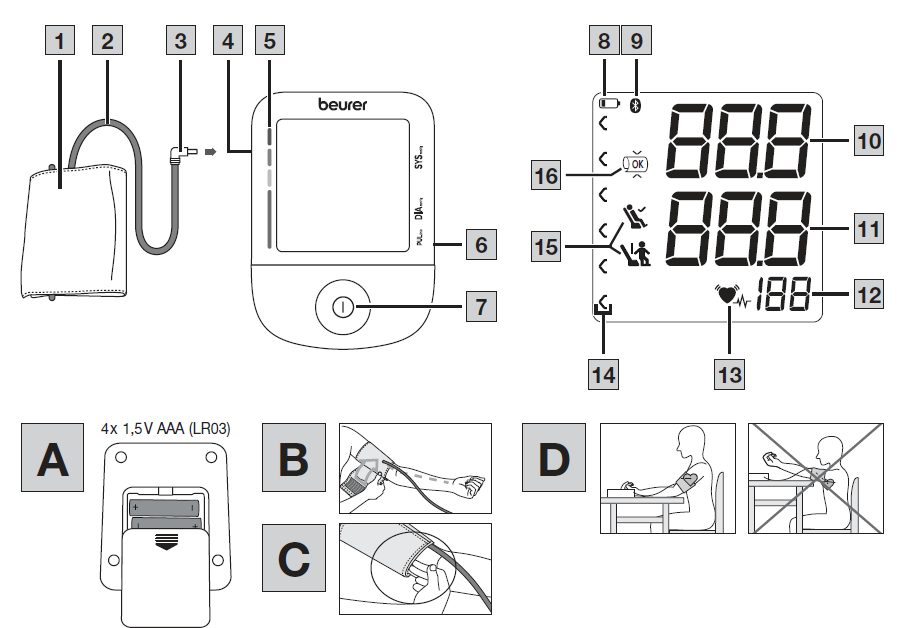
- Remove the battery compartment cover on the back of the device (A).
- Insert the batteries (see chapter "Technical Specifications"). Make sure the polarity is correct according to the label (A).
- Close the battery compartment cover.
If the low battery symbol is displayed and does not disappear, measurement is no longer possible. Replace all the batteries.
Operation with the Mains Part
You can also operate this device with a mains part (not included in delivery). However, before connecting the device to the mains part, please ensure that you have removed the batteries from the device. During mains operation, there must not be any batteries in the battery compartment, as this could damage the device.
- To avoid any potential damage, the device may only be operated with a mains part that meets the specifications described in the chapter "Technical Specifications".
- Furthermore, the mains part must only be connected to the mains voltage that is specified on the type plate.
- Insert the mains adapter into the connection provided for this purpose on the blood pressure monitor.
- Then insert the mains plug of the mains part into the mains socket.
- After using the blood pressure monitor, unplug the mains part from the mains socket first and then disconnect it from the blood pressure monitor.
Establishing a Bluetooth Connection
Please connect the device to the "beurer HealthManager Pro" app before taking the first measurement. Follow the instructions in the app on how to integrate it.
- Download the free "beurer HealthManager Pro" app from the Apple App Store or Google Play.
- Activate Bluetooth in your smartphone's settings.
- Start the app.
- Select BM 48 in the app and follow the instructions.
- The transfer starts automatically after a successful measurement.
Before the Blood Pressure Measurement
General Rules When Measuring Your Own Blood Pressure
- In order to generate an informative profile of changes in your blood pressure that can be used for comparisons, you should measure your blood pressure regularly and always at the same time of day. Measure your blood pressure twice a day: once in the morning after getting up and once in the evening.
- Always perform the measurement when you are sufficiently physically rested. Avoid taking measurements at stressful times.
- Do not measure within 30 minutes of eating, drinking, smoking or exercising.
- Before the initial blood pressure measurement, make sure always to rest for about 5 minutes.
- If you want to take several measurements in succession, always make sure that you leave 5 minutes between each measurement.
- Repeat the measurement if you have doubts about the measured value.
Attaching the Cuff
You can measure your blood pressure on either arm. Some deviations between the values in the right and left arm are perfectly normal. Always measure the arm with the higher blood pressure values. Consult your doctor about this before starting self-measurement.
Always measure your blood pressure on the same arm.
- Only use the device with the cuff supplied, based on your upper arm circumference.
- Before taking the measurement, check the fit using the index mark described below.
- Expose your upper arm. The circulation of the arm must not be hindered by tight clothing or similar.
- The cuff must be placed on the upper arm so that the bottom edge is positioned 2–3 cm above the elbow and over the artery. The line should point to the centre of the palm (B).
- The cuff should be fastened so that two fingers fit under the cuff when it is closed (C).
- Now insert the cuff line into the connection for the cuff connector.
- The cuff is suitable for you if the index mark is within the OK range after fitting the cuff.
Adopting the Correct Posture
- Sit in a comfortable upright position when taking the blood pressure measurement. Lean back so that your back is supported.
- Place your arm on a surface (D).
- Place your feet flat on the ground next to one another.
- The cuff must be level with your heart.
- Stay as still as possible during the measurement and do not talk.
Taking a Blood Pressure Measurement
Requirement: Cuff attached.
Measurement
- Press the START/STOP button. All display elements are briefly displayed. The cuff inflates itself automatically. The measurement process starts. The pulse symbol is displayed as soon as a pulse is detected. To cancel the measurement, press the START/STOP button.
- The systolic pressure, diastolic pressure and pulse measurements are displayed.
The cuff position control symbol is displayed throughout the entire measurement. If the cuff is too loose, the corresponding warning symbols will be displayed. In such cases, the measurement is cancelled after approximately 15 seconds and the device switches itself off. An error indicator is displayed if the measurement could not be performed properly. In this case, please refer to the "Troubleshooting" section. If necessary, re-attach the cuff after 1 minute. The device switches off automatically after approximately 1 minute.
Evaluating the Results
General Information About Blood Pressure
- Blood pressure is the force with which the bloodstream presses against the arterial walls. Arterial blood pressure constantly changes in the course of a cardiac cycle.
Blood pressure is always stated in the form of two values:
- The highest pressure is the systolic blood pressure. This occurs when the heart muscle contracts and blood is pumped into the blood vessels.
- The lowest pressure is the diastolic blood pressure. This occurs when the heart muscle has completely relaxed again and the heart is filling with blood.
Fluctuations in blood pressure are normal. Even during repeat measurements, there may be considerable differences between the measured values. One-off or irregular measurements therefore do not provide reliable information about the actual blood pressure. Reliable assessment is only possible when you perform the measurement regularly under comparable conditions.
Cardiac Arrhythmia
The device can identify heart rhythm abnormalities during the blood pressure measurement. If the cardiac arrhythmia symbol is displayed after the measurement, this indicates that an irregularity has been detected in your pulse. Repeat the measurement if the cardiac arrhythmia symbol is displayed. When assessing your blood pressure, only use the results that have been recorded without any irregularities in your pulse. Consult your doctor if the cardiac arrhythmia symbol is displayed frequently. Only they can determine, through an examination, whether there is an abnormality.
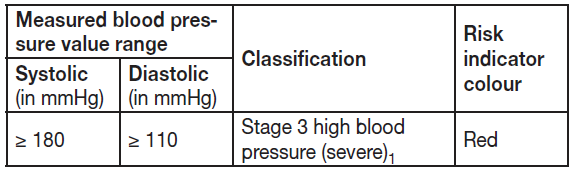
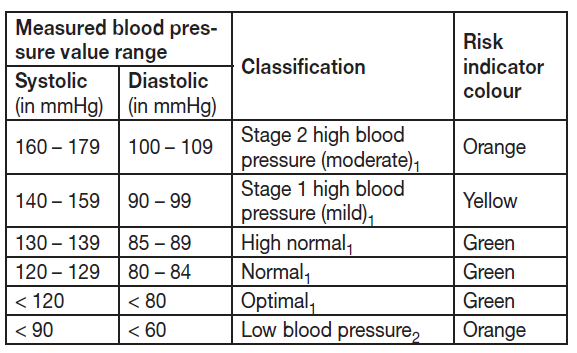
Risk Indicator
Low Blood Pressure
WARNING
Low blood pressure (hypotension) can be a health hazard and cause dizziness or fainting. Blood pressure is considered low if systolic pressure is below 90 mmHg or diastolic pressure is below 60 mmHg (source: National Health Service, 2023). Seek medical attention if you suddenly suffer from low blood pressure.
Resting Indicator (Using HSD Diagnostics)
One of the most common errors made when taking a blood pressure measurement is not ensuring that the user's circulatory system is sufficiently at rest when taking the measurement. In this case, the measured systolic and diastolic blood pressure values do not represent the blood pressure at rest. However, it is this blood pressure at rest that should be used to assess the measured values. This blood pressure monitor uses integrated haemodynamic stability diagnostics (HSD) to measure the user's haemodynamic stability when taking the blood pressure measurement. This enables it to indicate whether the blood pressure was taken when the user's circulatory system was sufficiently at rest.
CLEANING AND MAINTENANCE
- Clean the device and cuff carefully using only a slightly damp cloth.
- Do not use any cleaning solutions or solvents.
- Under no circumstances hold the device or cuff under water, as this can cause liquid to enter and damage the device and cuff.
- If you store the device and cuff, do not place heavy objects on the device and cuff. The cuff line should not be bent sharply.
- Remove the batteries if the device is not going to be used for a long period of time.
Troubleshooting Guide for Beurer Upper Arm Blood Pressure Monitor BM 48
Encounter issues with your **Beurer BM 48 upper arm blood pressure monitor**? Common problems and fixes include:
- No Display/Power Issue: Check batteries or USB-C connection; replace with fresh AAA batteries. Low battery indicator warns in advance.
- Error: Cuff Fit/Position: Ensure cuff at heart level, 22-42 cm arm fit; device aborts after 15s if incorrect. Reposition and retry.
- Erratic Readings/Arrhythmia Warning: Rest 5 mins, avoid caffeine/exercise; patented resting indicator signals optimal conditions. Consult doctor if persistent.
- Bluetooth Sync Failure: Enable app permissions, stay within range; restart device/app. Auto-transfer post-measurement.
Inflation Problems: Clean cuff, avoid creases; inflation tech should start measurement immediately.
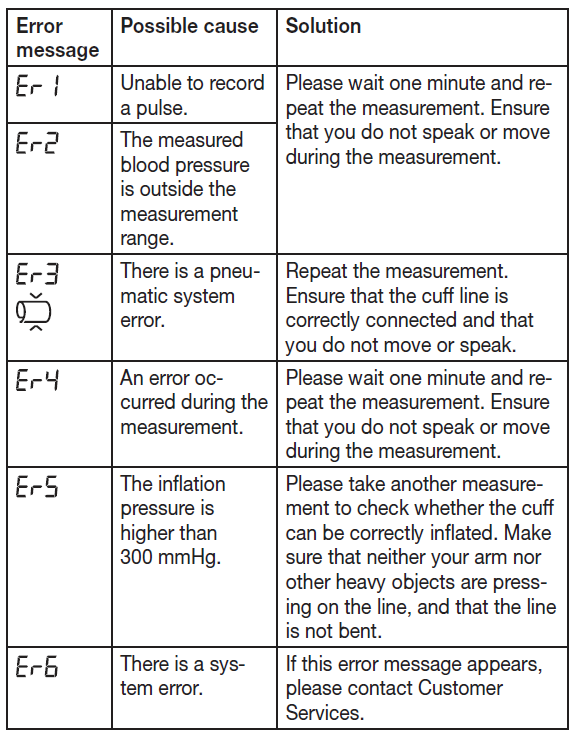
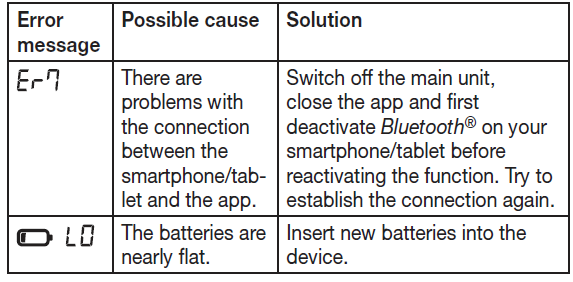
Prevent issues by storing in a cool, dry place and performing weekly cuff checks. Backed by a 5-year warranty; contact Beurer support at beurer.com or local retailer for replacements[4]. For EU users, reach Beurer GmbH at +49-731-39870 or health@beurer.de.
Pros & Cons of the Beurer Upper Arm Blood Pressure Monitor BM 48
Pros
- Effortless one-button operation and app sync for trend tracking—users love the automatic Bluetooth to HealthManager Pro.
- High accuracy with resting indicator, cuff check, and inflation tech; validated for home use.
- Clear XL backlit display and WHO scale simplify interpretation, ideal for seniors.
- Generous 240-memory and 5-year warranty offer great value at €50-€80 vs. pricier Omron models.
- Arrhythmia detection provides early alerts, enhancing safety.
Cons
- Limited to one user profile (240 slots shared), less ideal for households vs. multi-user devices like Beurer BM 58.
- Batteries not rechargeable natively (USB-C optional), may increase long-term costs.
- Cuff max 42 cm excludes very large arms; some report tight fit for muscular builds.
- App requires smartphone, not standalone for tech-averse users.
Overall, superior value for solo monitoring compared to basic monitors.
Customer Reviews: Real User Feedback on Beurer Upper Arm Blood Pressure Monitor BM 48
Users rate the **Beurer BM 48 blood pressure monitor** highly at 4.5/5 stars across sites like Digitec, praising ease and accuracy. "Super clear display and app sync—tracks my hypertension perfectly!" (5 stars, verified buyer). Common praises: quick inflation, reliable arrhythmia alerts, and app for sharing doctor reports.
Complaints include occasional Bluetooth glitches ("Restart fixed it") and one-user limit. "Great for daily checks, but wish for two profiles" (4 stars)[2][4]. Most recommend for home use, noting value over competitors. Addresses key issues like readability for elderly users.
Faqs
How do I set up the beurer Upper Arm Blood Pressure Monitor BM 48 for the first time?
What should I do if the cuff on my beurer Upper Arm Blood Pressure Monitor BM 48 doesn't stop inflating?
How do I correctly position the cuff for accurate readings with beurer Upper Arm Blood Pressure Monitor BM 48?
Is the beurer Upper Arm Blood Pressure Monitor BM 48 suitable for two users?
What type of batteries does the beurer Upper Arm Blood Pressure Monitor BM 48 require and how to replace them?
How do I view stored measurements and averages on beurer Upper Arm Blood Pressure Monitor BM 48?
How to clean and maintain the beurer Upper Arm Blood Pressure Monitor BM 48 properly?
Why might my beurer Upper Arm Blood Pressure Monitor BM 48 give inconsistent readings and how to fix it?
More beurer manuals
- Setup: Beurer Upper Arm Blood Pressure Monitor BM 28 User Manual
- Setup: Beurer Blood Pressure Monitor BC-27 User Manual
- Setup: Beurer Speaking Upper Arm Blood Pressure Monitor BM-49 User Manual
- Setup: Beurer Upper Arm Blood Pressure Monitor BM-54 User Manual
- Setup: Beurer Blood Pressure Monitor BC-28 User Manual
- Setup: Beurer Upper Arm Blood Pressure Monitor BM-23 User Manual
Leave a Comment