
Bowers and Wilkins 800 Series Center-Channel Loudspeaker User Manual
Content
Introduction to the Bowers and Wilkins 800 Series Center-Channel Loudspeaker
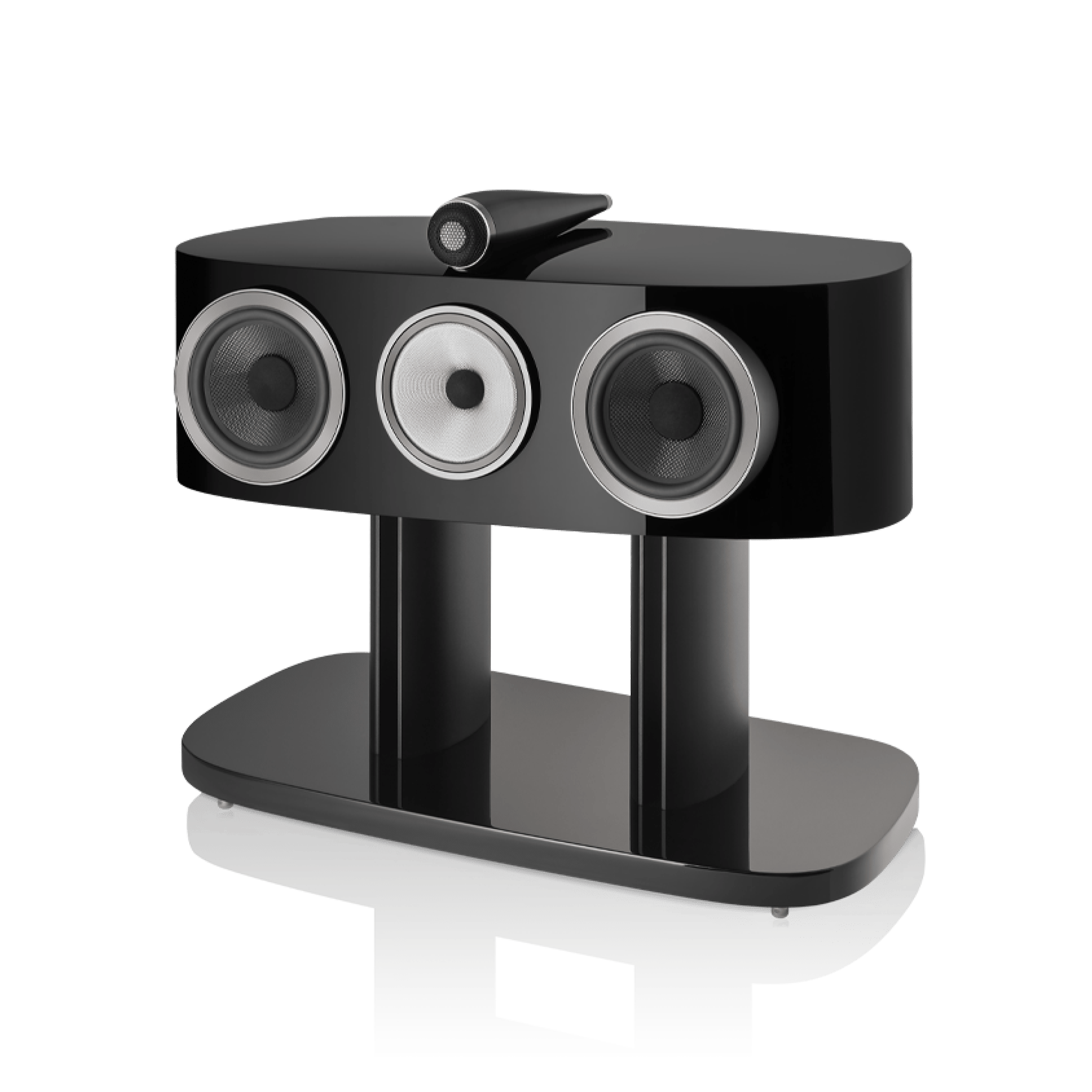
The Bowers and Wilkins 800 Series Center-Channel Loudspeaker is a flagship home theater speaker designed to anchor a premium surround sound system with exceptional clarity, scale, and dialogue precision. Built to complement the brand’s 800 Series Diamond floorstanding speakers, it is engineered for listeners who want cinema-grade center-channel performance in a dedicated media room or high-end living room setup. Whether you are watching blockbuster movies, streaming concert films, or building a reference-level multichannel system, this center speaker delivers a highly focused soundstage and natural vocal reproduction that makes on-screen speech easier to follow.
Its biggest strengths are seamless tonal matching, advanced driver technology, and rigid cabinet construction that helps reduce unwanted resonance. The Diamond dome tweeter, Continuum cone midrange, and Aerofoil bass drivers work together to provide detailed highs, lifelike mids, and controlled low-end support. The result is a center-channel speaker that excels with both subtle dialogue and explosive action scenes.
This speaker is best suited for serious home theater enthusiasts, audiophiles, and anyone pairing it with premium Bowers and Wilkins towers such as the 801 D4, 802 D4, 803 D4, or 804 D4. Price typically falls in the luxury tier, with the HTM82 D4 often around the low five-figure range and the larger HTM81 D4 positioned higher, depending on finish and retailer availability. Availability is generally through authorized specialty dealers and select premium audio stores.
Specifications for Bowers and Wilkins 800 Series Center-Channel Loudspeaker
The Bowers and Wilkins 800 Series Center-Channel Loudspeaker lineup includes the HTM81 D4 and HTM82 D4, both built as 3-way vented-box center speakers for high-end theater systems. The larger model is intended to match the 801 D4 and 802 D4, while the more compact model is designed for systems built around the 803 D4 and 804 D4.
- Speaker type: 3-way vented-box center-channel loudspeaker
- Tweeter: 1 x 25mm Diamond dome high-frequency unit
- Midrange: Continuum cone FST midrange driver
- Bass drivers: Aerofoil cone bass units for controlled, dynamic low frequencies
- Frequency response: HTM82 D4 reaches 45Hz to 28kHz; HTM81 D4 extends deeper with a wider low-end range
- Nominal impedance: 8 ohms
- Recommended amplification: Approximately 50W to 200W into 8 ohms, depending on model and system demands
- Primary performance goal: Clear dialogue, precise imaging, and timbre matching with 800 Series floorstanding speakers
Compared with mainstream center speakers, the 800 Series model offers far higher resolution, better cabinet refinement, and greater dynamic capability. It is designed for reference-grade systems rather than budget home theater setups.
Setup Guide for the Bowers and Wilkins 800 Series Center-Channel Loudspeaker
Start by placing the speaker directly above or below the display, with the tweeter ideally aimed toward ear level at the main listening position. Use a sturdy stand, cabinet, or dedicated shelf that can support the speaker’s substantial weight. Keep enough rear clearance for the Flowport to breathe and avoid pushing the cabinet tightly against a wall.
Connect the speaker to a compatible AV receiver or power amplifier using high-quality speaker cable and observe correct polarity at both terminals. For best results, match the center speaker with other 800 Series Diamond models so dialogue and effects move smoothly across the front soundstage. If your room has hard reflective surfaces, consider slight toe-in or acoustic treatment to improve clarity.
Before powering up, make sure all connections are tight and the speaker is securely positioned. Do not place objects on top of the cabinet or block the bass ports. If dialogue sounds thin or disconnected, re-check phase, receiver crossover settings, and center-channel level calibration. In most systems, running room correction after installation will help achieve a cleaner, more balanced result.
Troubleshooting the Bowers and Wilkins 800 Series Center-Channel Loudspeaker
Common issues usually involve setup, room placement, or amplifier matching rather than speaker failure. If dialogue sounds muffled, verify that the speaker is pointed toward the listening area and that the center channel is not buried inside a deep cabinet. If bass is weak or muddy, increase clearance around the enclosure and confirm the crossover is set appropriately in the AV receiver.
- No sound: Check cable polarity, receiver output assignment, and amplifier power status.
- Distortion at high volume: Lower playback level, confirm the amplifier is not clipping, and ensure the speaker is being driven within its recommended range.
- Uneven dialogue balance: Re-run room calibration and adjust center-channel level manually if needed.
- Rattling noises: Inspect nearby furniture, loose accessories, or objects touching the cabinet.
- Weak imaging: Align the speaker with the main seating position and check that left, center, and right speakers are timbre-matched.
Preventive care includes using proper support, keeping the cabinet dust-free, and avoiding overdriving the system. Warranty and service support are typically handled through authorized Bowers and Wilkins dealers and regional customer support channels. For help, contact the dealer where the speaker was purchased or the official brand support team in your market.
Pros and Cons of the Bowers and Wilkins 800 Series Center-Channel Loudspeaker
Pros
- Outstanding dialogue clarity and vocal realism for movies and TV
- Seamless match with 800 Series Diamond speakers for a cohesive front stage
- Premium drivers and cabinet design deliver highly detailed, low-distortion sound
- Excellent dynamic range for demanding home theater playback
- Strong value for enthusiasts building a reference-level cinema system
Cons
- High price makes it unsuitable for casual or budget systems
- Large size may be difficult to place in smaller rooms or furniture setups
- Needs quality amplification and careful calibration to perform at its best
- Best results come from pairing with other premium Bowers and Wilkins models
For buyers comparing alternatives, the HTM82 D4 is the more practical choice for medium-sized systems, while the HTM81 D4 is the stronger option for flagship theaters. Value for money is excellent only if the rest of the system is equally capable; otherwise, the investment may be excessive for the room and source components.
Customer Reviews of the Bowers and Wilkins 800 Series Center-Channel Loudspeaker
Owners consistently praise the speaker for its clear dialogue, smooth tonal balance, and ability to keep voices intelligible even during complex action scenes. Many users rate it around 4.8 out of 5 stars for home theater performance, especially when paired with matching 800 Series towers and a capable AV processor.
Common compliments include “voices sound anchored to the screen,” “the detail level is incredible,” and “it disappears into the soundstage.” Frequent complaints focus on the premium price, large footprint, and the need for careful setup to get the best results. Buyers who expect instant improvement without calibration are often less satisfied than those who fine-tune placement and room settings.
Purchase recommendation: choose this speaker if you are building a serious reference home theater and already own, or plan to own, compatible high-end Bowers and Wilkins speakers. If you need a smaller or more affordable center, the compact 800 Series alternative may be a better fit.
Frequently Asked Questions About the Bowers and Wilkins 800 Series Center-Channel Loudspeaker
What is the best amplifier for the Bowers and Wilkins 800 Series Center-Channel Loudspeaker?
A high-quality AV receiver or external power amplifier with clean headroom is recommended, especially in large rooms or at reference listening levels.
Is the Bowers and Wilkins 800 Series Center-Channel Loudspeaker suitable for small rooms?
It can work in smaller rooms, but its size and output capability are better suited to medium and large home theaters.
Which speakers should it be paired with?
It is designed to pair with Bowers and Wilkins 801 D4, 802 D4, 803 D4, or 804 D4 systems for the best tonal match.
Is it worth the price?
If you want reference-grade dialogue clarity and are building a premium theater, the performance justifies the cost.
Faqs
How do I set up the Bowers and Wilkins 800 Series Center-Channel Loudspeaker for the best dialogue clarity?
Which 800 Series Diamond speakers pair best with the Bowers and Wilkins 800 Series Center-Channel Loudspeaker?
Why does my Bowers and Wilkins 800 Series Center-Channel Loudspeaker sound quiet compared with the front left and right speakers?
What amplifier power and receiver settings does the Bowers and Wilkins 800 Series Center-Channel Loudspeaker need?
How do I fix muffled dialogue on the Bowers and Wilkins 800 Series Center-Channel Loudspeaker?
Can the Bowers and Wilkins 800 Series Center-Channel Loudspeaker be used in a home theater with a projector or large TV?
What is the best way to maintain a Bowers and Wilkins 800 Series Center-Channel Loudspeaker?
What should I check if the Bowers and Wilkins 800 Series Center-Channel Loudspeaker has distorted sound at high volume?
More bowers and wilkins manuals
- Bowers and Wilkins CWM Cinema 6 In-Wall Speaker User Manual
- How to Use: Bowers and Wilkins Pi8 In-Ear True Wireless Earbuds User Manual
- Bowers and Wilkins Standmount & Bookshelf Loudspeaker 606 User Manual
- Bowers and Wilkins 800 Series Center Channel Speaker HTM1-D3 User Manual
- Bowers and Wilkins Pi7-S2 True Wireless Earbuds User Manual
- Bowers and Wilkins CC6 Center Channel Speaker User Manual
Leave a Comment