
Bowers and Wilkins Standmount & Bookshelf Loudspeaker 606 User Manual
Content
Introduction to the Bowers and Wilkins Standmount & Bookshelf Loudspeaker 606
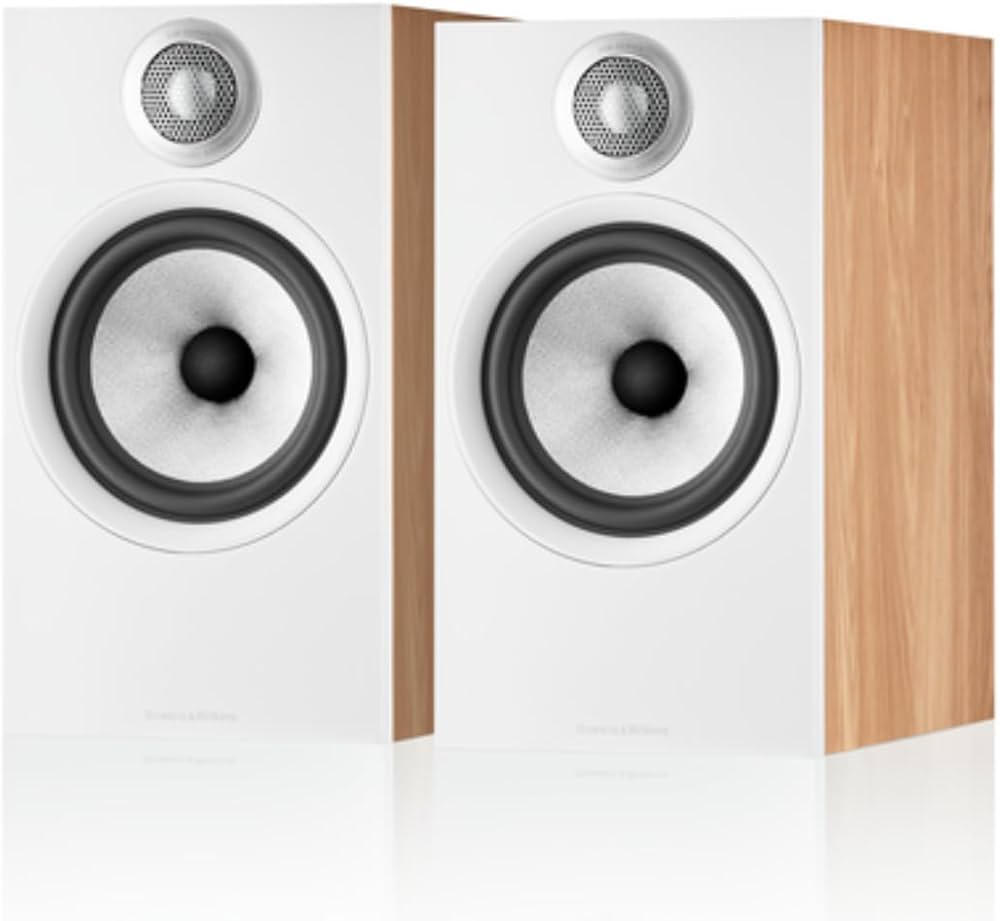
The Bowers and Wilkins Standmount & Bookshelf Loudspeaker 606 is a highly regarded two-way speaker designed for listeners who want detailed, room-filling sound from a compact cabinet. Built around a 6.5-inch Continuum cone bass/midrange driver and a 1-inch decoupled double-dome aluminum tweeter, it delivers a refined balance of clarity, bass extension, and stereo imaging for music, movies, and mixed-use home audio setups. Its rear-port Flowport design helps improve low-frequency performance while reducing turbulence, making it a strong choice for small to medium-sized rooms.
This speaker is especially appealing to audiophiles, home theater enthusiasts, and anyone upgrading from entry-level bookshelf speakers. It works well with stereo amplifiers, integrated amps, and AV receivers, and it pairs effectively with a quality speaker stand for optimal positioning. In practical use, the Bowers and Wilkins Standmount & Bookshelf Loudspeaker 606 suits desktop hi-fi, living room stereo systems, and compact surround setups where precision and articulation matter.
At launch, the estimated price range for the 606 typically sat around the mid-premium category, roughly $800 per pair, with current availability varying by retailer, region, and model generation. The original 606 and newer 606 S3 versions may appear alongside one another in stores, so buyers should verify the exact model before purchasing. For shoppers seeking an upgraded bookshelf speaker with genuine hi-fi performance, the Bowers and Wilkins Standmount & Bookshelf Loudspeaker 606 remains a popular and widely recommended option.
Specifications for Bowers and Wilkins Standmount & Bookshelf Loudspeaker 606
- Type: Two-way vented-box standmount/bookshelf loudspeaker
- Driver complement: 1 x 1-inch aluminum dome tweeter, 1 x 6.5-inch Continuum cone bass/midrange driver
- Frequency response: 52 Hz to 28 kHz ±3 dB
- Low-frequency extension: 40 Hz at -6 dB
- Sensitivity: 88 dB at 2.83V/1m
- Nominal impedance: 8 ohms, with a minimum of 3.7 ohms
- Recommended amplifier power: 30W to 120W into 8 ohms
- Distortion performance: Less than 1% harmonic distortion from 100 Hz to 22 kHz at 90 dB, 1m
- Dimensions: 345 x 190 x 300 mm cabinet only
- Weight: 6.9 kg each
Compared with smaller bookshelf models in the same family, the 606 offers a larger cabinet and more substantial bass output, making it a better fit for listeners who want fuller sound without moving to tower speakers. Relative to many similarly priced standmount speakers, it stands out for its clear treble, controlled midrange, and strong dynamic behavior.
Setup Guide for Bowers and Wilkins Standmount & Bookshelf Loudspeaker 606
Start by placing each speaker on a rigid stand or solid shelf, ideally with the tweeter at ear level when seated. Keep the rear port at least 20 to 50 cm from the wall to reduce bass buildup and improve clarity. Angle the speakers slightly toward the listening position to create a stable stereo image.
- Connect the amplifier with quality speaker cable, observing correct polarity: red to positive, black to negative.
- Use the recommended amplifier range of 30W to 120W to avoid underpowering or clipping.
- For stereo listening, position the speakers and your seat in an equilateral triangle for the best imaging.
- For home theater, match them with a compatible center and surround speakers from the same series when possible.
- Test playback at low volume first to confirm wiring and balance before raising the level.
Safety precautions are important: do not place the speakers in unstable locations, and avoid blocking the Flowport with walls, curtains, or objects. If the sound is thin, check polarity and amplifier settings. If bass sounds heavy or boomy, move the speakers farther from the wall or reduce toe-in. The Bowers and Wilkins Standmount & Bookshelf Loudspeaker 606 is not a wireless speaker, so all connections are wired through an amplifier or receiver.
Troubleshooting the Bowers and Wilkins Standmount & Bookshelf Loudspeaker 606
If the speaker sounds distorted, first lower the volume and confirm that the amplifier is not clipping. A weak or uneven stereo image often points to reversed polarity, poor placement, or mismatched toe-in. If bass is excessive, reposition the cabinet farther from room boundaries. If the treble seems harsh, try repositioning the listening angle or using a warmer-sounding amplifier.
- No sound: Check cable connections, amplifier output selection, and source playback.
- Buzzing or rattling: Tighten stands, check grille fit, and inspect nearby furniture or loose objects.
- One speaker louder than the other: Swap cables to isolate whether the issue follows the speaker or the amplifier channel.
- Overly bright sound: Reduce toe-in, use acoustic treatment, or pair with a smoother amplifier.
- Boomy bass: Increase distance from the rear wall and avoid corner placement.
There are no display-based error codes on this passive loudspeaker, so troubleshooting focuses on wiring, placement, and amplifier matching. Regularly inspect terminals and cables to prevent intermittent faults. For warranty support, contact the retailer or the manufacturer’s customer service through the official support channels in your region and keep your proof of purchase ready.
Pros and Cons of the Bowers and Wilkins Standmount & Bookshelf Loudspeaker 606
Pros
- Clear, detailed sound with strong stereo imaging
- Excellent midrange articulation for vocals and acoustic music
- Surprisingly solid bass for a bookshelf speaker
- Works well in stereo and compact home theater systems
- Premium build quality and refined industrial design
- Strong value for listeners seeking near-audiophile performance
Cons
- Rear port requires careful placement near walls
- Can sound bright with some amplifiers or recordings
- Needs quality stands to perform at its best
- Not ideal for very small rooms if placed too close to boundaries
- Passive design requires an external amplifier
For value for money, the Bowers and Wilkins Standmount & Bookshelf Loudspeaker 606 competes well against similarly priced bookshelf speakers from KEF, Monitor Audio, and Klipsch, especially if you prefer a cleaner, more refined presentation over a louder or more forward voicing. It is a strong choice for buyers who prioritize balance, detail, and upgrade potential.
Customer Reviews of Bowers and Wilkins Standmount & Bookshelf Loudspeaker 606
User feedback is generally very positive, with many owners praising the speaker’s clarity, bass extension, and ability to reveal detail in recordings. A common sentiment is that it delivers “bigger sound than expected” for a bookshelf model, especially when paired with a capable amplifier and proper stands. Typical star ratings trend around 4.5 out of 5 stars among enthusiast buyers.
- “Clean highs, excellent vocals, and far better bass than my previous bookshelves.”
- “Needs careful placement, but once dialed in, the imaging is fantastic.”
- “A little bright with certain recordings, but extremely detailed and engaging.”
Frequent complaints focus on brightness, rear-port placement sensitivity, and the need for quality amplification. For buyers willing to position the speakers properly, the Bowers and Wilkins Standmount & Bookshelf Loudspeaker 606 is often recommended as a confident upgrade from entry-level hi-fi speakers and a reliable choice for long-term listening enjoyment.
Faqs
How do I set up bowers and wilkins Standmount & Bookshelf Loudspeaker 606 for the first time on speaker stands?
What amplifier power works best with bowers and wilkins Standmount & Bookshelf Loudspeaker 606?
Why does bowers and wilkins Standmount & Bookshelf Loudspeaker 606 sound boomy near a wall, and how can I fix it?
Can I use bowers and wilkins Standmount & Bookshelf Loudspeaker 606 with a receiver for home theater or stereo listening?
What are the key features of bowers and wilkins Standmount & Bookshelf Loudspeaker 606 that affect sound quality?
How do I troubleshoot low volume or weak sound on bowers and wilkins Standmount & Bookshelf Loudspeaker 606?
What is the best way to optimize bass and imaging on bowers and wilkins Standmount & Bookshelf Loudspeaker 606?
How should I clean and maintain bowers and wilkins Standmount & Bookshelf Loudspeaker 606 over time?
More bowers and wilkins manuals
- Bowers and Wilkins 800 Series Center Channel Speaker HTM1-D3 User Manual
- Bowers and Wilkins CWM Cinema 6 In-Wall Speaker User Manual
- Bowers and Wilkins Pi7-S2 True Wireless Earbuds User Manual
- Bowers and Wilkins 800 Series Center-Channel Loudspeaker User Manual
- Bowers and Wilkins CC6 Center Channel Speaker User Manual
- How to Use: Bowers and Wilkins Pi8 In-Ear True Wireless Earbuds User Manual
Leave a Comment